Let's check in with this firearms expert (must be with a neck tattoo like that...) and see what his advice for winning a gunfight "in an urban setting" is 🤨
Use optics and sights accordingly...
#WTF#sights#knowledge#nope#education#urban#learning
#Epistemology: The Art of Knowing
How do we know what we think we know?
Epistemology is the branch of #philosophy concerned with #knowledge, #truth, belief, and justification.
It challenges us to examine not only what we believe, but why we believe it. 🧵
Specialized knowledge is key. It's not about ignorance, but education. The right answer can floor everyone, revealing a mind of true learning. #Knowledge#Learning
Kia Orana!
Please pardon another protracted absence, but I’ve been hopelessly distracted by the beauty of the South Pacific, the hospitality of the Cook Islanders, a delightful lack of Wi-Fi, and America’s growing reliance on rare earths and critical metals.
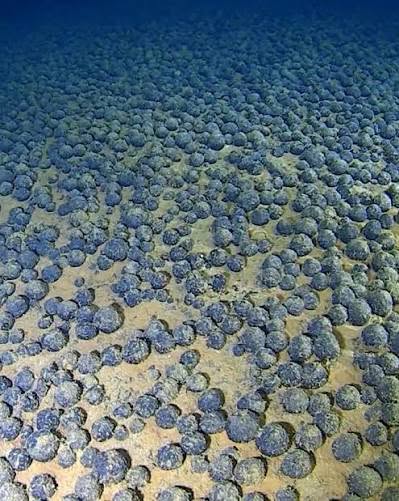
I blame my friends at CIC Minerals and OML, a couple of deep-sea research and exploration companies on the island of Rarotonga, who are working to better understand the impact of harvesting a few hundred million tons of polymetallic nodules spread across the bottom of the ocean, like so many golf balls on a giant driving range, waiting to be scooped up. Unlike golf balls however, these small, ancient spheres are packed with cobalt, copper, nickel, manganese, and rare earths. They’re also five miles below the surface of the ocean, where they’ve been forming for the last 30 million years or so, in quantities so vast it boggles the mind.
Obviously, the business of retrieving these nodules is complicated and controversial. The pressure five miles below the surface is indescribable. But so too, is the pressure up here on land. The electric grid on which we all depend is about to get a whole lot bigger, and the metals in these nodules are now more valuable than all of the gold and silver on every shipwreck combined, with a collective value of fifteen to twenty trillion dollars. (Yes, trillion.) And now, 150 years after these curious little rocks first came to our attention, we finally have the technology and the capital to bring them to the surface. The question is, will we? Or more to the point, should we?
The stakes are high for everyone, but especially for Cook Islanders. Assuming the research indicates an acceptable level of environmental impact, and assuming the government grants permission to start harvesting sometime soon, these islands could quickly become one of the wealthiest nations on earth. Some locals like the sound of that. The Cooks rely almost entirely on tourism, and for them, Covid was an unmitigated economic disaster. After years of no appreciable GDP, a new source of revenue would be most welcome, and provide a whole new level of infrastructure, health care, and so forth. Others, however, are skeptical. Many locals fear the potential disruption of fisheries and cultural heritage, while others believe the immense profits will enrich no one but politicians and foreign corporations. And those fears are being stoked every day. Consider the billboard that greeted me just outside the airport in Rarotonga. (Obviously, this is not an accurate depiction of what nodule collecting looks like, but it’s a fine example of the propaganda and misinformation that’s about to bombard this part of the world, and soon, America.)
Suffice it say the battle lines are drawn. On one side are NGOs and environmental groups like Greenpeace, Earth Justice, and Ocean Ancestors, all of whom categorically oppose any form of deep-sea mining. Period, hard stop. They argue that we don’t yet understand the marine ecosystem at 5,000 meters and have no business disrupting it, no matter how badly we need the resources, or how little the impact the harvesting might have. On the other side are capitalists, entrepreneurs and industrialists who argue that harvesting these nodules poses little to no relative impact on the marine ecosystem, especially when compared to the business of mining cobalt in the rain forest. And somewhere in between are the scientists and researchers who invited me down, and the 15,000 Cook Islanders, who must ultimately decide what’s best for their own nation.
Anyway, that’s where I’ve been, and early next year, I’ll have an episode ready to share. For now, I want to thank Greg Stemm and Shona Lynch at CIC Ocean Research for their hospitality, along with Hans Smit at Ocean Minerals, (and his hard-working crew aboard the Anuanua Moana,) Michael Tavioni, (a genuine cultural icon, master carver, and traditional knowledge keeper,) Mrs. Beverly Stacey-Ataera the Seabed Minerals Commissioner, Mark Brown, the current Prime Minister, and everyone else who welcomed us warmly and talked candidly about the future of their island. I hope to return, sometime soon.
Fun fact ☝🏾
"The Autobiography of Malcolm X” is published
On October 29, 1965, nine months after its subject’s assassination, The Autobiography of Malcolm X is first published.
#FunFact#Knowledge
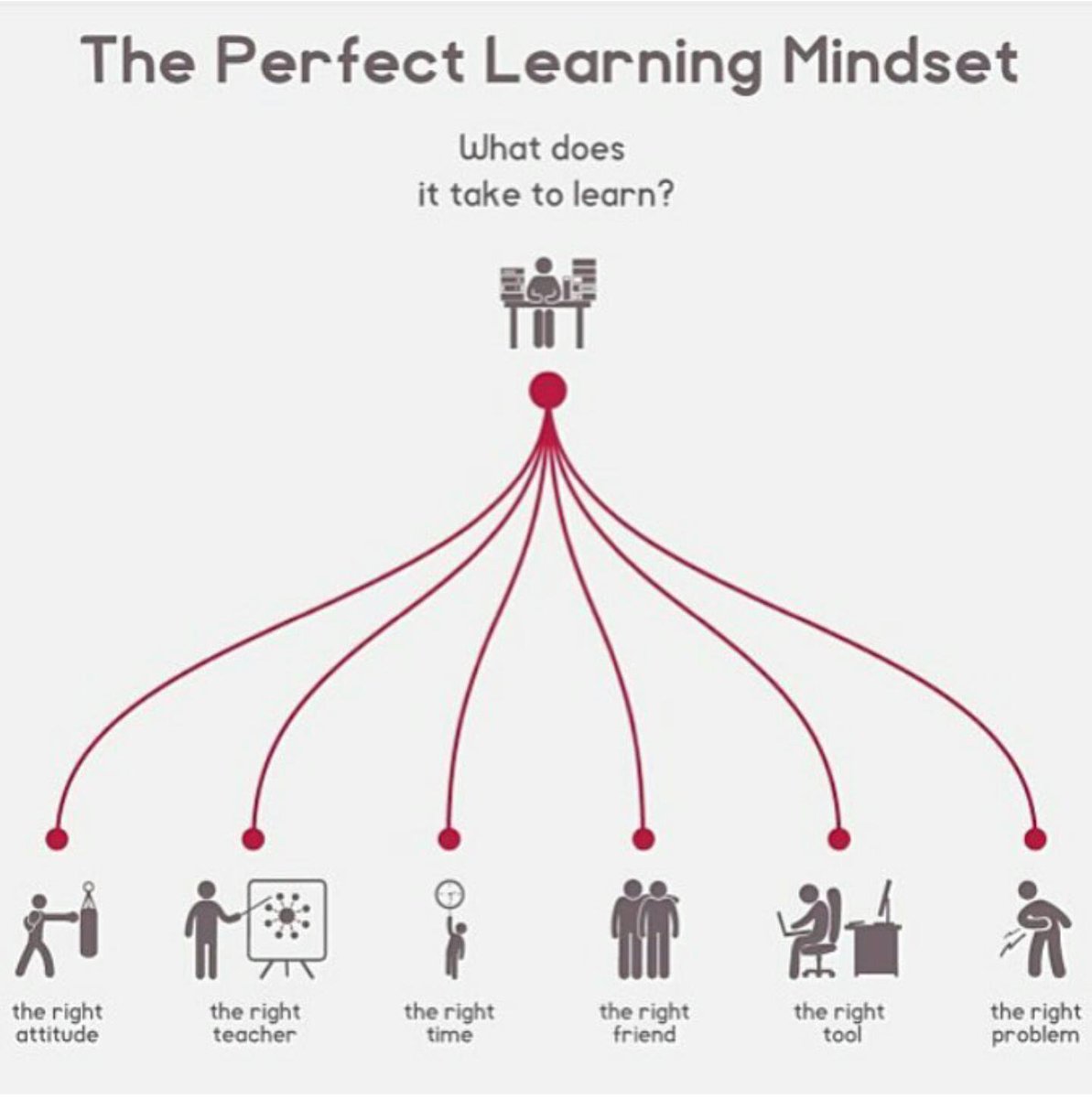
The Power of Knowledge
Knowledge opens doors that strength alone cannot. Never stop learning, never stop growing, and never underestimate the power of an enlightened mind.
#Knowledge#Enlightenment#Wisdom
Why stay poor when the secret to unlimited wealth is right in front of you? Only open-minded individuals will understand. #Illuminati#Knowledge#Power#Success
Meet Annautaq, an orphaned Pacific walrus calf whose unexpected discovery during USGS research in Alaska saved his life.
Last month, USGS biologist Tony Fischbach and Violet Anniskett, an Illisavik College intern, were surveying a beach after a storm moved a walrus herd from the area. While sampling carcasses for a study on harmful algal toxin levels in Pacific walruses, Violet discovered a live, orphaned calf hiding between two adult carcasses.
With approval from the U.S. Fish and Wildlife Service (USFWS) and the local Iñupiaq community, the pair cared for the calf for nearly four days. They dispersed the gulls scavenging him, walked a half mile to the nearest shelter (an abandoned building open to the elements), and protected him from polar bears until the storm passed and a local rescue team could boat him across the lagoon. From there, Alaska Sea Life Center (ASLC) vet techs crated him onto a small plane to rehabilitation. Violet joined the journey to ease his transition.
Violet grew up near walrus herds and first joined USGS surveys on a high school class field trip. This September, she joined the USGS team to gain professional experience working with the wildlife central to Iñupiaq culture. Her community agreed to have the orphan saved with the condition that they name him to preserve their connection to him. Violet chose Annautaq, an Iñupiaq word meaning axe, in honor of her father’s Iñupiaq name.
USGS scientists monitor Pacific walrus populations in support of Marine Mammal Protection Act reporting and management requirements. This work depends on partnerships with Alaska Native communities, whose generational knowledge shapes how we understand and protect these animals.
After rehabilitation at the ASFC, Annautaq has moved to his long-term home, where he will serve as a species ambassador, helping people learn about walruses and their connection to Alaska's people and changing marine environments.
All work was conducted under USFWS permit MA3376D.
📷1: Violet and Annautaq.
📷2: Annautaq gazes out the shelter window.
📷3: Tony and Annautaq.
📷4: Violet resting with Annautaq.
Credit: Tony Fischbach, USGS