Posts with #pathogen
#pathogen
Public posts on X that use #pathogen.
Related hashtags

Intestinal Pathogenic Escherichia Coli (InPEC) :: EPEC,ETEC,STEC,EAEC,EIEC 🆕💥🔴 Narrative Review:: Pathovars of Escherichia coli associated with diarrhoea – which, when and how to treat them in the NAAT era #IDXposts219492.5K
Pathogenic@pathogenicgameHey #PitchYaGame! Become a pathogen and infect the human body in Pathogenic! This is a roguelike twin-stick shooter where you invade the immune system as a tiny parasite, endlessly evolving and building game-breaking combos to destroy everything in your path! #indiegame324118
Patrick Skinner@SkinnerPmWe got our flu shot & the newest Covid booster. We live in an age of medical wonders, and I am so thankful for that. Our neighborhood is only as healthy as our sickest neighbor, our society likewise. Public health is a personal responsibility.18577785.8K
He8ter@he8ter@SkinnerPm@SkinnerPm Pathogenic priming: Flu shot → ↑influenza and ↑non-influenza infection risk.He8ter @he8ter@ktho641521 @Biff234523 @DonEford Before you take any flu shot, learn the truth. Hint: they don't work and instead: Flu shot → ↑influenza and ↑non-influenza infection risk. References in the reply. #cdnpoli #potus10250
He8ter@he8ter@ktho641521@ktho641521 @Biff234523 @DonEford Before you take any flu shot, learn the truth. Hint: they don't work and instead: Flu shot → ↑influenza and ↑non-influenza infection risk. References in the reply. #cdnpoli #potus111890
Biology+AI Daily@BiologyAIDailyOmics-scale decoding of protein N-glycosylation using protein language model embeddings 1 MaskNGly is a zero-shot (training-free) framework that predicts N-linked glycosylation sites directly from protein language model (ESM-2) embeddings, avoiding dependence on curated positive/negative labels that are often uncertain in glycoproteomics. 2 The core idea is an interpretable “mask-and-probe” perturbation: mask residue i in the sequence, recompute embeddings, and quantify how embedding changes propagate to residue j. The resulting response Ci(j) acts like an embedding-derived coevolution/coupling signal without MSA construction or supervised decoding. 3 These embedding-derived coupling matrices recapitulate structural proximity: for benchmark proteins, the inferred couplings closely mirror experimental distance maps; on PSICOV150, contact prediction from this approach approaches supervised predictors and outperforms classic MSA-based coevolution baselines. 4 For N-glycosylation, the method focuses on canonical sequons N-X-S/T (X≠P). Functional sequons show strong bidirectional coupling between the Asn and Ser/Thr positions; non-functional sequons behave like random residue pairs in coupling strength. 5 A simple glycosylation propensity score (GP) is computed from the normalized coupling between N and S/T (averaging both masking directions). GP score distributions separate experimentally supported UniProt positives (~5826 sites) from high-confidence negatives (~11552 sites from nuclear/mitochondrial proteins). 6 On the N-GlyDE test set, MaskNGly achieves AUC ~0.94 and MCC ~0.81, comparable to state-of-the-art supervised predictors (e.g., DeepNGlyPred, EMNGly, StackGlyEmbed). Importantly, it remains robust when older UniProt labels are revised: it correctly recovers most sites later updated to “experimentally supported”. 7 Orthogonal experimental validation: intact glycoproteomics (Click-iG) in HIBEpiC cells identified 247 N-glycosylation sites across 146 glycoproteins, including 111 previously unreported sites. MaskNGly assigns GP>0.5 to >95% (106/111) of these newly discovered sites, despite no training on these data. 8 Proteome-scale application across 48+ species using AlphaFold DB sequences/structures shows evolutionary divergence: bacteria largely have unimodal low GP distributions (consistent with rare N-glycosylation), while archaea show bimodality resembling eukaryotes, and eukaryotes display an increasingly prominent high-GP population with organismal complexity. PCA on mixture-model-fitted score distributions separates the three domains of life. 9 Structural context at scale: high-GP sequons are enriched in well-structured regions (high AlphaFold pLDDT) and solvent-exposed residues (high rSASA), supporting proteome-wide evidence that N-glycosylation favors stable, accessible contexts rather than disordered or buried environments. 10 Clinical variant analysis (ProteinGym, 1,096 missense variants altering sequons) links GP to pathogenicity: gain-of-glycosylation and loss-of-glycosylation mutations are more often pathogenic when they create/disrupt high-GP motifs, suggesting GP can help prioritize sequon-altering variants in disease interpretation. 11 Beyond site calling, the same embedding-coupling analysis captures signatures of glycan-mediated allostery: for CD2 N65 glycosylation, predicted coupling hotspots align with glycan-contacting regions from long-timescale MD (hydrogen-bond occupancy and DCCM), and additionally highlight a distal interface residue (Trp35) implicated in allosteric communication. 📜Paper: #Glycobiology #Glycoproteomics #NGlycosylation #ProteinLanguageModels #ESM2 #AlphaFold #Coevolution #ZeroShotLearning #ComputationalBiology #Bioinformatics05131.1K
Pluchino lab - Regenerative Neuroimmunology@PluchinolabP2RX7 drives inflammatory microglia and pathogenic extracellular vesicle secretion in tauopathy07281.4K
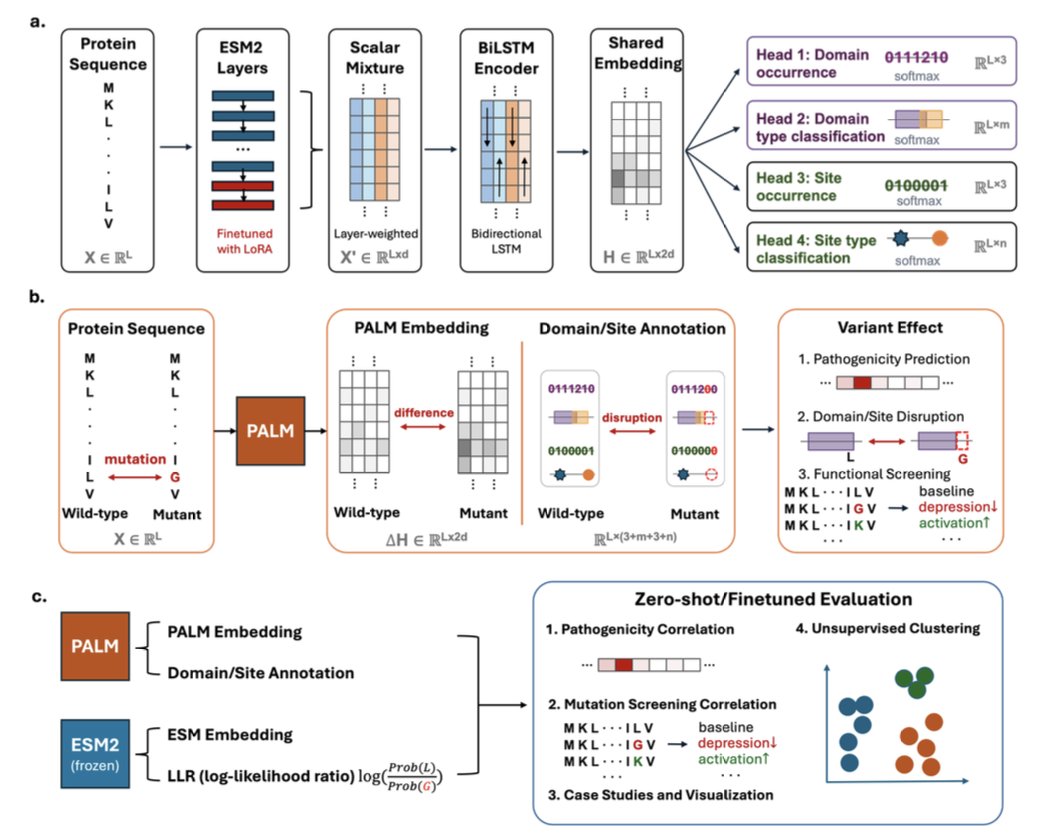
Biology+AI Daily@BiologyAIDailyA protein language model for domain, functional site, and variant effect prediction 1 PALM is trained only on UniRef50 sequences + InterPro residue annotations, yet its zero-shot “embedding disruption” separates ClinVar pathogenic vs benign missense variants with AUROC 0.835 (vs 0.710 for ESM2 embedding disruption). When combined with ESM2 masked-marginal likelihood ratio (LLR), AUROC rises to 0.877, showing complementary signals without using variant labels during training. 2 The core modeling idea is overlap-aware residue supervision: many residues have nested/overlapping domains and multiple site types. PALM uses a soft-target objective that spreads probability mass across all valid labels at a residue, instead of forcing a single “correct” label and discarding the rest. 3 Architecture: ESM2-150M backbone with LoRA adapters (limited parameter updates), learned scalar mixture of transformer layers, then a BiLSTM encoder. A shared residue representation feeds four heads: domain occurrence, site occurrence (each predicts none/single/multiple), plus domain class (17,951 InterPro domain labels) and site class (1,383 site labels). 4 Scale of training/evaluation: ~15.37M InterPro-annotated UniRef50 proteins (11.52M train, 1.53M val, 2.31M held-out test). Domain annotations appear in ~97% of proteins; site annotations are sparse (~15% of proteins, ~4% sequence coverage), making site prediction a harder task. 5 Residue-level annotation performance on 2.31M held-out proteins: domain-occurrence F1 0.941 and site-occurrence F1 0.877; relaxed top-class accuracy 97.14% (domains) and 99.45% (sites). PALM also exceeds the reported ESM3 function-annotation baseline in the supported-label comparison. 6 Generalization beyond close homologs: on a PID-stratified test subset, even proteins with <20% identity (or no detectable BLASTP hit) retain substantial performance (domain/site occurrence F1: 0.857/0.828), indicating predictions are not limited to near-duplicates. 7 Variant interpretation is not only a scalar score: PALM provides localized, residue-level readouts via changes in predicted domain/site occurrence and class probabilities. Example: PTEN C124F vs C124S shows different predicted active-site disruption patterns, offering mechanistic context for why variants at the same residue may differ in functional impact. 8 Beyond annotation, PALM reshapes protein embeddings: on human proteins with CATH-Gene3D labels, PALM mean-pooled embeddings show stronger superfamily organization than frozen ESM2 and ESM3 (e.g., kNN at k=5 accuracy 0.955 PALM vs 0.951 ESM3 vs 0.825 ESM2; higher neighbor purity as well). Reactome pathway organization provides additional support that embeddings capture broader functional structure. 9 Experimental relevance: on FlexiNR deep mutational screens (activation/repression hit changes), concatenating PALM+ESM2 embeddings gives the best AUROC (activation 0.875; repression 0.757), outperforming either embedding alone and far exceeding LLR-only or head-disruption-only features. PALM embedding differences also correlate with PTEN DMS lipid phosphatase activity, supporting use as a proxy signal for scanning mutational effects. 💻Code: 📜Paper: #ProteinLanguageModels #ComputationalBiology #Bioinformatics #ProteinFunction #VariantEffect #InterPro #UniRef #ClinVar #DeepLearning #ZeroShotLearning02211.5K
He8ter@he8ter@SkinnerPm@SkinnerPm Oh wow, double wammy. Pathogenic priming from the flu shot, which ↑ risk of influenza + ↑ COVID infection. And on top of that, repeated COVID vaccine boosters trigger IgG4 class switching → TURBO CANCER + ↑ infections of all kinds. Learn the truth.11194
Waggoner Lab@LabWaggonerHarnessing autoantibodies to target pathogenic plasma cells @PNASNews07241.9K
SmackTrack 3 Request : Glo man NOTR Mike Jessahn Amaru Pathogenic Bubba Forde Blve Coca Jay Gray1313548.1K
Viruses MDPI@VirusesMDPI🎉 Welcome to our new EBMs! Dr. Steeve Boulant — Enteric viruses and innate immunity Dr. Huihui Kong — Influenza and host adaptation Dr. Chao Shan — Highly pathogenic viruses and vaccines Dr. Fabrício S. Campos — Emerging and zoonotic viruses012219
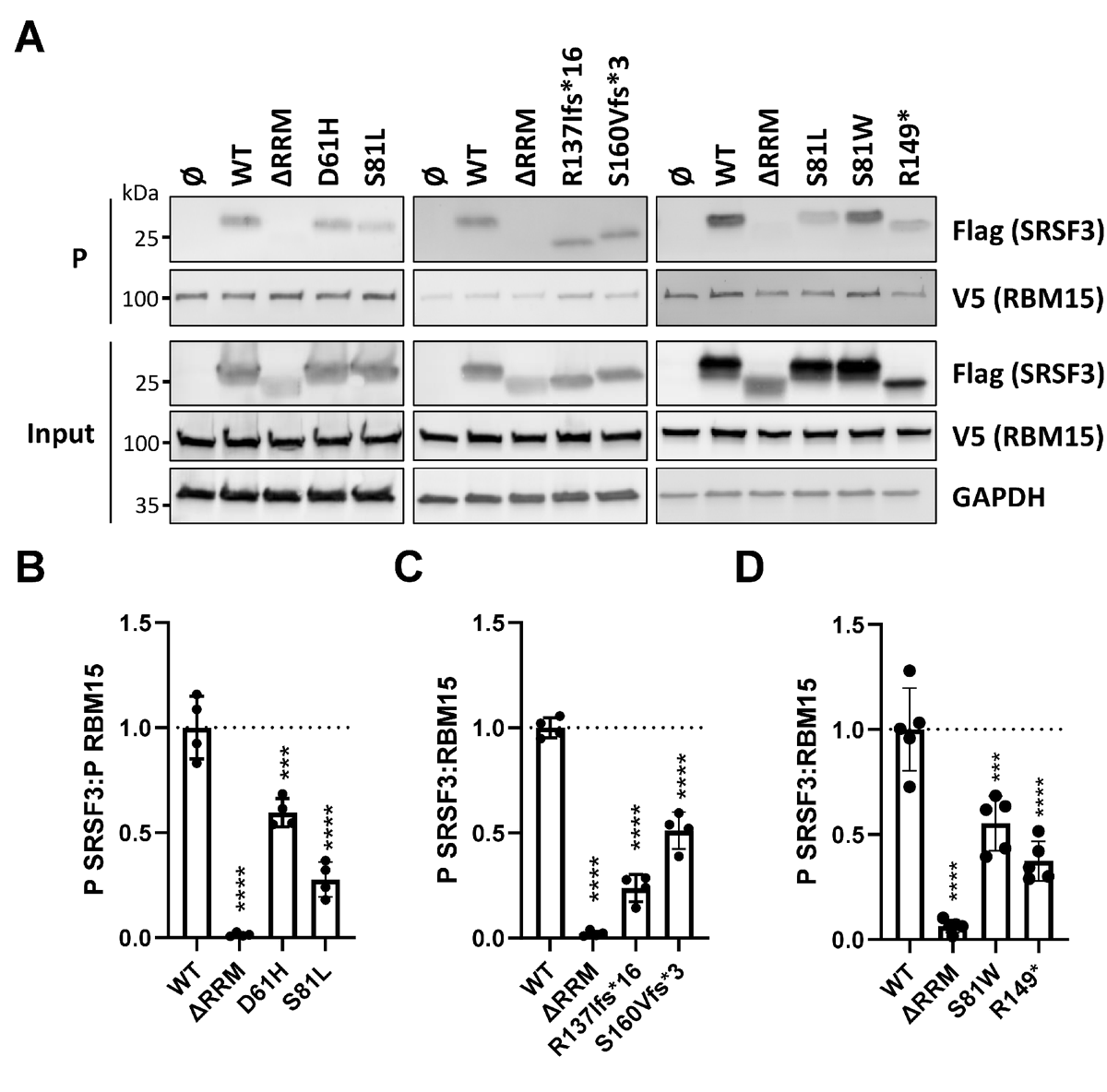
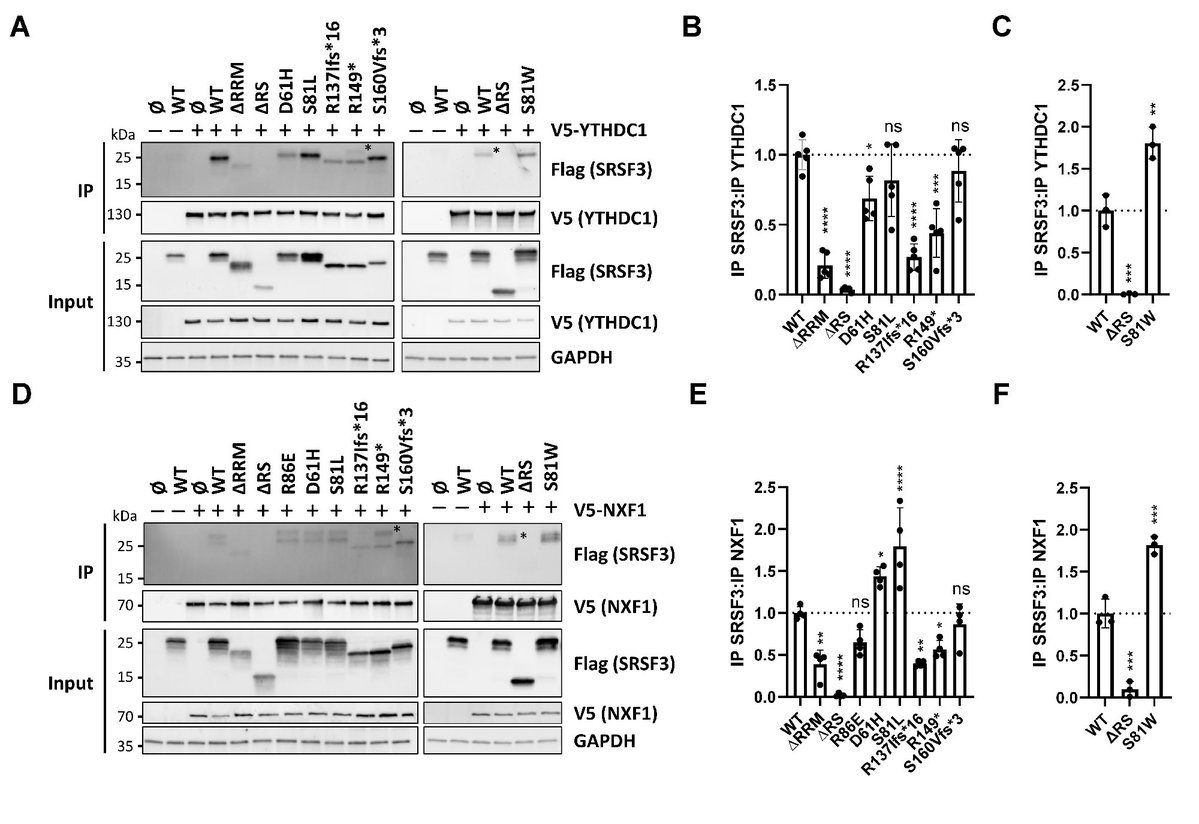
ASHG@GeneticsSocietyAuthors of @AJHGNews' latest article explore the pathogenic mechanisms that underlie a newly identified neurodevelopmental disorder caused by de novo variants in the splicing factor gene SRSF3. Read the full article: #ASHG #humangenetics122665
“When water sources dry up or shrink, animals & pathogenic microorganisms concentrate in the remaining water sources, allowing easier transmission.” Data centers will take our water & accelerate disease transmission. Drought = disease5441061.6K
Margarita Parada-Kusz@MParada_KuszBlood infection in vivo! #Zebrafish embryo infected with #Salmonella (green dots) and live imaged 10 hrs post-infection. Sensory #neurons (DRG, green) and #macrophages (magenta) detect and coordinate the body's anti-microbial response. DRG: dorsal root ganglia @zebrafishRock1382506
Margarita Parada-Kusz@MParada_Kusz@MParada_KuszSalmonella is an intracellular #pathogen that multiplies inside susceptible #macrophages. Before the end, it saturates the zebrafish cardiovascular system. #Zebrafish can help us understand bacterial pathogenesis and identify new therapeutic targets to treat #infections.4328
Mitochondrial Dysfunction/ Rhinosinusitis Evidence from multiple experimental studies demonstrates that mitochondrial dysfunction is closely intertwined with key pathological processes in CRS. Mitochondria are damaged by diverse CRS‐related pathogenic factors leading to excessive reactive oxygen species production, impaired biogenesis, and disrupted membrane potential. These mitochondrial abnormal- ities amplify epithelial inflammation, oxidative stress, and barrier dysfunction, creating a self‐propagating vicious cycle in which mitochondrial injury and inflammation reinforce each other. Mitochondrial dysfunction also contributes to character- istic histopathological changes, including epithelial damage, ciliary impairment, and fibrin deposition The Role of Mitochondrial Homeostasis in the Pathogenesis of Chronic Rhinosinusitis00126
The Museveni regime has given Dei BioPharma at least 720,000,000,000/=. To put this into context, the upper limit the regime spends on building a classroom block is 100 million. So, if this money was spent on classroom blocks it would build 7,200 classroom blocks at that rate! We would get almost 50 classroom blocks in each of the 145 districts & cities in Uganda! If we take the lower limit of 42 million, this money builds 17,142 classroom blocks - 118 in each district & city! Thousands of Ugandan pupils study under trees, today! If the regime decided to improve the health sector instead, & use the money to buy ambulances, at the current regime rate of about 370 million per ambulance, the regime would buy at least 1,945 ambulances - 13 for each district and city in the country. Finally, if the regime decided to use the money to feed govt students at Makerere - the current rate being 760,000 - it would feed at least 947,368 students. There are about 6,000 govt students at Makerere each year, if the regime decided to be generous and give them 1,000,000/= instead, to 6,000 students a year, and two semesters a year; this money is enough to last 60 years! Without thinking twice, or any shame, the regime gave ALL this money to Moses Magoola - "The young man from Busoga" - instead to build his "revolutionary pharmacy plant" now the plant is being put up for sale by Equity Bank! Magoola will not lose sleep, it wasn't his money anyway, it was Ugandan taxpayer's money! Almost a trillion shillings, down the drain!3610427823.5K

Vinod Scaria@vinodscariaSudden cardiac death in the young. A tragedy we need to talk about. 🧵 When a young person suddenly dies, we often blame stress, overwork, the gym or COVID. But are we looking deep enough? These explanations are not always supported by evidence. #Genomics #SuddenCardiacDeath518527.9K
Vinod Scaria@vinodscaria@vinodscaria1029 genomes of self-declared healthy individuals from India reveal prevalent and clinically relevant cardiac ion channelopathy variants - PubMed102253
Vinod Scaria@vinodscaria@vinodscariaAssociation of Pathogenic/Likely Pathogenic Genetic Variants for Cardiomyopathies With Clinical Outcomes: A Multiancestry Analysis in the All of Us Research Program - PubMed101224
🧬 How can a single amino acid deletion disrupt skeletal development before birth? A study published in Phenomics identifies a novel heterozygous variant in the IHH gene, c.331_333delCTG (p.Leu111del), in a fetus with brachydactyly type A1 (BDA1), a rare inherited skeletal disorder characterized by shortened fingers and/or toes. By integrating prenatal ultrasonography, whole-exome sequencing, protein structural modeling, and functional experiments, the researchers uncovered several key findings: 🔹 Prenatal phenotype: Ultrasound revealed pronounced limb shortening, with proximal limb segments more severely affected than distal segments. 🔹 Genetic evidence: The variant was inherited from the father and resulted in the deletion of a highly conserved leucine residue at position 111 of the IHH protein. 🔹 Functional evidence: In HEK293T cells, the mutant IHH protein showed increased precursor accumulation and markedly reduced levels of the mature IHH-N signaling fragment, suggesting impaired protein maturation. These findings provide mechanistic evidence linking the IHH variant to disrupted protein processing and expand our understanding of the molecular basis and prenatal manifestations of BDA1. Although the variant was initially classified as being of uncertain significance under ACMG guidelines, the functional findings support its potential pathogenic role. 🔗 Read the full study: #Phenomics #HumanGenetics #RareDiseases #PrenatalDiagnosis035289- Show more posts