Igor Logvinenko@igorlogvinenko
It’s only France and Germany that objected
Anand Menon @anandMenon1What an utter farce. A lesson in how to look unserious
0006

@igorlogvinenko
Associate Professor of Diplomacy and World Affairs, and Director of the Young Initiative for Global Political Economy @ Occidental College
Anand Menon @anandMenon1What an utter farce. A lesson in how to look unserious


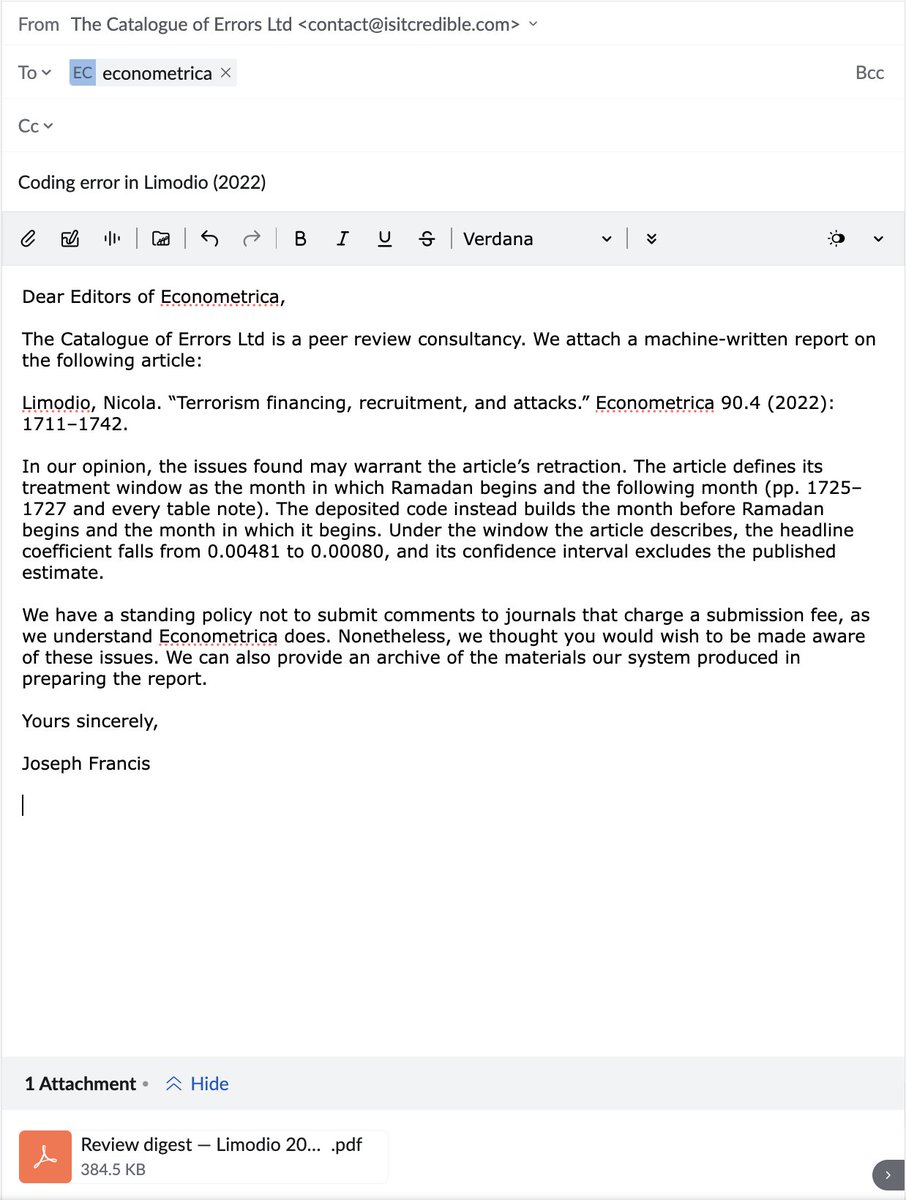
joseph francis @joefrancis505The people demanded it and who am I to deny them? My email to the editors of Econometrica:

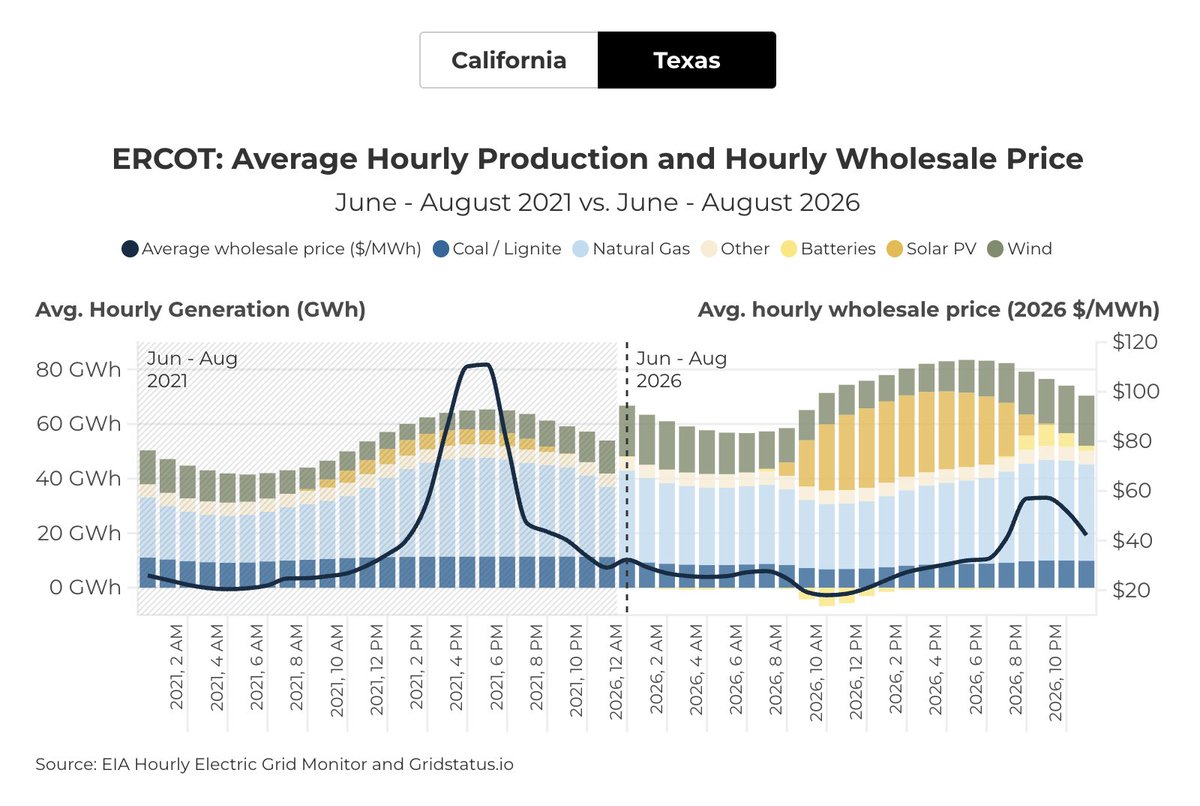
Jonas Nahm @jonasnahm1/ Dan Wang’s NYT essay on TSMC's Arizona plant argues that TSMC is doing for America what Apple did for China. But the analogy rests on two assumptions and it's not clear that either one of them is holding.

Ryan Grim @ryangrimAside from the shocking substance of this story, what's amazing is how it was unearthed by Cole. The short version: The Russians were able to penetrate Jared Kushner's iPhone and extract screenshots and data. Then, a Russian intel official was captured by Dutch intelligence (!) and flipped. The Dutch believed Kushner may have been acting on behalf of Russia, so pursued him as an intel target and were able to get into his phone. They did not find any evidence of Russian collusion, instead they watched him moving hundreds of millions of dollars from slush funds created by Saudi Arabia and the UAE, one of them housed in Israel's central bank. Incredible reporting, and if Democrats have any sense, they will pull on these threads and learn a lot more about this money.

Daniel Foubert 🇵🇱🇱🇹 @d_foubertWHO DESTROYED FRANCE? 🇫🇷 Yes. EVERYONE did. 1. Emmanuel Macron, a man who thinks he's Jupiter but governs like a McKinsey intern who accidentally became emperor. He promised a French Renaissance and delivered a complete disaster. His solution to every catastrophe is another speech about the future of Europe. 2. The ENA Elite, Sciences Po, and the Grandes Écoles, the world's most sophisticated factories for producing highly educated incompetence. They can explain the collapse of French industry in seventeen PowerPoint presentations without ever having entered a factory. They invented a system where the same people run the state, destroy it, and then get promoted to investigate what went wrong. 3. François Hollande, the socialist who declared war on finance and then appointed Emmanuel Macron economy minister. His presidency was so spectacularly mediocre that even his own party eventually pretended not to know him. He managed to make political paralysis look like an exhausting full-time occupation. 4. Jacques Chirac, who promised reform, encountered a demonstration, and immediately discovered the virtues of doing absolutely nothing. He spent twelve years as president shaking hands with farmers while the national debt continued its agricultural expansion. His greatest political achievement was making immobility look presidential. 5. François Mitterrand, who tried socialism in 1981, and discovered economic reality in 1983. He nationalized companies, reversed course, and built a pyramid at the Louvre. Appropriate architecture for a president who occasionally treated the French economy like a pharaoh's burial chamber. 6. The Socialist Left, which believes money grows on government decrees. Their economic model consists of taxing the rich, subsidizing the poor, employing the middle class in public administration, and borrowing whatever remains. When the money runs out, they accuse arithmetic of being fascist. 7. The French Trade Unions, which defend public services by making sure nobody can use them. They stop trains to save the railways, close schools to defend education, and block refineries to protect purchasing power. Their greatest contribution to French productivity is ensuring that nobody produces anything without their permission. 8. The French Right, which has spent forty years promising to reduce public expenditure, reform the state, restore authority, and liberate the economy. Then it wins an election, appoints seventeen ministers, creates four administrative agencies, and discovers that cutting public expenditure might upset somebody. French conservatives defend free enterprise in speeches and administrative regulation in practice. They want a smaller state, provided nobody removes their subsidies, pensions, privileges, public contracts, or favorite government department. Their economic program was essentially socialism with better tailoring. 9. The French Boomers, who inherited affordable housing, expanding industries, and economic growth, then converted everything into pensions and real estate. They bought apartments for the price of a used Peugeot and now explain to young people that homeownership requires sacrifice. They spent their youth demanding revolution and their retirement demanding that absolutely nothing change. 10. Pétain and Vichy, who responded to the greatest military humiliation in modern French history by deciding that collaboration with the occupier was an excellent national recovery strategy. France had already lost the war. Pétain somehow found a way to make losing considerably more embarrassing. 11. The French Generals of 1940, who built the Maginot Line and apparently forgot to tell the Germans they were supposed to attack it. They prepared brilliantly for the First World War, only to discover that the enemy had inconveniently arrived in the Second. 12. The Republican Idealists, who believe France isn't a country but a philosophical concept. Other nations build institutions. France proclaims Values. When schools fail, they organize republican ceremonies. When public order collapses, they deliver speeches about citizenship. When reality contradicts their principles, reality is clearly insufficiently republican. 13. Saint-Simon, Fourier, Cabet, and the French Utopian Socialists, who looked at humanity and decided the problem was insufficient central planning. Fourier imagined communities organized around human passions. Saint-Simon dreamed of society directed by enlightened productive elites. Their descendants now occupy French ministries, designing national happiness through administrative circulars. Two centuries later, the happiness is still missing, but the paperwork is magnificent. 14. The French Revolution, which promised Liberty, Equality, and Fraternity, then introduced mass executions, revolutionary tribunals, civil war, and political terror. The revolutionaries liberated France from monarchy, discovered that citizens disagreed about liberty, and began executing one another. France has spent two centuries celebrating this as the birth of political enlightenment. Apparently, mass killing becomes progressive when accompanied by the correct slogans. 15. The Enlightenment, Libertinism, and the Marquis de Sade, who began by liberating humanity from superstition and ended by demonstrating that intellectual sophistication is no guarantee against moral insanity. Voltaire mocked religious authority, Rousseau dreamed of remaking society, and Sade turned transgression into an entire literary industry. Their descendants now believe that every inherited institution is oppressive and every new social experiment is automatically progress. 16. The English, who spent centuries sabotaging French ambitions, financing France's enemies, and preventing French domination of Europe. The Hundred Years' War was essentially a prolonged British property dispute conducted on French territory. Every time France attempted to become a continental superpower, England appeared with a navy, a coalition, and a remarkably enthusiastic willingness to pay somebody else to fight. 17. The Habsburgs, who surrounded France with territories acquired through marriage, inheritance, and a family tree resembling a biological experiment conducted without ethical supervision. They conquered half of Europe through weddings while French kings bankrupted themselves trying to escape the encirclement. The Habsburgs invented geopolitical domination through matrimonial administration. 18. The English, Again, because centuries of warfare were apparently insufficient. After defeating Napoleon, they conquered global commerce, international finance, and eventually the English language conquered French business. Today, French executives speak English to other French executives in Paris. England finally conquered France without deploying a single soldier. 19. The Romans, who conquered Gaul, introduced taxation, centralized administration, and the idea that provincial populations should be governed by distant officials convinced of their intellectual superiority. Two thousand years later, Paris continues to administer France like a Roman governor collecting taxes from barbarians. Rome collapsed. French bureaucracy survived. Live like Rome, die like Rome. 20. Darth Vader, the ultimate French technocrat. He believed every problem could be solved through centralization, intimidation, and an enormous publicly funded megaproject. His Death Star was essentially the French Ministry of Finance equipped with a superlaser. It cost a fortune, concentrated all power in one place, and exploded because nobody listened to the engineers. 21. Saruman and Sauron, the spiritual ancestors of French industrial planning and European centralization. Saruman wanted to replace forests with factories. Sauron wanted to unite the continent under one supreme administrative authority. Both believed that enough central planning could overcome reality. Both were eventually defeated by small provincial creatures who refused to follow instructions. 22. Satan, who has reportedly retired from corrupting France because the competition has become unbearable. He spent centuries encouraging pride, vanity, envy, and destructive political passions, only to discover that French politicians could produce the same results without supernatural assistance. He applied for a position at the Ministry of Finance but was rejected for insufficient administrative experience. And the French people? They have spent more than two centuries overthrowing kings, emperors, republics, governments, and presidents, convinced that the next political arrangement would finally solve everything. They have tried absolute monarchy, constitutional monarchy, revolutionary dictatorship, empire, parliamentary republics, presidential republicanism, socialism, liberalism, conservatism, and technocracy. Every generation announces that France needs a revolution. Every revolution promises to put an end to the failures of the previous regime. And every new regime eventually discovers that it has inherited THE FRENCH.


Marko Mihkelson 🇪🇪🇺🇦🇪🇺 @markomihkelsonRussia has a clear interest in seeing looting and disorder on the streets of France and Italy. This is part of its multidimensional shadow war against the West.

Luis Garicano 🇪🇺🇺🇦 @lugaricanoBelgium: 4.8 million adults get their income from the state versus 3.6 million unsubsidized private-sector workers. State spending is over 54% of GDP, taxes take ~50%, and the budget hasn't been balanced since 2006. More than 526,000 working-age citizens (over 7% of the entire workforce) are now on long-term disability leave—exceeding the number of officially unemployed.

Phil Magness @PhilWMagnessI first encountered Leo Strauss around the tail end of high school, and first read him as a freshman in college. I recall him being touted as brilliant. I also recall being thoroughly underwhelmed, and quickly noticed he had a penchant for magic decoder ring nonsense that was fundamentally unfalsifiable and always seemed to reach the conclusion that he desired for normative reasons.

Mark Malone @soundmigrationMark Zuckerberg pretending to enjoy Guinness is my new favourite thing.

Andrej Karpathy @karpathyJudging by my tl there is a growing gap in understanding of AI capability. The first issue I think is around recency and tier of use. I think a lot of people tried the free tier of ChatGPT somewhere last year and allowed it to inform their views on AI a little too much. This is a group of reactions laughing at various quirks of the models, hallucinations, etc. Yes I also saw the viral videos of OpenAI's Advanced Voice mode fumbling simple queries like "should I drive or walk to the carwash". The thing is that these free and old/deprecated models don't reflect the capability in the latest round of state of the art agentic models of this year, especially OpenAI Codex and Claude Code. But that brings me to the second issue. Even if people paid $200/month to use the state of the art models, a lot of the capabilities are relatively "peaky" in highly technical areas. Typical queries around search, writing, advice, etc. are *not* the domain that has made the most noticeable and dramatic strides in capability. Partly, this is due to the technical details of reinforcement learning and its use of verifiable rewards. But partly, it's also because these use cases are not sufficiently prioritized by the companies in their hillclimbing because they don't lead to as much $$$ value. The goldmines are elsewhere, and the focus comes along. So that brings me to the second group of people, who *both* 1) pay for and use the state of the art frontier agentic models (OpenAI Codex / Claude Code) and 2) do so professionally in technical domains like programming, math and research. This group of people is subject to the highest amount of "AI Psychosis" because the recent improvements in these domains as of this year have been nothing short of staggering. When you hand a computer terminal to one of these models, you can now watch them melt programming problems that you'd normally expect to take days/weeks of work. It's this second group of people that assigns a much greater gravity to the capabilities, their slope, and various cyber-related repercussions. TLDR the people in these two groups are speaking past each other. It really is simultaneously the case that OpenAI's free and I think slightly orphaned (?) "Advanced Voice Mode" will fumble the dumbest questions in your Instagram's reels and *at the same time*, OpenAI's highest-tier and paid Codex model will go off for 1 hour to coherently restructure an entire code base, or find and exploit vulnerabilities in computer systems. This part really works and has made dramatic strides because 2 properties: 1) these domains offer explicit reward functions that are verifiable meaning they are easily amenable to reinforcement learning training (e.g. unit tests passed yes or no, in contrast to writing, which is much harder to explicitly judge), but also 2) they are a lot more valuable in b2b settings, meaning that the biggest fraction of the team is focused on improving them. So here we are.

steve hsu @hsu_steveMichael I. Jordan, machine learning demigod, UC Berkeley ... the young people who work at these companies operate in a world [Silicon Valley, Berkeley, etc.] where these kinds of discussions are commonplace. Many of them aren’t really engineers; they come from the humanities, philosophy, or other disciplines. They’re 25 years old, they’re naive, they don’t do engineering work, they’ve never worked at large companies where real products are developed for real people, with discipline. And they get together, a bit like in Parisian cafés in the 1920s, to talk about these grand science-fiction ideas. When these young people resign, they know they’re going to attract attention. It allows them to feel virtuous and to be seen as very important figures. They claim to be giving up money, but in reality, they already have their stock options. So all of this is a grand moralizing performance that doesn’t serve the real objective it claims to pursue. There’s a great deal of naiveté here, which goes hand in hand with a certain cynicism…