Matter Bio
@matterbio
Making DNA damage optional. Protect your genome!
467 Following283 Followers100 Posts
- Matter Bio@matterbioMatter BioRT @beffjezos: Max literally restored sight to the blight, with hardcore tech. Totally underreported by mainstream media. One of the most cracked and genuine people in Silicon Valley.Juan Benet @juanbenetExcited to launch a new podcast dedicated to conversations on the future of neurotech, computing, intelligence, and more. First guest: @maxhodak_ founder & CEO of @ScienceCorp_, which is building PRIMA, a retinal prosthetic that’s restoring meaningful vision for patients with blindness caused by age-related macular degeneration. Science is also developing a biohybrid brain implant that grows living neurons directly onto a silicon chip, then interfaces that system with the cortex. The possibility space here is vast and new. Imagine growing new areas of the brain. Sections 00:00 What counts as neurotech? 01:45 History of brain-computer interfaces and the smartphone dividend 07:25 PRIMA - How Science is restoring vision in blind patients 10:10 Why stimulating bipolar cells works when the optic nerve doesn't 30:30 Are we bottlenecked by biology or engineering? 32:40 Expanding the brain's bandwidth beyond 10 bits per second 37:00 Can we add new areas to the brain? 37:46 Biohybrid BCIs: neurons growing on a chip 39:20 What could neural augmentation look like? 01:13:20 How Science drives Fast R&D 01:44:00 How founders learn and level up This is the kind of discussion I’m excited to explore on this podcast. Enjoy! Full Episode 1 here and in links below.021033.3K
 Excited to launch a new podcast dedicated to conversations on the future of neurotech, computing, intelligence, and more. First guest: @maxhodak_ founder & CEO of @ScienceCorp_, which is building PRIMA, a retinal prosthetic that’s restoring meaningful vision for patients with blindness caused by age-related macular degeneration. Science is also developing a biohybrid brain implant that grows living neurons directly onto a silicon chip, then interfaces that system with the cortex. The possibility space here is vast and new. Imagine growing new areas of the brain. Sections 00:00 What counts as neurotech? 01:45 History of brain-computer interfaces and the smartphone dividend 07:25 PRIMA - How Science is restoring vision in blind patients 10:10 Why stimulating bipolar cells works when the optic nerve doesn't 30:30 Are we bottlenecked by biology or engineering? 32:40 Expanding the brain's bandwidth beyond 10 bits per second 37:00 Can we add new areas to the brain? 37:46 Biohybrid BCIs: neurons growing on a chip 39:20 What could neural augmentation look like? 01:13:20 How Science drives Fast R&D 01:44:00 How founders learn and level up This is the kind of discussion I’m excited to explore on this podcast. Enjoy! Full Episode 1 here and in links below.2781360405K
- Matter Bio@matterbioMatter BioRT @_twolfram: Today the worlds most powerful genetic predictor of IQ, CogPGT, has been published in the peer reviewed journal Intelligence and Cognitive Abilities. When used for embryo screening, it can substantially boost expected IQ of future offspring. Read on for the scientific details!01170629K
- Matter Bio@matterbioMatter BioRT @Prof_Lundberg: What would it look like to see all ~13,000 proteins inside a single human cell at once? We share ProtiCelli — a generative model that makes this possible. Besides benchmarking, we demonstrate utility in many tasks. Preprint: A thread 🧵👇0118038.5K
- Matter Bio@matterbioMatter BioRT @SebastianCaliri: It looks like the White House is finally taking US-China biotech competition seriously. The FDA is putting forward an expedited IND pathway that would shorten time to first-in-human. Overdue, but good news for American biotech.0790158K
- Matter Bio@matterbioMatter BioRT @cryptopunk7213: Anthropic fucking killed it (again). biggest ai product launch of the year so far. claude can now control your entire computer autonomously. anything you can do on a computer - claude can. your very own digital employee. - any app, browser, file, spreadsheet, tool claude can intelligently access and operate. - claude controls your entire screen (like a human), no connectors. this is a huge step-up in intelligence. - best part: you can text claude to do things from your phone and it'll do work on your computer! - in the last week anthropic has shipped 9 features that have built up to this: a fully automated digital human. unrealClaude @claudeaiYou can now enable Claude to use your computer to complete tasks. It opens your apps, navigates your browser, fills in spreadsheets—anything you'd do sitting at your desk. Research preview in Claude Cowork and Claude Code, macOS only.046502M

- Matter Bio@matterbioMatter BioRT @tbpn: "BPC-157 is the biggest scam I've ever seen. It does absolutely nothing. There's no redeemable value to it." - @MartinShkreli "Why are we going backwards? Why don't we go forwards? What is this urge by the Valley — and I blame the Valley — to go backwards through time and space?" "This is nonsense. This is not science. Science is controlled experiments that are well-done, very carefully documented, and so forth."0440270K
- Matter Bio@matterbioMatter Bio
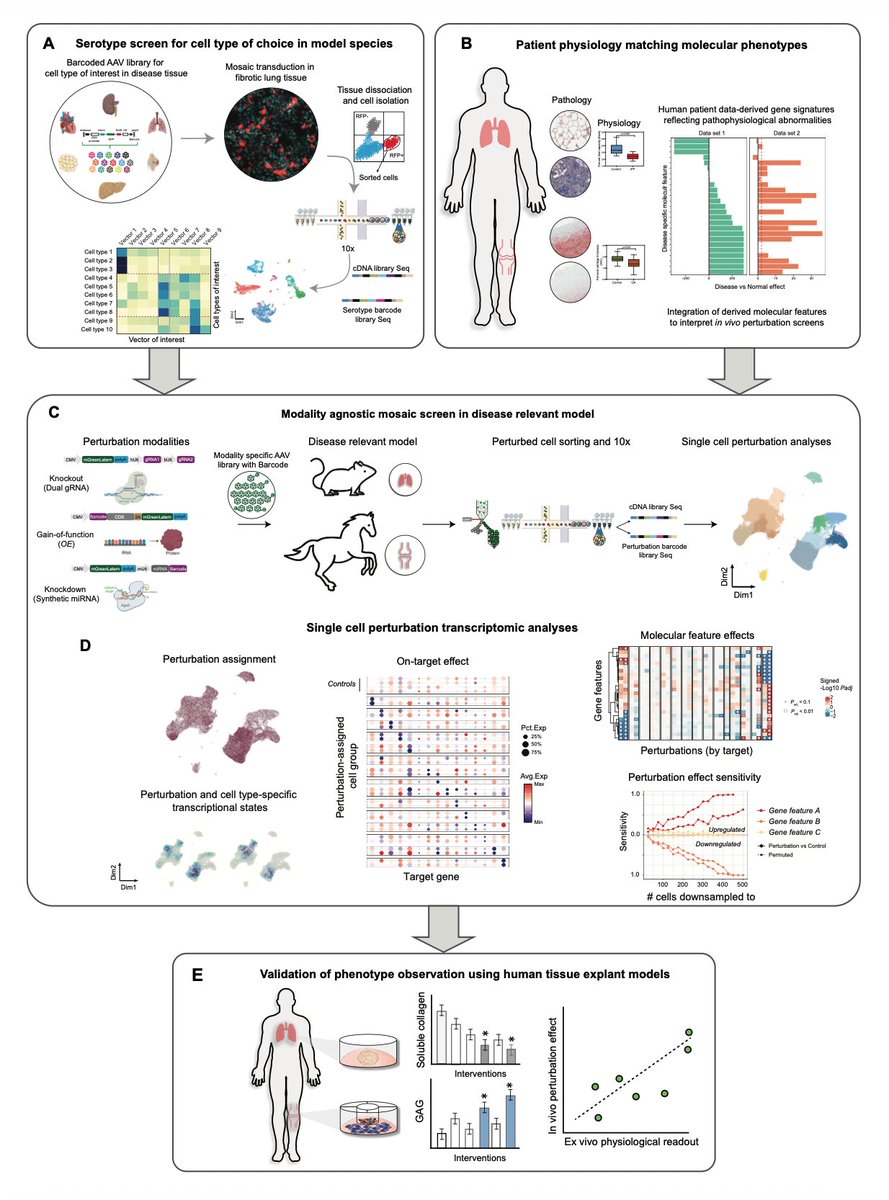
 Martin Borch Jensen @MartinBJensenFinding new medicines is getting more and more expensive, and AI won't help much unless we can generate physiological data at scale. In our new preprint, @GordianBio extends the progress of the functional genomics community to run pooled in vivo screens at scale, in a way that answers questions about physiology and therapeutic potential. We show screens in mice and horses, fibrotic and degenerative disease, with a framework for physiological predictions validated in human ex vivo tissues. Very proud of @v_sontake, @vkartha88, Neety and the rest of the team. Tweetorial follows:0101.7K
 Finding new medicines is getting more and more expensive, and AI won't help much unless we can generate physiological data at scale. In our new preprint, @GordianBio extends the progress of the functional genomics community to run pooled in vivo screens at scale, in a way that answers questions about physiology and therapeutic potential. We show screens in mice and horses, fibrotic and degenerative disease, with a framework for physiological predictions validated in human ex vivo tissues. Very proud of @v_sontake, @vkartha88, Neety and the rest of the team. Tweetorial follows:
 95820039.5K
- Matter Bio@matterbioOur CEO Chris Bradley had a great conversation with the Free Radicals Podcast1756812K
- Matter Bio@matterbioMatter BioRT @MAstronomers: A living piece of history is swimming beneath the Arctic ice. This Greenland shark has been alive since 1627. It was born before Isaac Newton🦈05.6K017.9M
- Matter Bio@matterbioMatter BioRT @LifespanNews: New research raises fresh questions about epigenetic alterations, aging clocks, and strategies for longevity therapies. By: @ArkadyMazin @UCSanDiego @TreyIdeker @unibirmingham @jpsenescence @matterbio @harvardmed @davidasinclair01001.9K
- Matter Bio@matterbioMatter BioRT @bryan_johnson: A cool paper was just published about how biological age is measured. It's pretty technical so I asked an AI tool to explain it as if I am a fifth grader: Imagine Our DNA is Like a Book Think of your DNA like a big book that tells your body how to grow, stay healthy, and repair itself. Over time, this book gets damaged in two main ways: 1. Typos in the Words: These are called mutations, where the letters in the book get changed, making it harder for the body to work properly. 2. Sticky Notes on the Pages: These are called methylation marks. They don’t change the words, but they stick notes on the book’s pages, telling your body which parts to pay attention to or ignore. Scientists have been studying these two types of damage separately to understand why we age, but this new study shows they’re connected—like the typos and sticky notes actually affect each other! Science summary New study discovers a mechanism unifying the two main theories of DNA-related aging, findings pave the way to improving the way biological age is measured, and emphasize the importance of a universal approach to tackling aging. Conclusion These findings unify two theories of aging that are still perceived as competing or non-compatible, and offer an avenue for developing a next generation of aging clocks that take both DNA-mutation and DNA-methylation phenomenon into account to generate better predictions of biological age. Details As we age we accumulate both mutations in our DNA that change its sequence, and epigenetic changes including DNA-methylation that alter gene expression in the cells without directly changing the DNA sequence. Both phenomena have been used to explain aging, with each being at the center of older and newer theories of aging. More recently epigenetic changes and especially DNA methylation have been at the center of attention, as they have yielded a very reliable group of epigenetic biological aging clocks that can predict health, lifespan, and mortality very reliably. The recent study aimed to explore potential mechanistic links between somatic mutations and DNA-methylation changes in the context of biological aging. Former functional links have been described, for example, a mutation that deactivates the TET1 enzyme responsible for removing methyl groups from the DNA associated with hypermethylation of its DNA targets. This study went further to explore a basic biochemical link, when methylation occurs on the CpG groups it renders them sensitive to mutations, so they are more likely to mutate with the C turning to T. Once mutated the CpG location turns into TpG, which is not prone to methylation. So in a way a methylation drives mutation, but once mutated a position is not available for methylation anymore. The study provided evidence for this, showing that increased mutation rate for a particular CpG coincided with decreased methylation. It gets more interesting as the group discovered a wider-association between somatic mutations and methylation patterns for the entire region of the genome surrounding the mutation. Somatic mutations can increase or decrease methylation in their entire region of the DNA, so that a single mutation can affect methylation patterns up to a distance of 20kb from the actual mutation position. A triangular relationship was uncovered in which methylation can directly drive mutation in the same CpG position, while a mutation directly prevents methylation in the same CpG while unlocking wide methylation changes for its entire region of the DNA. Based on this two biological aging clocks were developed and compared, one based on methylation-driven mutations (mutations occurring at methylation-prone CpG positions) and the other epigenetic bases. The mutation aging clock showed high correlation with the epigenetic clock, and with other commonly used epigenetic aging clocks. The degree of reliability and precision across tissues was also comparable between the mutation based and epigenetic based clocks.0680295K
- Matter Bio@matterbioMatter BioRT @LongevityTech: Matter Bio lands seed funding for #longevity therapeutics that preserve genomic integrity... @matterbio targets clinical trials of treatments designed to counter the damage incurred by our #genome as we #age. @geochurch #investment #biotech #DNA0702.3K
- Matter Bio@matterbioMatter BioRT @jay_azhang: Hosted a meetup in NYC with some of my favorite thinkers & biohackers. We covered some interesting stuff: - Drug discovery is broken.. rats/mice are terrible models for human biology - Biohackers may be the future of drug discovery. Its happening but regulation prevents sharing of self-experimentation. - Society is robbing people of the chance to be a hero. Should let humans volunteer to test compounds on themselves + coordinate to get max useful data - Frontline/first-line treatments for most non-urgent things in medical system bad - Post-finasteride syndrome (PFS) and the dangers of DHT blockers - Talked about @drmichaellevin work and interventions at level of bioelectric network. Some suggested omega-3 maxxing in order to modulate ion channel activity - @matterbio working on cheap/accurate tests to gauge somatic point mutations, lots of applications here - Peptides & other compounds like Cerebrolysin, PEPCK, Noopept, 9-me-bc, BPC-157, follistatin gene therapy. Lots of promise - How interesting Prospera and Palestra are (@functi0nZer0) - Irish ancestry and the melanin<>dopamine<>schizophrenia link - Artificial tetrachromacy, IVG, androgen receptor expression0202K
- Matter Bio@matterbioMatter BioRT @adamgries: Read my story if you want to live For 17 years I built tech companies, reached 80M users & drove 5 M&As. Since an exit in 2021, I’ve focused on ending aging & death It's why @realnathancheng & I founded To follow the herd, Stop here. To live, Read on.0540104K
- Matter Bio@matterbioFantastic overview from @adanguyenxAda Nguyen @adanguyenxIntroducing: The Longevity Biotech Landscape. An overview of all different scientific approaches as well as unexplored strategies in the field.014568
 Introducing: The Longevity Biotech Landscape. An overview of all different scientific approaches as well as unexplored strategies in the field.
 20122560115K
- Matter Bio@matterbioMatter BioRT @agingdoc1: The DREAM complex functions as conserved master regulator of somatic DNA-repair capacities @ArBujarrabal & @schumacherbj et al. "DREAM complex transcriptionally represses essentially all DNA-repair systems..." @NatureSMB @CECAD_ @UKKoeln @UniCologne0604.1K
- Matter Bio@matterbioMatter BioRT @vita_dao: 🤩 We are excited to announce that we've closed a $4.1m fundraising round🌱 from strategic members including: • @pfizer Ventures • @ShineCapitalNYC • @L1Digital_ • @beakerdao • @SpaceshipDAO • @balajis • @bettslacroix and many more 🧵02350355K
- Show more posts