Mitchell✓

@mitchellsniffle

Consumer investor @ MetaDAO. Helped 26 companies raise $46M in 1 year. Talk to founders all day. DM what you're building.

5.2K Following14.7K Followers9.7K Posts
  1. Mitchell✓@mitchellsniffle
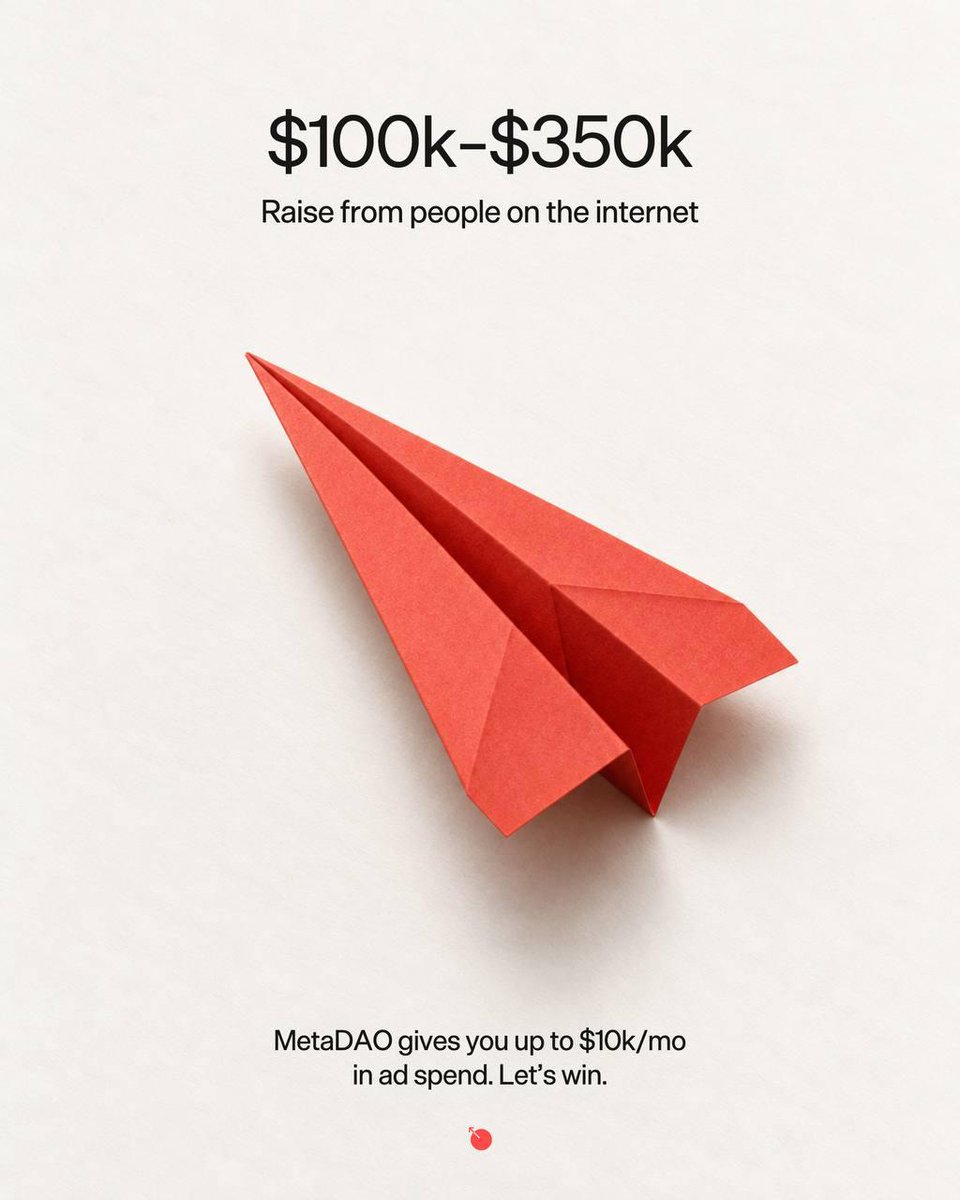
    Looking to fund 2-3 app builders with $100k-$350k. Must haves: -All in on your app -Willing to build in public -Have 10 or more paying customers We'll also provide up to $10k/mo in ad spend, support from our design team, and thousands of people who want to see you win. DM me!
    Download
    359861.3K164K
  2. Mitchell✓@mitchellsniffle
    Some personal learnings over the past several years (just turned 29)
    Download
    222882K
  3. Mitchell✓@mitchellsniffle
    Some tips on how to think about fundraising
    Download
    41361.2K
  4. Mitchell✓@mitchellsniffle
    Mitchell
    RT @startupoppa: underrated performance hack: figure out what interests you, and push your thoughts and work in public. your network and career will form around you.
    020105
  5. Mitchell✓@mitchellsniffle
    Mitchell
    RT @mitchellsniffle: The downside of doing something different is that it is not normal. Before an idea is proven, people will call it crazy, stupid, or unnecessary. They will tell you to be more realistic. They will ask why you do not just do things the normal way. But the normal way is already obvious. It is already comfortable. It is not contrarian and that is why it rarely creates anything of substantial value. It takes a revolutionary idea and a team insane enough to keep going while everyone else is still asking why. MetaDAO.
    0903.7K
  6. Mitchell✓@mitchellsniffle
    Boom
    MetaDAO @MetaDAOProject
    We're excited to announce that @overdotcomputer will be the next curated raise on October 29th. Raise page:
    143874K
  7. MetaDAO@MetaDAOProject
    We're excited to announce that @overdotcomputer will be the next curated raise on October 29th. Raise page:
    Download
    302327441.8K
  8. Mitchell✓@mitchellsniffle
    This guy did 3M views from 26 reels. 1,200 videos a month. AI just made views basically free.. So when a founder pitches me saying they've generated millions of views, that's not the signal anymore. What I look at instead: - view → install → trial → paid - D1 / D7 retention on that traffic - % of revenue actually from this channel - win rate (how many of the 26 clear a useful bar) - what happens when TT / IG compresses or bans hit Volume is table stakes now. Conversion is the moat
    Ernesto Lopez @ErnestoSOFTWARE
    Holy sh*t... these explainer videos are literally a goldmine. 3,000,000 views with 26 reels on videos 100% produced by AI you can now vibe code attention with opus 5.5 + the right workflow run a loop Literally until your mac blows up And you have 1200 videos for the month Then post the videos across 20 accounts 1 account = TT ,YT and IG if you do this level of volume, it will literally be impossible for your app not to make atleast $10-$40k/mo unless you are producing slop.
    82432.7K
  9. Ernesto Lopez✓@ErnestoSOFTWARE
    Holy sh*t... these explainer videos are literally a goldmine. 3,000,000 views with 26 reels on videos 100% produced by AI you can now vibe code attention with opus 5.5 + the right workflow run a loop Literally until your mac blows up And you have 1200 videos for the month Then post the videos across 20 accounts 1 account = TT ,YT and IG if you do this level of volume, it will literally be impossible for your app not to make atleast $10-$40k/mo unless you are producing slop.
    Download
    103360955.4K
  10. Mitchell✓@mitchellsniffle
    This is the best Meta ads breakdown from an app founder I've seen this year. The insane part: Pep did ~$170K in August and still wasn't profitable. When a founder tells me paid is working, these are some questions I ask: 1. What event are you optimizing for? 2. What's your download-to-paid? 3. How many new creatives do you ship a week? 4. What does a creative actually cost you? 5. What's your plab if your #1 channel dies tomorrow? Revenue is easy to show. Profitable, repeatable CA is what gets funded
    Cedric Roberge @Cedric_Roberge
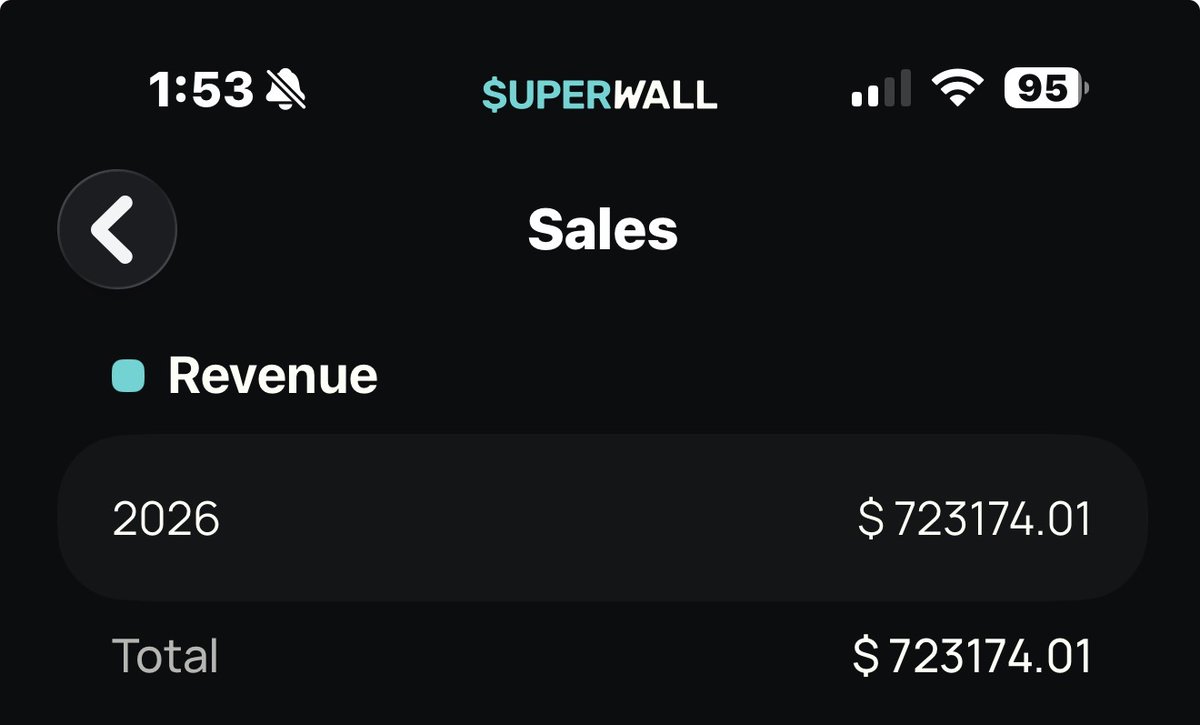
    My app Pep AI has generated over $700,000 in revenue in less than 8 months. Halfway through that run, our #1 marketing channel basically got destroyed. Influencer marketing had driven a huge part of our growth, but creators in our niche started getting restricted on TikTok and Instagram, videos stopped getting distribution, and some creators were even losing their accounts. We had to find another way to keep scaling. That’s when we started taking Meta ads seriously. Here’s what I’ve learned and what can possibly work for your app too: 1. Start with proven winners If you already have influencer or organic videos that performed well, start there. Take your best performing videos and give them some initial spend. Don’t immediately pay for 100 brand new ads when you already have content that has proven people will stop and watch. Also make sure your funnel actually works before you scale. Meta won’t fix a bad onboarding flow, paywall, or offer. If people already aren’t converting, paid traffic can just make you lose money faster. 2. Optimize for the right event Optimize for the deepest conversion event you have enough data for. If you have a free trial, that may mean trial starts. If you have a hard paywall and enough purchase volume, optimize for purchases. I generally wouldn’t optimize only for installs if your actual goal is paying users. Meta will optimize toward people it predicts are more likely to complete the event you give it. If you ask for installs, it’ll find installers. If you give it a stronger downstream signal, it can optimize toward better customers. 3. Give Meta time, but don’t blindly burn money Meta takes time to learn. You probably won’t launch a campaign and instantly get an amazing cost per trial or purchase. Sometimes campaigns improve over several days or weeks as Meta gets more conversion data. But that doesn’t mean you should let terrible ads run forever hoping they magically recover. I learned this the expensive way. In August, Pep AI did around $170,000 in revenue and still wasn’t profitable. Yes, many of those subscribers may generate additional LTV through future renewals, but when you’re bootstrapping, you can’t rely on future renewals to fix bad cash flow today. We tightened things up, cut what wasn’t working, scaled our winners, and kept testing new creative. The next month we still did over six figures in revenue, but our ads were profitable. 4. Separate scaling from testing We keep proven ads separate from a lot of our experimental creative so the existing winners don’t immediately take all the spend. This gives new concepts enough delivery to actually learn something from them. At the same time, don’t overcomplicate your account with dozens of tiny campaigns and ad sets. Meta still needs enough conversion data to optimize. The goal is simple: give your winners room to scale while constantly searching for the next winner. 5. Track everything We use AppsFlyer and it has worked extremely well for us. You need to know which campaigns and creatives are driving installs, trials, purchases, and revenue. Before spending heavily, test your tracking end-to-end. Make a real trial or purchase and make sure the event is showing up correctly. Spending thousands while your conversion tracking is broken is an unbelievably expensive mistake. 6. How we find new ad concepts Study the companies that are better than you. Go through Meta Ad Library and look at apps in your niche that appear to be scaling. You can’t see their ROAS, so don’t assume every ad is profitable, but if a company keeps running the same concept or repeatedly makes variations of it, that can be a useful signal. Then look outside your niche. Find consumer apps that are growing quickly and study their ads too. Don’t copy the exact creative. Copy the psychology and framework behind it. 7. Make ads feel like content Some of the best-performing ads don’t immediately feel like ads. Don’t open with your logo and spend 30 seconds listing features. Teach something. Compare something. Tell a story. Show a problem. Then introduce your product as the solution. You’re trying to earn the viewer’s attention before asking them to care about your app. 8. Test concepts AND hooks There’s a big difference between a new concept and a new variation. A concept is the actual idea behind the ad. A variation might just be the same video with a different hook, creator, caption, or first few seconds. You need both. We often take one core concept and create 5 different hooks for the beginning of the video. So one testing batch might be: 5 concepts × 5 hooks = 25 creatives. The hook alone can completely change performance. But don’t only make variations of your winners. Keep testing completely different angles too. One person might respond to a comparison. Another might respond to a creator talking directly to camera. Another might respond to a screen recording or story. You want multiple ways to sell the same product. 9. Where we get the content made We currently use Trybe and SideShift. For faster experimental concepts, we may pay around $40 per video with multiple hook variations. For concepts we have more confidence in and want higher production quality on, we may pay around $100 per video with multiple hooks. Those are just the rates that have worked for us. You can also source creators yourself by messaging people in your niche on TikTok and Instagram. You can make the videos yourself or pay friends. The important part is building a constant pipeline of new creative. Finding one winning ad does not mean you’re done. Creatives eventually fatigue, so you need a system where new concepts and variations are constantly being produced, tested, killed, or scaled. You also need to have a place to keep all content stored. We use frame for this and have everything organized in a way where we know exactly where every ad concept is. This makes it very easy when dealing with hundreds of ad concepts. One more thing: reputation matters on creator platforms. When you’re starting, you may need to begin with simpler campaigns, build good reviews for your brand account, and prove that you’re easy to work with. Or have a professional Instagram that has lots of followers and is verified. Then it gets much easier to attract better creators. 10. Final Thoughts This entire system is how we continued scaling Pep AI after our #1 marketing channel basically got destroyed. If influencer marketing still works affordably in your niche, keep doing it. Influencer marketing + Meta ads together can be extremely powerful. But Meta has become one of the best tools we’ve found for consistently scaling the app. You do need a testing budget you’re comfortable losing. But every dollar should be buying information. If you’re spending money and you aren’t learning anything, you’re not testing. You’re just losing money. Once you start figuring out the right offer, creative angles, hooks, and conversion signals, Meta can completely change the scale of your app. It helped us continue doing over $100,000 a month after the marketing channel we relied on most stopped working. Hope this helps. Next up for Pep AI: We will be trying UGC and influencer marketing again. We hope to find a way that works for us and I will be documenting it. If you made it this far thank you for reading and I will be posting more content soon. I had to stop for awhile when we had to fix our marketing, but I will be posting a lot more so I appreciate the support. If you have any questions, feel free to comment, DM me, or book a call through the link in my bio.
    2271009.1K
  11. Cedric Roberge✓@Cedric_Roberge
    My app Pep AI has generated over $700,000 in revenue in less than 8 months. Halfway through that run, our #1 marketing channel basically got destroyed. Influencer marketing had driven a huge part of our growth, but creators in our niche started getting restricted on TikTok and Instagram, videos stopped getting distribution, and some creators were even losing their accounts. We had to find another way to keep scaling. That’s when we started taking Meta ads seriously. Here’s what I’ve learned and what can possibly work for your app too: 1. Start with proven winners If you already have influencer or organic videos that performed well, start there. Take your best performing videos and give them some initial spend. Don’t immediately pay for 100 brand new ads when you already have content that has proven people will stop and watch. Also make sure your funnel actually works before you scale. Meta won’t fix a bad onboarding flow, paywall, or offer. If people already aren’t converting, paid traffic can just make you lose money faster. 2. Optimize for the right event Optimize for the deepest conversion event you have enough data for. If you have a free trial, that may mean trial starts. If you have a hard paywall and enough purchase volume, optimize for purchases. I generally wouldn’t optimize only for installs if your actual goal is paying users. Meta will optimize toward people it predicts are more likely to complete the event you give it. If you ask for installs, it’ll find installers. If you give it a stronger downstream signal, it can optimize toward better customers. 3. Give Meta time, but don’t blindly burn money Meta takes time to learn. You probably won’t launch a campaign and instantly get an amazing cost per trial or purchase. Sometimes campaigns improve over several days or weeks as Meta gets more conversion data. But that doesn’t mean you should let terrible ads run forever hoping they magically recover. I learned this the expensive way. In August, Pep AI did around $170,000 in revenue and still wasn’t profitable. Yes, many of those subscribers may generate additional LTV through future renewals, but when you’re bootstrapping, you can’t rely on future renewals to fix bad cash flow today. We tightened things up, cut what wasn’t working, scaled our winners, and kept testing new creative. The next month we still did over six figures in revenue, but our ads were profitable. 4. Separate scaling from testing We keep proven ads separate from a lot of our experimental creative so the existing winners don’t immediately take all the spend. This gives new concepts enough delivery to actually learn something from them. At the same time, don’t overcomplicate your account with dozens of tiny campaigns and ad sets. Meta still needs enough conversion data to optimize. The goal is simple: give your winners room to scale while constantly searching for the next winner. 5. Track everything We use AppsFlyer and it has worked extremely well for us. You need to know which campaigns and creatives are driving installs, trials, purchases, and revenue. Before spending heavily, test your tracking end-to-end. Make a real trial or purchase and make sure the event is showing up correctly. Spending thousands while your conversion tracking is broken is an unbelievably expensive mistake. 6. How we find new ad concepts Study the companies that are better than you. Go through Meta Ad Library and look at apps in your niche that appear to be scaling. You can’t see their ROAS, so don’t assume every ad is profitable, but if a company keeps running the same concept or repeatedly makes variations of it, that can be a useful signal. Then look outside your niche. Find consumer apps that are growing quickly and study their ads too. Don’t copy the exact creative. Copy the psychology and framework behind it. 7. Make ads feel like content Some of the best-performing ads don’t immediately feel like ads. Don’t open with your logo and spend 30 seconds listing features. Teach something. Compare something. Tell a story. Show a problem. Then introduce your product as the solution. You’re trying to earn the viewer’s attention before asking them to care about your app. 8. Test concepts AND hooks There’s a big difference between a new concept and a new variation. A concept is the actual idea behind the ad. A variation might just be the same video with a different hook, creator, caption, or first few seconds. You need both. We often take one core concept and create 5 different hooks for the beginning of the video. So one testing batch might be: 5 concepts × 5 hooks = 25 creatives. The hook alone can completely change performance. But don’t only make variations of your winners. Keep testing completely different angles too. One person might respond to a comparison. Another might respond to a creator talking directly to camera. Another might respond to a screen recording or story. You want multiple ways to sell the same product. 9. Where we get the content made We currently use Trybe and SideShift. For faster experimental concepts, we may pay around $40 per video with multiple hook variations. For concepts we have more confidence in and want higher production quality on, we may pay around $100 per video with multiple hooks. Those are just the rates that have worked for us. You can also source creators yourself by messaging people in your niche on TikTok and Instagram. You can make the videos yourself or pay friends. The important part is building a constant pipeline of new creative. Finding one winning ad does not mean you’re done. Creatives eventually fatigue, so you need a system where new concepts and variations are constantly being produced, tested, killed, or scaled. You also need to have a place to keep all content stored. We use frame for this and have everything organized in a way where we know exactly where every ad concept is. This makes it very easy when dealing with hundreds of ad concepts. One more thing: reputation matters on creator platforms. When you’re starting, you may need to begin with simpler campaigns, build good reviews for your brand account, and prove that you’re easy to work with. Or have a professional Instagram that has lots of followers and is verified. Then it gets much easier to attract better creators. 10. Final Thoughts This entire system is how we continued scaling Pep AI after our #1 marketing channel basically got destroyed. If influencer marketing still works affordably in your niche, keep doing it. Influencer marketing + Meta ads together can be extremely powerful. But Meta has become one of the best tools we’ve found for consistently scaling the app. You do need a testing budget you’re comfortable losing. But every dollar should be buying information. If you’re spending money and you aren’t learning anything, you’re not testing. You’re just losing money. Once you start figuring out the right offer, creative angles, hooks, and conversion signals, Meta can completely change the scale of your app. It helped us continue doing over $100,000 a month after the marketing channel we relied on most stopped working. Hope this helps. Next up for Pep AI: We will be trying UGC and influencer marketing again. We hope to find a way that works for us and I will be documenting it. If you made it this far thank you for reading and I will be posting more content soon. I had to stop for awhile when we had to fix our marketing, but I will be posting a lot more so I appreciate the support. If you have any questions, feel free to comment, DM me, or book a call through the link in my bio.
    Download
    511330429.7K
  12. Mitchell✓@mitchellsniffle
    This founder just raised $250k in like 5 seconds 😭
    Download
    481355179.1K
  13. Mitchell✓@mitchellsniffle
    Life Changes Every October
    92782.4K
  14. Mitchell✓@mitchellsniffle
    A profitable app can still be capital constrained.. and I want to fund those. There's a difference between needing money to survive and knowing how you'd use more of it to grow. Are your ads working really well, and you need some additional $$ to maximize revenue? Is your influencer strategy working, so you just need to bring on more of them? If your app is showing signs of life like this, I would LOVE to fund you
    122562.2K
  15. Mitchell✓@mitchellsniffle
    I've spoken to 100+ app builders in the last month who are looking to raise money. Most of them will NEVER get funding. Here are a few reasons why: A slightly differentiated product isn't going to cut it. You're in the app game.. you should know product is not the moat. Study Cal AI. If you are not the ideal user for your own app, it's a red flag. At this point I can't count how many fitness apps I've spoken to where the founders don't go to the gym, or peptide apps where they don't actually know anything about them. You need to be authentic and know your customer inside and out, ideally by being one of them yourself. You should be able to tell me the ins and outs of everything you've done from the beginning re: distribution. What's worked, what hasn't, which platforms work best, your ROAs, your CAC, what you want to double down on, etc. If you're an app founder who actually knows what they're doing, please DM me so I can give you $100k
    3291285.6K
  16. Mitchell✓@mitchellsniffle
    If you’re a founder who never knows what to post, an easy way to start is with the work you’re already doing. I promise people will find it valuable. Things like customer questions, feature you scrapped, something that surprised you after launch, feedback from investors, etc etc. A few ways I think to turn that into posts people actually get value out of: After you have a customer/investor/team call, post about how it went and what you learned. If it helped you think about the product or your company, explain why! When you ship something, talk about it. Doesn't matter if it's a quick demo, screenshot, whatever. This is such free content to post about. Share the things you did that DIDN'T work too. Authenticity is key when trying to get other humans to care about what you're doing. What did you try? What happened? What are you changing? Give others information to learn from and get value out of. Pick an audience you truly understand and identify with. Never change it. That way, you can do so many different content ideas, but the audience stays the same. You will build a community this way. Reply to every comment you get. Reach out to everyone who liked your post thanking them for liking it. It goes a long way
    162802.4K
  17. Mitchell✓@mitchellsniffle
    I moved back to New York to fund the next generation of app builders. After four months in SF and a lot of conversations with our customers, I’m convinced the best consumer app talent is on the East Coast (NYC / Miami). We primarily invest in consumer companies, so here I am. If you're building an app, I'd love to chat
    Download
    3151975.6K
  18. Mitchell✓@mitchellsniffle
    If you're feeling stuck, watch this
    Download
    183893.2K
  19. Mitchell✓@mitchellsniffle
    Is building in public dead? My thoughts
    Download
    81592.1K
  20. Mitchell✓@mitchellsniffle
    Raise fast. Scale FASTER. DM me to get funded
    Download
    124652.4K
  21. Mitchell✓@mitchellsniffle
    We've helped 26 companies raise $46,000,000 in the past year at @MetaDAOProject. Here are a a few takeaways for the founders out there from the past ~6 months of leading investing at MetaDAO: You need one of three things in order to get investors interest: something net-new (0-1), a distribution moat, or a 100x improvement vs your incumbents, you need to go back to the drawing board because it is unlikely you will raise a round Founders say too many words on calls. That lessens your power. Your language should be concise about what you're doing, why you're doing it, and a compelling reason as to why you're going to win. If you're raising to figure out distribution, show me what you've already tried. I need to see that you're learning and iterating FAST. You don't need a fully solved growth engine, but it's hard to get comfortable funding a large marketing budget when you haven't run a small acquisition experiment. Don't undersell traction because the number is small. 10 people choosing to use an early product is great!! I want to know who they are, what they're doing, and whether they're coming back. Help me understand why they care
    13101586.4K
  22. Mitchell✓@mitchellsniffle
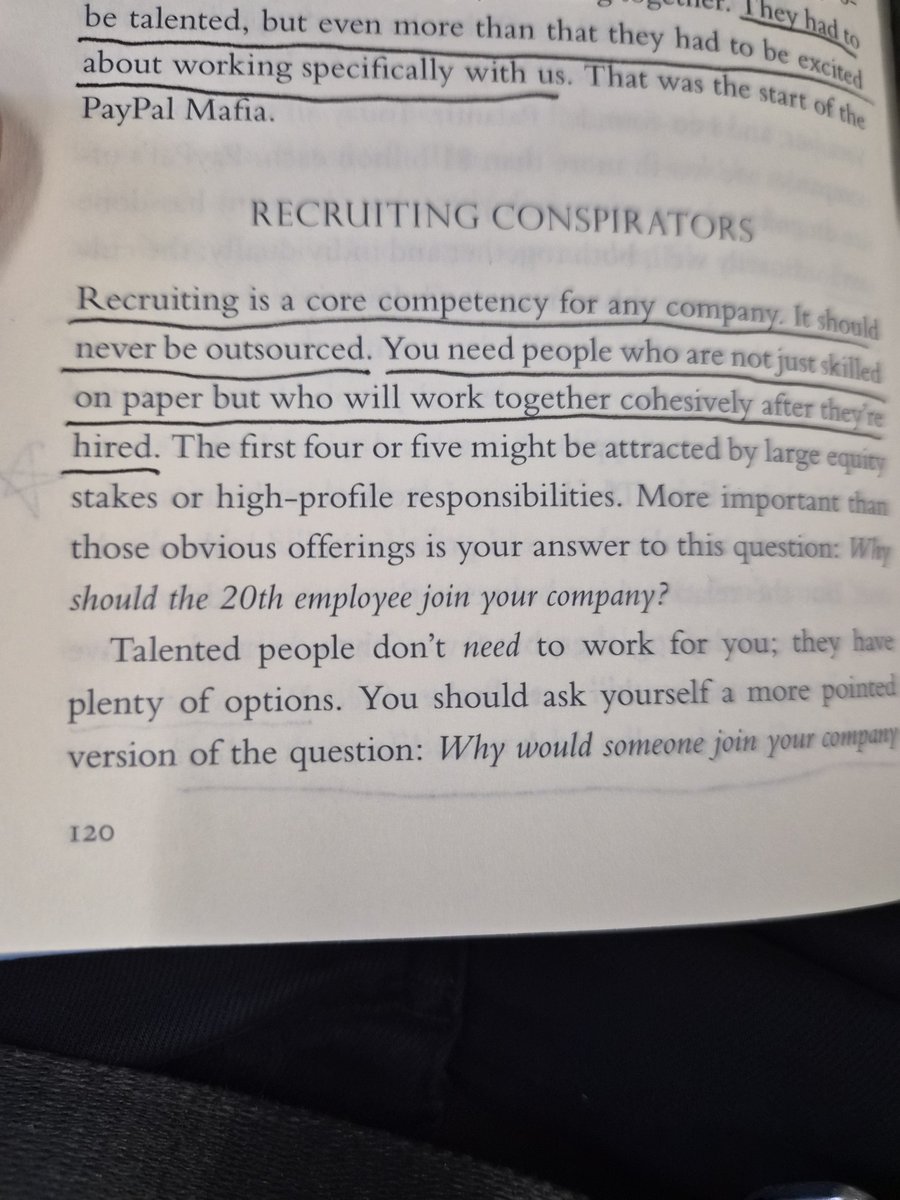
    Peter Thiel's thoughts for all my recruiters out there
    Download
    31371.7K
  23. Mitchell✓@mitchellsniffle
    Mitchell
    RT @emilylai: A visual adventure on payments and how money moves:
    Download
    Emily Lai @emilylai
    Anyone here work in payments? Sneak peak of a side project I’ve been building to understand payment orchestration layers and the capital stack. Would love to get feedback before I push it live!
    070107
  24. Emily Lai✓@emilylai
    Anyone here work in payments? Sneak peak of a side project I’ve been building to understand payment orchestration layers and the capital stack. Would love to get feedback before I push it live!
    Download
    37011915.9K
  25. Show more posts