Hubble✓

@NASAHubble

The official X account for the NASA Hubble Space Telescope, managed and operated by NASA's Goddard Space Flight Center.
44 Following8.9M Followers8.5K Posts
  1. Hubble✓@NASAHubble
    Hubble (along with ground-based telescopes) revealed that the expansion rate of our universe is accelerating! Soon, @NASARoman will study the “dark energy” behind this expansion with its large field of view and infrared vision.
    Download
    532091.3K66.1K
  2. Hubble✓@NASAHubble
    Posts @NASAHubble
    Its treasure trove of data will include thousands of exploding stars and millions of galaxies, tracing the universe’s expansion across cosmic history! Hubble's key observations led to dark energy's discovery (even helping earn a Nobel prize in physics!) and the mission will work with Roman to continue investigating this enigma:
    3139414.5K
  3. Hubble✓@NASAHubble
    Posts @NASAHubble
    @NASARoman As we gear up for its first images, we'll share more here on how Roman and Hubble bring different superpowers to astronomy:
    11913915.9K
  4. Hubble✓@NASAHubble
    Hubble
    RT @NASAScience_: NASA is seeking industry input on future in-space servicing options for @NASAHubble, including a possible orbit boost to extend its science mission, future servicing capabilities, or end-of-mission planning. Responses to the RFI are due Nov. 30:
    06705K
  5. Hubble✓@NASAHubble
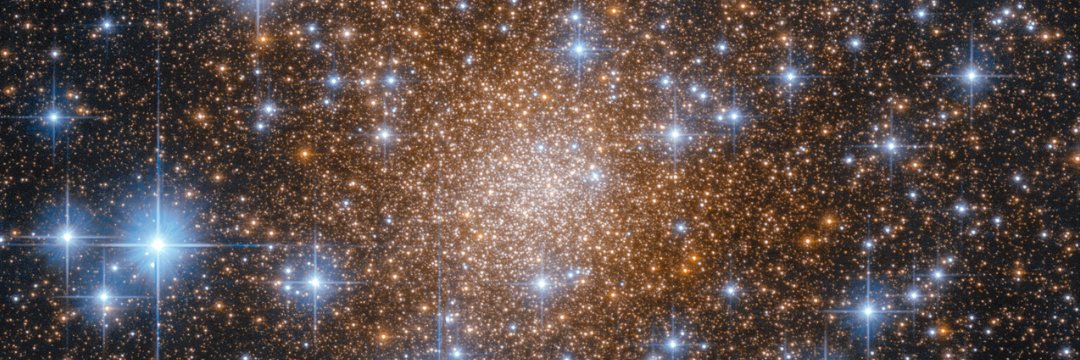
    Cosmic pixie dust 🪄 This new Hubble image shows M30, which is a globular cluster – a roughly spherical collection of stars held together by their mutual gravitational attraction. Find out more:
    Download
    493001.7K52.2K
  6. Hubble✓@NASAHubble
    📍IRAS 05437+2502 🏠 Constellation Taurus 🌈 Visible & near-infrared light As a “snapshot” observation, this image of a cosmic site full of dark clouds and bright stars was slotted into Hubble's busy schedule as a way to maximize efficiency:
    Download
    492421.4K51.3K
  7. Hubble✓@NASAHubble
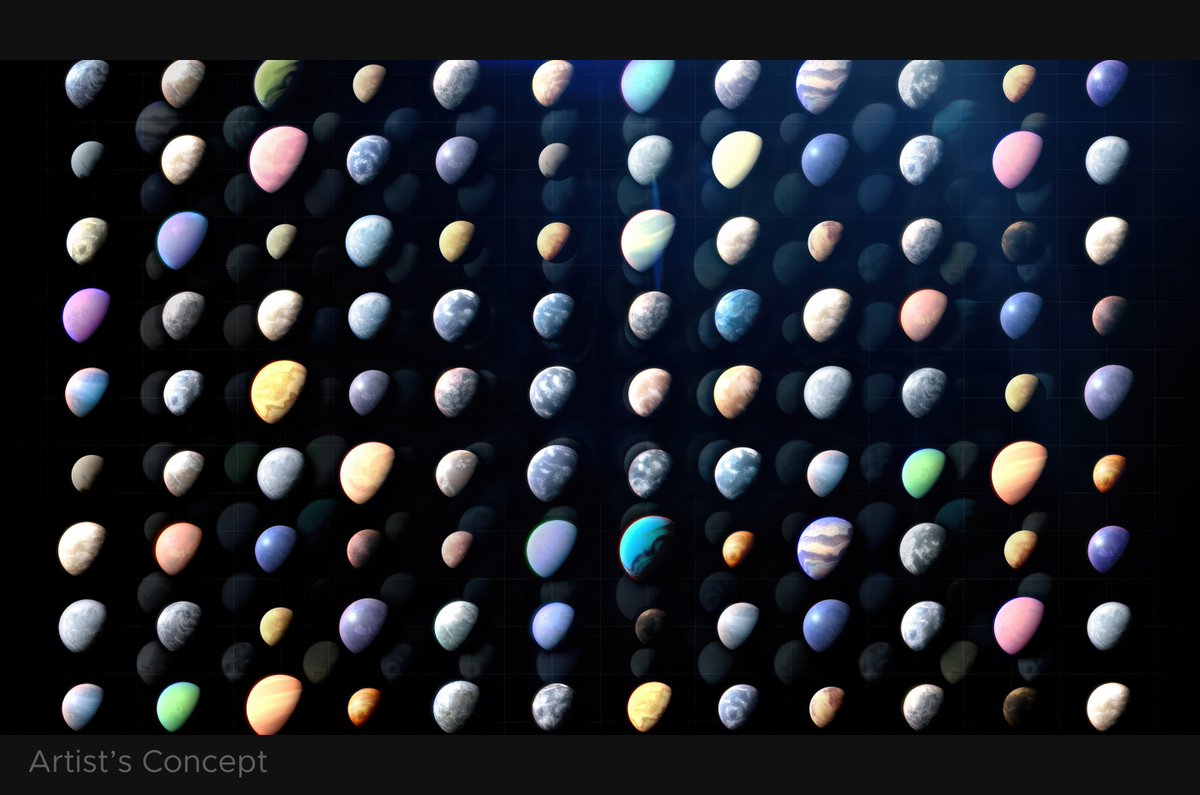
    The ultimate group project: studying worlds beyond our own. As we get closer to the first images from @NASARoman, a long list of science objectives await. One way Roman will team up with Hubble is by the different ways the missions will study exoplanets. ⬇️
    Download
    331741K55.1K
  8. Hubble✓@NASAHubble
    Posts @NASAHubble
    Roman will likely find hundreds of thousands exoplanets with its remarkable instruments; meanwhile, Hubble’s capabilities allow for analysis of exoplanet atmospheres. This work is part of NASA's search for life elsewhere in the universe. Plus, Roman's coronograph instrument will be able to directly image some larger exoplanets.
    62617916.2K
  9. Hubble✓@NASAHubble
    Posts @NASAHubble
    @NASARoman Explore more of Hubble's role in exoplanet science here ⬇️
    41210713.4K
  10. Hubble✓@NASAHubble
    Where's the oxygen? After researchers studied nearby dwarf galaxies, they realized much of the oxygen they expected to see was missing. Galactic winds from supernova explosions are apparently more effective at removing oxygen than current models predict:
    Download
    642421.5K73.5K
  11. Hubble✓@NASAHubble
    Happy Hubble Halloween! This new image of the Cat's Head Nebula shows a star-forming region with an eerily feline resemblance. Dare to learn more? Start here:
    Download
    984612.9K96.6K
  12. Hubble✓@NASAHubble
    NASA issued a Request for Information to learn more about industry capabilities for in-space servicing to support the agency’s Hubble Space Telescope:
    Download
    392041.3K71K
  13. Hubble✓@NASAHubble
    Beware… space cat! 🐱 Something spooky lurks about 7,500 light-years away. The watchful eyes of Hubble and @NASAWebb captured the Cat’s Head Nebula, just in time for Halloween Eve. This cosmic cat is in the process of forming new stars:
    Download
    1082321.2K81.8K
  14. Hubble✓@NASAHubble
    Hubble
    RT @NASAGoddard: History will never forget the name Captain Picard. Thank you for inspiring the Next Generation of explorers. ✨
    03.8K05.3K
  15. Hubble✓@NASAHubble
    Cat got your telescope? 🐾 Venture into the Cat's Head Nebula, as seen by Hubble and @NASAWebb. Both telescopes observed the nebula across a wide spectrum of light, revealing complementary data on its cosmic activity:
    Download
    633362K101K
  16. Hubble✓@NASAHubble
    Collectively called 2MASX J09133888-1019196, these two galaxies are in the early stages of merging, pulled in by their mutual gravitational attraction. They're still separated by ~130,000 light-years, and reside in the constellation Hydra:
    Download
    472301.5K57.1K
  17. Hubble✓@NASAHubble
    Hubble
    RT @NASAGoddard: Eye see you 👁️ The sonification of the Helix Nebula scans from left to right, where redder colors correspond with lower pitches while bluer colors are associated with higher pitches. It has been called “The Eye of Sauron" for its uncanny and all-seeing appearance.
    029005.6K
  18. Hubble✓@NASAHubble
    Thank you, Swift! ❤️ Though the Neil Gehrels Swift Observatory's mission is at an end, its legacy and extensive collection of data will remain. Swift's discoveries, and the work completed in tandem with Hubble, advanced astrophysics in so many ways. Learn more ⬇️
    NASA Universe @NASAUniverse
    Science operations for our Neil Gehrels Swift Observatory have now ended. With the spacecraft orbiting less than 171 miles (275 kilometers) above Earth, atmospheric drag prevents the satellite’s telescopes from steadily gazing at their cosmic targets. 🧵
    278159746.6K
  19. NASA Universe✓@NASAUniverse
    Science operations for our Neil Gehrels Swift Observatory have now ended. With the spacecraft orbiting less than 171 miles (275 kilometers) above Earth, atmospheric drag prevents the satellite’s telescopes from steadily gazing at their cosmic targets. 🧵
    Download
    147746995.7K
  20. Hubble✓@NASAHubble
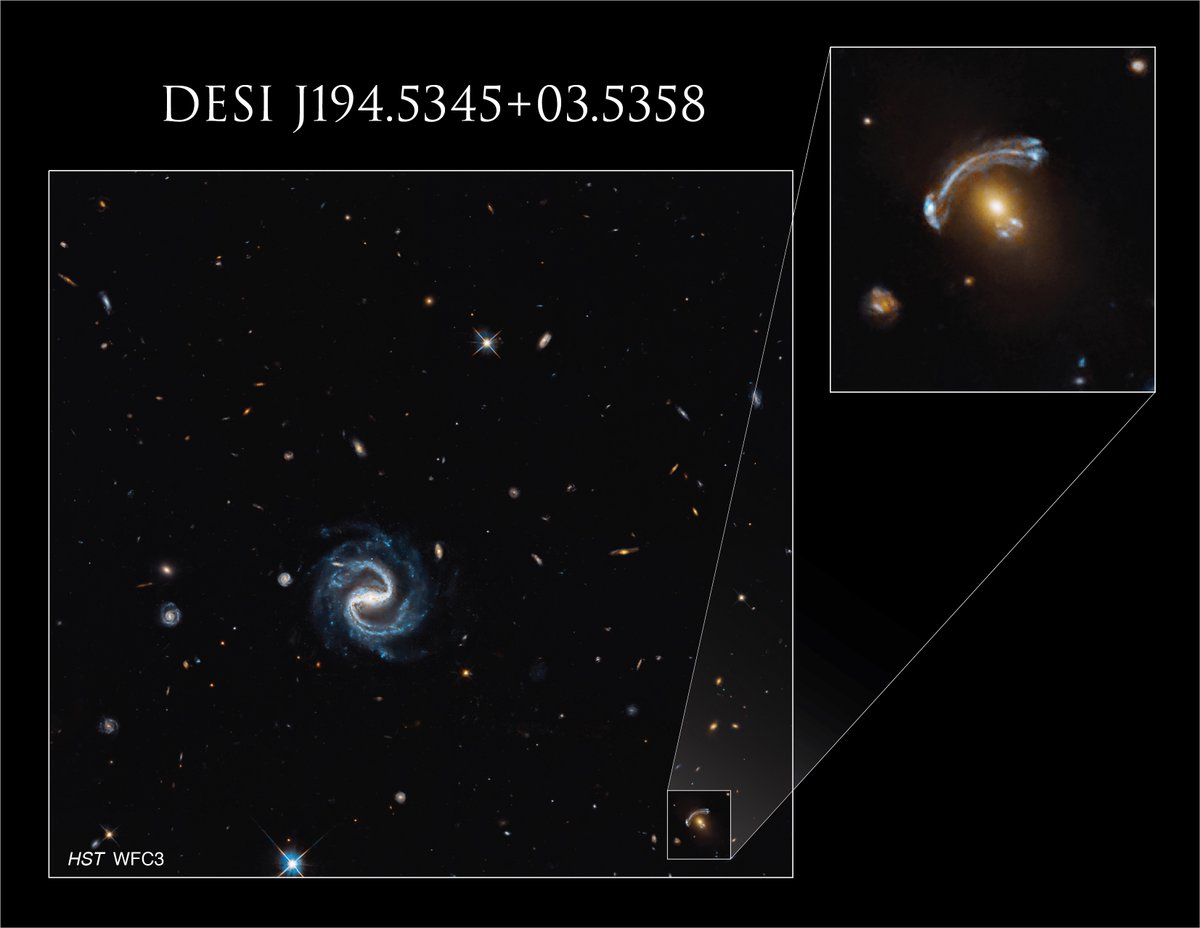
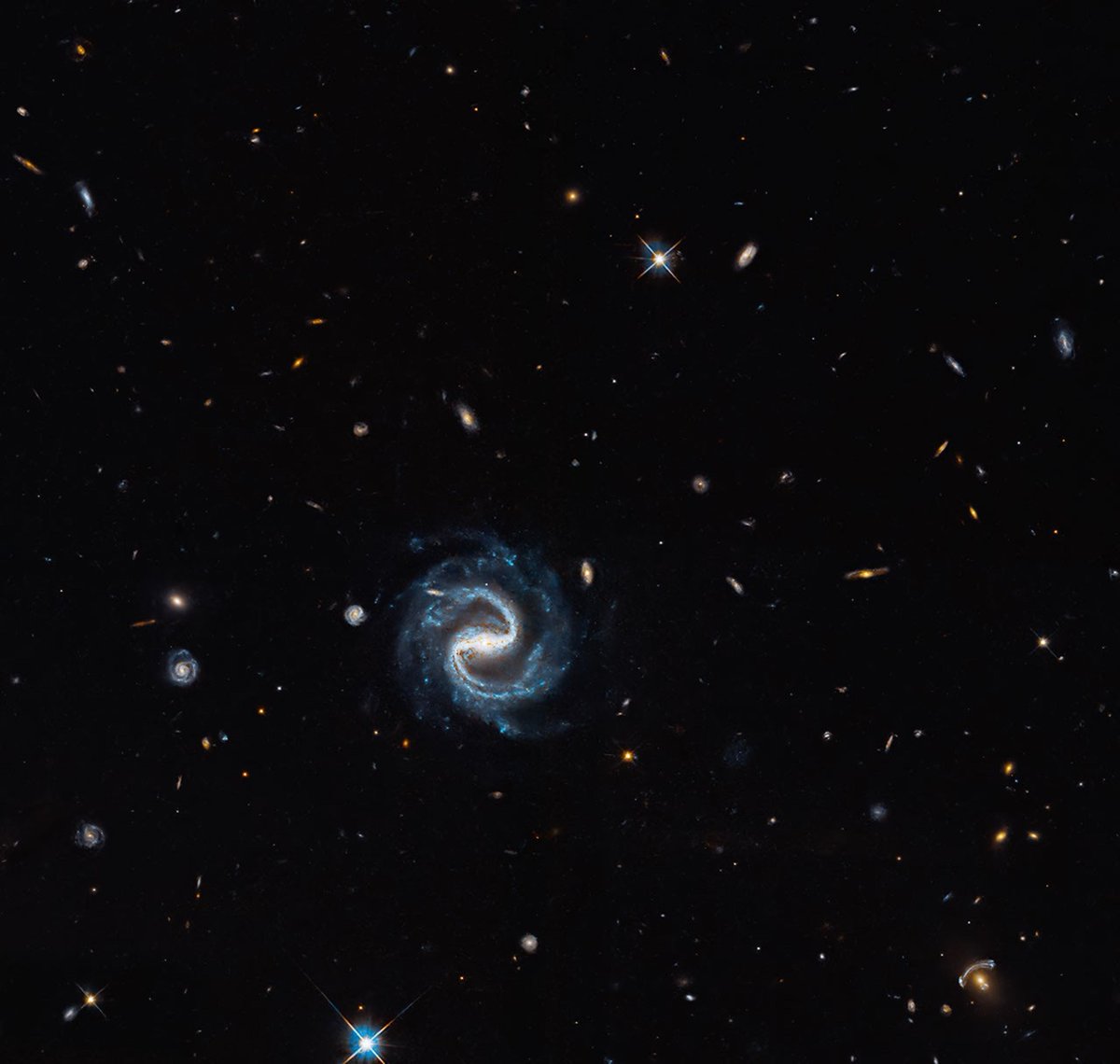
    A gorgeous galaxy marks the spot in this image, but the real treasure is the gravitational lens in the lower-right corner, where a distant background galaxy is being magnified and distorted by the gravity of a closer galaxy:
    Download
    704222.5K81.2K
  21. Hubble✓@NASAHubble
    We know our universe is expanding. But telescopes like Hubble measure an expansion rate that’s faster than predicted, based on models of the early universe. Here’s how @NASARoman will join the quest on cracking the case of this “Hubble Tension” ⬇️
    Download
    591861.1K73.4K
  22. Hubble✓@NASAHubble
    Hubble
    RT @NASAAmes: A cosmic butterfly 🦋 In this shimmering view captured by @NASAHubble, the complexities of the Twin Jet Nebula are seen in striking detail, with lobes of material stretching outward while jets of gas stream from a central star system.
    01.3K05.8K
  23. Hubble✓@NASAHubble
    Posts @NASAHubble
    Hubble observed this lens in preparation for science with the recently launched @NASARoman. While Hubble can only view these gravitational lenses one at a time, Roman’s wide view of the sky will provide a greater sample of these lenses!
    Download
    22214115.6K
  24. Hubble✓@NASAHubble
    Even galaxies need to vent. Because of a prior gravitational interaction with a neighboring galaxy, M82 undergoes super intense star formation. This image shows its "exhaust system" in action, regulating the galaxy's growth by venting gas outwards. ⬇️
    Download
    523462K64.1K
  25. Hubble✓@NASAHubble
    Stellar ingredients 🧑‍🍳 This Hubble view shows a grouping of cosmic dust, made up of a concentration of elements that are responsible for the formation of stars in our galaxy and throughout the universe. Learn more about these "Bok globules":
    Download
    583822.2K57.4K
  26. Hubble✓@NASAHubble
    Posts @NASAHubble
    In this image, @ChandraXray's data (blue) highlight superwinds of million-degree gas blowing out of the galactic disk, while Hubble's optical light (yellow, orange, and white) shows the galaxy shape, and @NASAWebb and Spitzer observations detail infrared dust emission (red):
    1912416.6K