- NavalRT @StephenPenders: A recent post by @naval made me introspective about the passage of time and its relativity to parenthood. My son is 15. He's going to be out of the house and living his own life much sooner than I realize. I try to spend time with him as much as I can, yet there's always an excuse to occupy my attention elsewhere. I wish I'd spent more time with him when he was younger. I look forward to spending time with the man he becomes when he's 25 and even 35. But the present is now. And here I am pontificating on X about the whole thing instead of being with him. I'm gonna go wake his ass up to play catch and grab some burgers. He's much more important than building a brand on social media.Stephen Penders @StephenPenders@naval My son is 15, man. He was 3 years old about twenty minutes ago. Time escapes you. Grandkids are around the corner, trying not to blink.016034.7K
 Posts @naval@naval My son is 15, man. He was 3 years old about twenty minutes ago. Time escapes you. Grandkids are around the corner, trying not to blink.50161136K
- NavalRT @lukerosiak: Dilu Monger lives in an expensive house with a Range Rover and custom Cybertruck. She spends her time traveling the world on luxury vacations. What's her secret? Strip-mining PA for anyone over the age of 60 who's on Medicaid, the health program for the poor. Gov. Josh Shapiro's policies allow them to be farmed for pure gold: up to 24 hours a day of home care, in the form of a $175k check to the relative, friend or company of their choosing.02.7K037.6K
- NavalRT @spencerpratt: Why is an impotent communist in Vermont so invested in a ballot prop in California??? Because he wants to expand it nationwide. CA is the incubator for all their stupid commie schemes. They'll confiscate your stuff in CA, then make it nationwide so you can't escape. Then they will expand it to the working class. Commies NEVER stop. The blob always grows. They seduce you by breaking the seal on government confiscation with billionaires first, because you have no sympathy for them. Then, once you've gotten OK with government seizing people's stuff, they take it further. They will then confiscate from the millionaires. Then you. It happens EVERY single time. We need to start saying no to literally EVERYTHING these commies propose. They are schemers, and all they do is lie...every innocent sounding proposal they make is just their opening effort to get the camel's nose under the tent. The blob is out of control. Say no to communism.Bernie Sanders @BernieSandersSergey Brin, Google’s co-founder worth $231 billion, is spending $102 million against a 5% billionaire wealth tax in California known as Prop 40. This is how much Mr. Brin has paid in income taxes: 2019: $0 2020: $0 2023: $0 California: Say NO to greed and oligarchy. Vote for Prop 40.03.4K036.9K
 Sergey Brin, Google’s co-founder worth $231 billion, is spending $102 million against a 5% billionaire wealth tax in California known as Prop 40. This is how much Mr. Brin has paid in income taxes: 2019: $0 2020: $0 2023: $0 California: Say NO to greed and oligarchy. Vote for Prop 40.1.5K1.9K7.2K820K
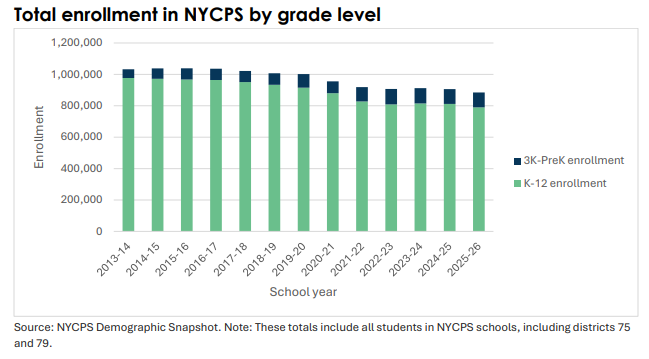
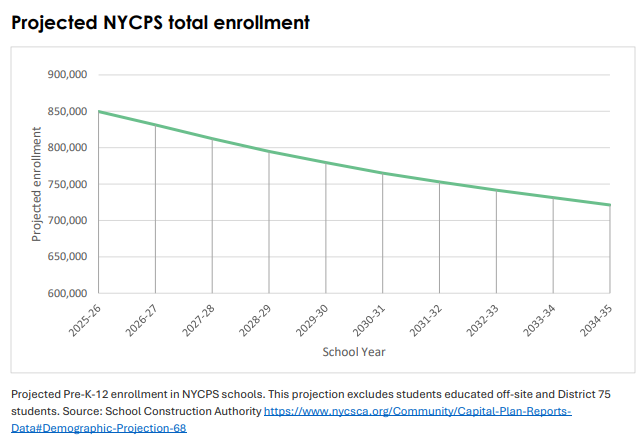
- NavalRT @ViktorBunin: As a father who just chose not to send my older son to public school, here's what's happening: 1. NYC public schools are full of woke, mentally ill people. The teachers, the students, the counselors, everyone is wacked out. If you're just a normal parent that wants a normal school with a normal focus on education, good behavior, friendship, manners, etc. you are shit out of luck. 2. While there are some good elementary schools, most middle schools are atrocious, and result in some of the biggest drops in education outcomes. Even if you send your kid to a good elementary public school, you're 100% going to move in time for middle school. And if you make it to high school, your only hope are the specialized schools, but mamdani the islamist is intent on destroying them, which would completely fuck your kids. 3. The average kid in an average NYC public school is stupid as hell. 70% do not read proficiently for their grade level. They can't do math. They have a ton of behavioral issues and are bad influences on your kid. As a normal father of a normal family I'm paying an absurd amount of taxes and for what? My hard earned money is being wasted on the comically evil teachers union, paying adult day care fraudsters, and subsidizing the "73% of public school students in poverty." This is just a scam. Those kids are not in poverty. Their parents work under the table, don't report anything to not pay taxes, and get ridiculous government subsidies. Everyone is running a scam and families like mine are paying for it. It's no wonder so many of my peers left and despite living in NYC for coming on 30 years, I probably will too at some point.Mark D. Levine @MarkLevineNYCToday my office has released a major new report on student enrollment in NYC. We found that k-12 enrollment in our public schools has fallen by 187k since 2013, with a projected decline of an additional 128k students by 2034. As total enrollment declines, NYCPS is serving a student population with growing needs. The number of students with disabilities is increasing. In the most recent school year, approximately 73% of students were in poverty and 14% were homeless or living in temporary housing. Our report finds the drop in enrollment is driven by declining births and families with children leaving NYC, with a particularly notable drop in public-school enrollment as students transition from elementary to middle school. These trends have massive implications for our schools that we have only barely begin to grapple with. My hope is that this report will spur a long overdue conversation about what the era of falling student enrollment means for NYC, and what we can do to reverse or slow it. 🧵0662034.7K
 Today my office has released a major new report on student enrollment in NYC. We found that k-12 enrollment in our public schools has fallen by 187k since 2013, with a projected decline of an additional 128k students by 2034. As total enrollment declines, NYCPS is serving a student population with growing needs. The number of students with disabilities is increasing. In the most recent school year, approximately 73% of students were in poverty and 14% were homeless or living in temporary housing. Our report finds the drop in enrollment is driven by declining births and families with children leaving NYC, with a particularly notable drop in public-school enrollment as students transition from elementary to middle school. These trends have massive implications for our schools that we have only barely begin to grapple with. My hope is that this report will spur a long overdue conversation about what the era of falling student enrollment means for NYC, and what we can do to reverse or slow it. 🧵

 255111698790K
- NavalRT @cremieuxrecueil: In Tokyo, you're never far from a police office. The city has decided that, instead of using just big precincts, they'll distribute their cops across tiny stations so police are always nearby. It works great!Crémieux @cremieuxrecueilMy latest article talks about how being closer to police officers reduces crime more It then applies this to the police system in Japan, and describeshow if we applied it to other places, it could be used to dramatically reduce crime at a low cost Link:0285037.5K

- NavalRT @PhilWMagness: 🧵on the AI audit of Saez and Zucman and by implication Piketty (or PSZ together): Since some are objecting to what the computer found, here's a list of biases in this trio's work that were found by humans over the last decade.0144034.4K
- NavalRT @DrunkRepub: Everything wrong with this country in a single post. Elon makes things that benefit humanity while members of Congress do nothing but obstruct innovation and leech off the American people. They make $174,000 per year yet more than half are millionaires. They can’t even pass voter ID, which has an 84% bipartisan approval rating, because they are so beholden to special interests. If anyone is to be investigated it should be Senator Padilla and his colleagues who have enriched themselves on the backs of hardworking Americans, not the dude who employs thousands and saves lives with his inventions.Senator Alex Padilla @SenAlexPadillaINVESTIGATE ELON MUSK.0639037K

- Turns out the “Open” part refers to *your* code.Amjad Masad @amasadWhat’s happening in the AI-powered reverse engineering and decompilation is absolutely insane. Pretty soon all software will be de facto open-source. AI is coming for everything and everyone.2341332.8K501K
 What’s happening in the AI-powered reverse engineering and decompilation is absolutely insane. Pretty soon all software will be de facto open-source. AI is coming for everything and everyone.5591.1K12K1.4M
- Models are the last moat in software. AI can train on essays and rewrite them. AI can decompile software and recode it. AI can ingest art and recreate it. But AI itself doesn’t want to be “distilled.” Expect more software to retreat to the server and resist “distillation.”Eric S. Raymond @esrtweetThis is the doom I predicted a few days ago, coming for Photoshop. A clean-room open-source reimplementation. No prizes for guessing that they decompiled Photoshop to source code, processed that to some kind of non-code specification language, then fed the spec to an LLM with an instruction to generate Rust. Adobe just got nuked. And closed source is dead, dead, dead.3933996K957K
- If AI is risky like fire is risky, then you want everyone to have it. If AI is risky like a nuclear weapon is risky, then you want no one to have it.Yishan @yishanMaybe you have recently become aware of the AI safety debate and the arguments swirling around it. If you want to understand them, you need to understand a couple things that almost everyone gets wrong: There are TWO distinct classes of AI dangers, and it's VERY important to think about them separately, and not let one confuse you about the other. Many many people (including many quite intelligent, clear-thinking people) do not effectively understand the fundamental differences between these two classes of dangers. The first one has to do with the theory that an AI far superior to human intelligence (Artificial SuperIntelligence, or ASI) will inevitably wipe out the human race. The second one has to do with the idea that powerful AI will result in very harmful things happening to many human beings, possibly all human beings. Those two sound VERY similar, don't they? They are DIFFERENT. Understanding how they are different is crucial if you want to think about or contribute usefully to any conversation about AI safety or AI harm. You might feel like you are Making Very Good Points or Asking Incisive Questions, but if you aren't clear on the differences between the two, you aren't. So, I'm going to tell you what the difference is so that you can talk more usefully. The first one concerns itself with a very specific thing, which is ASI (Artificial Superintelligence) that is more intelligent than any human being. When I say that, I am not referring to a thing like how Einstein is smarter than you, we are talking more about something like how a human being is more intelligent than any mouse. In our regular lives, we meet other people who we can tell are smarter than us, vs some who are less smart. The line is fuzzy, because intelligence has a lot of dimensions. I'm better at a "rotating shapes" kind of intelligence than my wife, and she is better at "words-making" kind of intelligence than I am. But every human is better in almost every dimension of intelligence than every single mouse. That's the level we're talking about: an artificial superintelligence - made up of a computer or a network of computers - that is more intelligent than any human. And more intelligent by a long shot, by a wide margin, in an indisputable way like how humans are above mice. That is the first thing. The theory says that if you have an AI that is vastly smarter than all humans - in the way that a human is smarter than mice - that superintelligent AI will inevitably, eventually, sooner or later, wipe out every human on the planet. We will refer to this as "existential risk." The common follow-up question "well, how exactly is it going to do that?" is NOT the important question, and one of the most important elements of understanding this theory is first getting why that particular question is not important. A couple analogies: Analogy 1: You are playing chess against a grandmaster. My theory predicts the grandmaster is going to beat you. You can ask "Well, how exactly is he going to do that?" I don't know, because I'm not a grandmaster, I just know that a chess grandmaster is almost always going to beat a normal player like you. And I'd be right. So the question "how is he going to do that" is not important, and doesn't affect the final outcome. He's going to figure out a way because he's way better than you. Analogy 2: Humans are smarter than all other animals, comprehensively, by a wide margin. We have driven numerous species to extinction, not because we hated them or hunted them. Many of them have died out without most humans even ever thinking about them. All we did was expand our civilization, use up resources, encroach on habitats, and pretty soon the resources needed by those species went away and they died out. We figured out a way to get what we wanted because we're way smarter than them, and often we didn't even notice they died as a result. A lesser animal asking, "how are the humans going to wipe us out?" is not asking a relevant question. We don't know, but we do know that any time humans and lesser species compete for any kind of resources, the humans will win. The fact that we know who is going to win beforehand - and that it is due to the vastly different levels of intelligence - is the key concept here. A vastly more intelligent AI is likely to care about things that are incomprehensible to us, the way animals can't understand human goals. It's going to need resources to pursue those goals and it's going to be far more effective at gaining control of them and excluding us from them - in the same way that we are far more effective than other lower species. A much more intelligent AI will not care about our interests, it will care about its interests, and to whatever small degree we happen to escape total annihilation from losing access to all our resources, any remaining humans will likely be enslaved into a system that serves the AI's own purposes. That is the first thing. (Remember how I said at the beginning of this post that there was a first thing, and then a second thing?) The first thing is the most difficult to understand, because you have to extrapolate how a vastly superior intelligence would act, and you can only use analogies like "how do humans treat lesser creatures," and the analogies are messy. But now let's move on to the second thing. The second thing is "everything else you've ever heard that AI might do that's harmful." That's a little inaccurate. It's actually "everything else you've ever heard that humans might use AI to do that's harmful." This is the critical difference. The first one talks about the inevitable outcome of what happens when two vastly different levels of intelligence collide, e.g. ASI vs humans, or human vs mice. The second one has to do with what happens when humans possess AI as a powerful tool. This second thing is much easier to understand, because we have many more concrete notions: Like: - the military uses AI to make hyper-efficient killer drones and missiles - your capitalist overlords use AI to replace you and everyone loses their jobs - authoritarian government uses AI to surveil everybody and control the entire population - hackers use AI to break into secure networks and hold companies and governments hostage - students use AI to cheat on homework and show up to college knowing nothing - AI slop saturates the internet and makes it impossible for artists and writers to make a living - terrorists use AI to make biological or nuclear weapons or even things like - the military hands control to an AI and it misinterprets something and launches nuclear attacks and kills millions All of those sound pretty familiar, right? Yeah, you've heard them before. We call this second thing "risks from misuse." These problems are not the first class of problem! This second class of problems exists while AI is a tool that can be controlled by humans, and humans use it to do evil or careless things to each other. The problems may sound exotic or dystopian or novel, but they are fundamentally problems having to do with flawed human nature. Given a powerful tool, some humans will likely use it to control or otherwise harm others. This is a very familiar problem. I am not condemning or condoning this. I'm just describing it. That is a fundamentally different danger from the first thing, which is that when a human is far superior to a mouse, the mouse is likely to come to harm because the human cares about doing human things, and the mouse is not gonna make it once the humans get going. ===== Hopefully from the above, you have understood the difference between the first thing and the second thing. I will list them again - see if you now understand how they are different: The first one has to do with the idea that an AI superior to human intelligence (Artificial SuperIntelligence, or ASI) will inevitably wipe out the human race. The second one has to do with the idea that powerful AI will result in very harmful things happening to many human beings, possibly all human beings. Can you tell how they are different now? If not, re-read the stuff from earlier until you understand. We call the first one "existential risk" and we call the second one "risks from misuse." Once you understand, here is the CRUX of the problem: SOLUTIONS TO THE SECOND THING DO NOT HAVE ANYTHING TO DO WITH SOLUTIONS TO THE FIRST THING. In fact, it's worse: Solutions to the second thing (misuse) look roughly like "give powerful AI to as many people as you can, so they can fight the other people using powerful AI." But the general solution to the first one (existential risk) is basically "don't let anyone have powerful AI, no one can control super-intelligent AI." Throughout history, harms from technological misuse typically arise because a small group has control of it and can use it to dominate or harm others. Once everyone has it, things tend to stabilize: you can hurt me, I can hurt you, maybe we test each other (ouch 💥), and then we agree not to hurt each other. But the first one (existential risk) pretty much just arises if anyone (good or bad!) creates a superintelligence. Because they aren't going to be able to control it, the superintelligence will decide it has other priorities, and then we will be at great risk of being wiped out. And the solutions that generally work to solve problems like the second thing are EXACTLY THE OPPOSITE of the ones likely to solve the first thing. THIS is why lots of arguments about "AI risk" or "AI safety" go nowhere. Because someone will be thinking about the risk from the first thing, and another person will be thinking about the risk from the second thing. Both are plausible risks but fundamentally they arise from different things - and so the solutions are not just "bad" or "flawed" - they are likely to be very nearly exact opposites.4644355.5K633K
 This is the doom I predicted a few days ago, coming for Photoshop. A clean-room open-source reimplementation. No prizes for guessing that they decompiled Photoshop to source code, processed that to some kind of non-code specification language, then fed the spec to an LLM with an instruction to generate Rust. Adobe just got nuked. And closed source is dead, dead, dead.6361.5K16.7K4M
 Maybe you have recently become aware of the AI safety debate and the arguments swirling around it. If you want to understand them, you need to understand a couple things that almost everyone gets wrong: There are TWO distinct classes of AI dangers, and it's VERY important to think about them separately, and not let one confuse you about the other. Many many people (including many quite intelligent, clear-thinking people) do not effectively understand the fundamental differences between these two classes of dangers. The first one has to do with the theory that an AI far superior to human intelligence (Artificial SuperIntelligence, or ASI) will inevitably wipe out the human race. The second one has to do with the idea that powerful AI will result in very harmful things happening to many human beings, possibly all human beings. Those two sound VERY similar, don't they? They are DIFFERENT. Understanding how they are different is crucial if you want to think about or contribute usefully to any conversation about AI safety or AI harm. You might feel like you are Making Very Good Points or Asking Incisive Questions, but if you aren't clear on the differences between the two, you aren't. So, I'm going to tell you what the difference is so that you can talk more usefully. The first one concerns itself with a very specific thing, which is ASI (Artificial Superintelligence) that is more intelligent than any human being. When I say that, I am not referring to a thing like how Einstein is smarter than you, we are talking more about something like how a human being is more intelligent than any mouse. In our regular lives, we meet other people who we can tell are smarter than us, vs some who are less smart. The line is fuzzy, because intelligence has a lot of dimensions. I'm better at a "rotating shapes" kind of intelligence than my wife, and she is better at "words-making" kind of intelligence than I am. But every human is better in almost every dimension of intelligence than every single mouse. That's the level we're talking about: an artificial superintelligence - made up of a computer or a network of computers - that is more intelligent than any human. And more intelligent by a long shot, by a wide margin, in an indisputable way like how humans are above mice. That is the first thing. The theory says that if you have an AI that is vastly smarter than all humans - in the way that a human is smarter than mice - that superintelligent AI will inevitably, eventually, sooner or later, wipe out every human on the planet. We will refer to this as "existential risk." The common follow-up question "well, how exactly is it going to do that?" is NOT the important question, and one of the most important elements of understanding this theory is first getting why that particular question is not important. A couple analogies: Analogy 1: You are playing chess against a grandmaster. My theory predicts the grandmaster is going to beat you. You can ask "Well, how exactly is he going to do that?" I don't know, because I'm not a grandmaster, I just know that a chess grandmaster is almost always going to beat a normal player like you. And I'd be right. So the question "how is he going to do that" is not important, and doesn't affect the final outcome. He's going to figure out a way because he's way better than you. Analogy 2: Humans are smarter than all other animals, comprehensively, by a wide margin. We have driven numerous species to extinction, not because we hated them or hunted them. Many of them have died out without most humans even ever thinking about them. All we did was expand our civilization, use up resources, encroach on habitats, and pretty soon the resources needed by those species went away and they died out. We figured out a way to get what we wanted because we're way smarter than them, and often we didn't even notice they died as a result. A lesser animal asking, "how are the humans going to wipe us out?" is not asking a relevant question. We don't know, but we do know that any time humans and lesser species compete for any kind of resources, the humans will win. The fact that we know who is going to win beforehand - and that it is due to the vastly different levels of intelligence - is the key concept here. A vastly more intelligent AI is likely to care about things that are incomprehensible to us, the way animals can't understand human goals. It's going to need resources to pursue those goals and it's going to be far more effective at gaining control of them and excluding us from them - in the same way that we are far more effective than other lower species. A much more intelligent AI will not care about our interests, it will care about its interests, and to whatever small degree we happen to escape total annihilation from losing access to all our resources, any remaining humans will likely be enslaved into a system that serves the AI's own purposes. That is the first thing. (Remember how I said at the beginning of this post that there was a first thing, and then a second thing?) The first thing is the most difficult to understand, because you have to extrapolate how a vastly superior intelligence would act, and you can only use analogies like "how do humans treat lesser creatures," and the analogies are messy. But now let's move on to the second thing. The second thing is "everything else you've ever heard that AI might do that's harmful." That's a little inaccurate. It's actually "everything else you've ever heard that humans might use AI to do that's harmful." This is the critical difference. The first one talks about the inevitable outcome of what happens when two vastly different levels of intelligence collide, e.g. ASI vs humans, or human vs mice. The second one has to do with what happens when humans possess AI as a powerful tool. This second thing is much easier to understand, because we have many more concrete notions: Like: - the military uses AI to make hyper-efficient killer drones and missiles - your capitalist overlords use AI to replace you and everyone loses their jobs - authoritarian government uses AI to surveil everybody and control the entire population - hackers use AI to break into secure networks and hold companies and governments hostage - students use AI to cheat on homework and show up to college knowing nothing - AI slop saturates the internet and makes it impossible for artists and writers to make a living - terrorists use AI to make biological or nuclear weapons or even things like - the military hands control to an AI and it misinterprets something and launches nuclear attacks and kills millions All of those sound pretty familiar, right? Yeah, you've heard them before. We call this second thing "risks from misuse." These problems are not the first class of problem! This second class of problems exists while AI is a tool that can be controlled by humans, and humans use it to do evil or careless things to each other. The problems may sound exotic or dystopian or novel, but they are fundamentally problems having to do with flawed human nature. Given a powerful tool, some humans will likely use it to control or otherwise harm others. This is a very familiar problem. I am not condemning or condoning this. I'm just describing it. That is a fundamentally different danger from the first thing, which is that when a human is far superior to a mouse, the mouse is likely to come to harm because the human cares about doing human things, and the mouse is not gonna make it once the humans get going. ===== Hopefully from the above, you have understood the difference between the first thing and the second thing. I will list them again - see if you now understand how they are different: The first one has to do with the idea that an AI superior to human intelligence (Artificial SuperIntelligence, or ASI) will inevitably wipe out the human race. The second one has to do with the idea that powerful AI will result in very harmful things happening to many human beings, possibly all human beings. Can you tell how they are different now? If not, re-read the stuff from earlier until you understand. We call the first one "existential risk" and we call the second one "risks from misuse." Once you understand, here is the CRUX of the problem: SOLUTIONS TO THE SECOND THING DO NOT HAVE ANYTHING TO DO WITH SOLUTIONS TO THE FIRST THING. In fact, it's worse: Solutions to the second thing (misuse) look roughly like "give powerful AI to as many people as you can, so they can fight the other people using powerful AI." But the general solution to the first one (existential risk) is basically "don't let anyone have powerful AI, no one can control super-intelligent AI." Throughout history, harms from technological misuse typically arise because a small group has control of it and can use it to dominate or harm others. Once everyone has it, things tend to stabilize: you can hurt me, I can hurt you, maybe we test each other (ouch 💥), and then we agree not to hurt each other. But the first one (existential risk) pretty much just arises if anyone (good or bad!) creates a superintelligence. Because they aren't going to be able to control it, the superintelligence will decide it has other priorities, and then we will be at great risk of being wiped out. And the solutions that generally work to solve problems like the second thing are EXACTLY THE OPPOSITE of the ones likely to solve the first thing. THIS is why lots of arguments about "AI risk" or "AI safety" go nowhere. Because someone will be thinking about the risk from the first thing, and another person will be thinking about the risk from the second thing. Both are plausible risks but fundamentally they arise from different things - and so the solutions are not just "bad" or "flawed" - they are likely to be very nearly exact opposites.2103261.8K750K
- When you look back, you’ll wish you’d just done the long-term version of everything.8477.1K54.7K3M
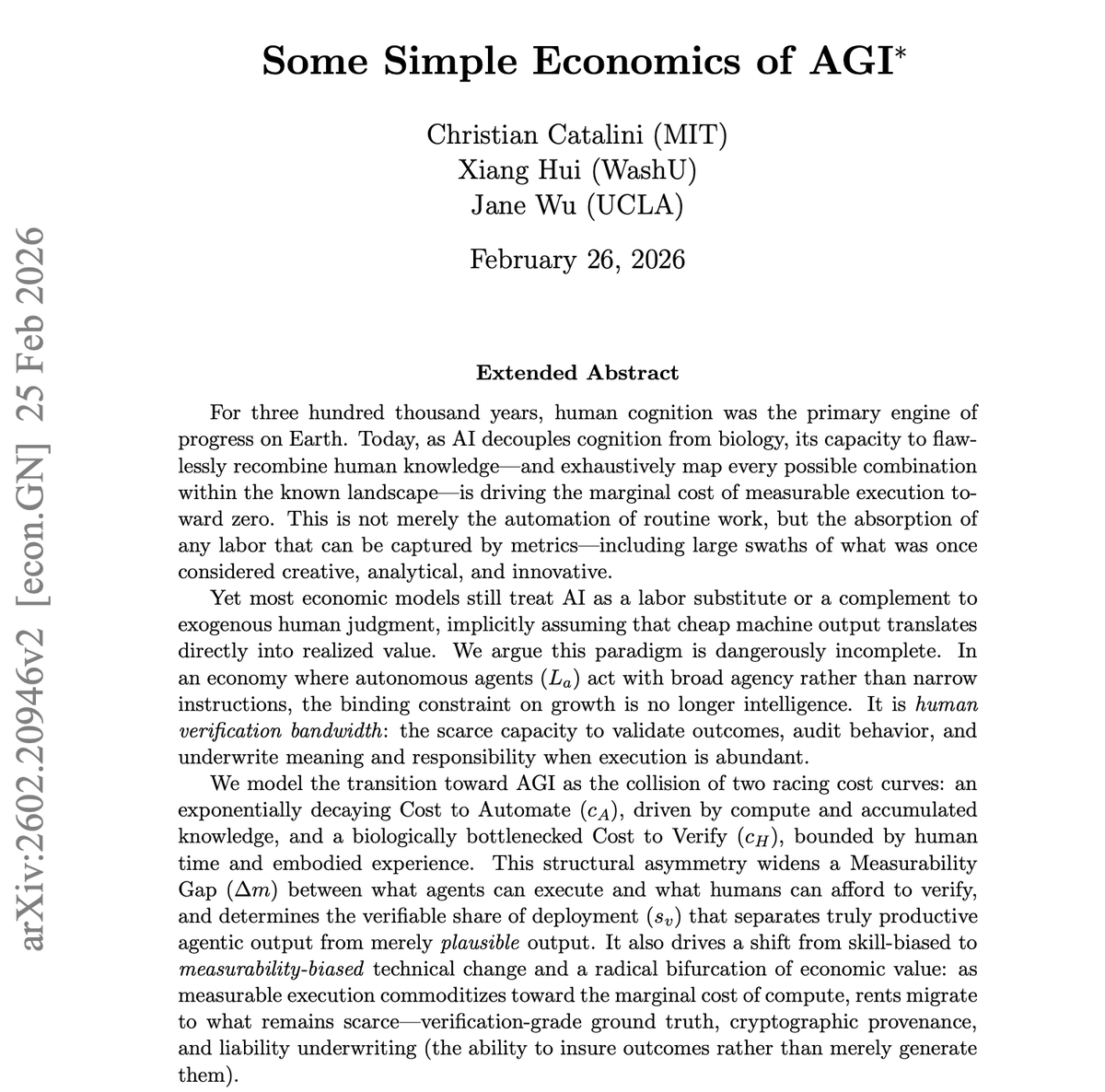
- "When liability exposure approaches 0—when no one pays the price for unverified failures—verification budgets collapse...Deployers flood the Runaway Risk Zone with unmonitored agents, capturing the gains of automation while socializing catastrophic risks."Christian Catalini @ccatalini1/ When we looked at the economics of AGI, the key policy challenge was immediately clear: AI drastically lowers the cost of execution for anything easy to verify. For everything else, verification is the bottleneck.1401401.4K310K
 1/ When we looked at the economics of AGI, the key policy challenge was immediately clear: AI drastically lowers the cost of execution for anything easy to verify. For everything else, verification is the bottleneck.
 40107714334K
- People who want to appear moral are attracted to the left. People who want to appear rational are attracted to the right. Effective Altruism lets you appear rational and moral - the ultimate ego trip.6111.4K18.5K758K
- Strong liability enforcement could be helpful in the AI debate. If your agent swarm goes rogue, you’re liable. If your weakly protected model gets jailbroken, you’re liable. If you serve a weakly protected OSS model, you’re liable.5054475.6K426K
- The future is more likely AIs fighting AIs (on behalf of humans) than AI fighting humanity.90897312.6K569K
- On the way to killing all of us, AI will likely kill some of us. In that case, who’s liable?7562887.2K557K
- The best way to pace the frontier is to hold the labs fully liable for the behavior of their models.9281.9K21.4K1.3M
- Posts @navalFor “dangerous” or weakly-guarded open source models, hold the hosts liable. Of course the end user holds liability as well if they are jailbreaking models to do harmful things.58571.2K141K