Julien Gachadoat✓

@v3ga

🤖 Classic generative weirdo • #processing + #plottertwitter • Generative art on Feral File / ArtBlocks / Plottables / Verse / Teia 👀

3.1K Following12.2K Followers8.8K Posts
  1. Julien Gachadoat✓@v3ga
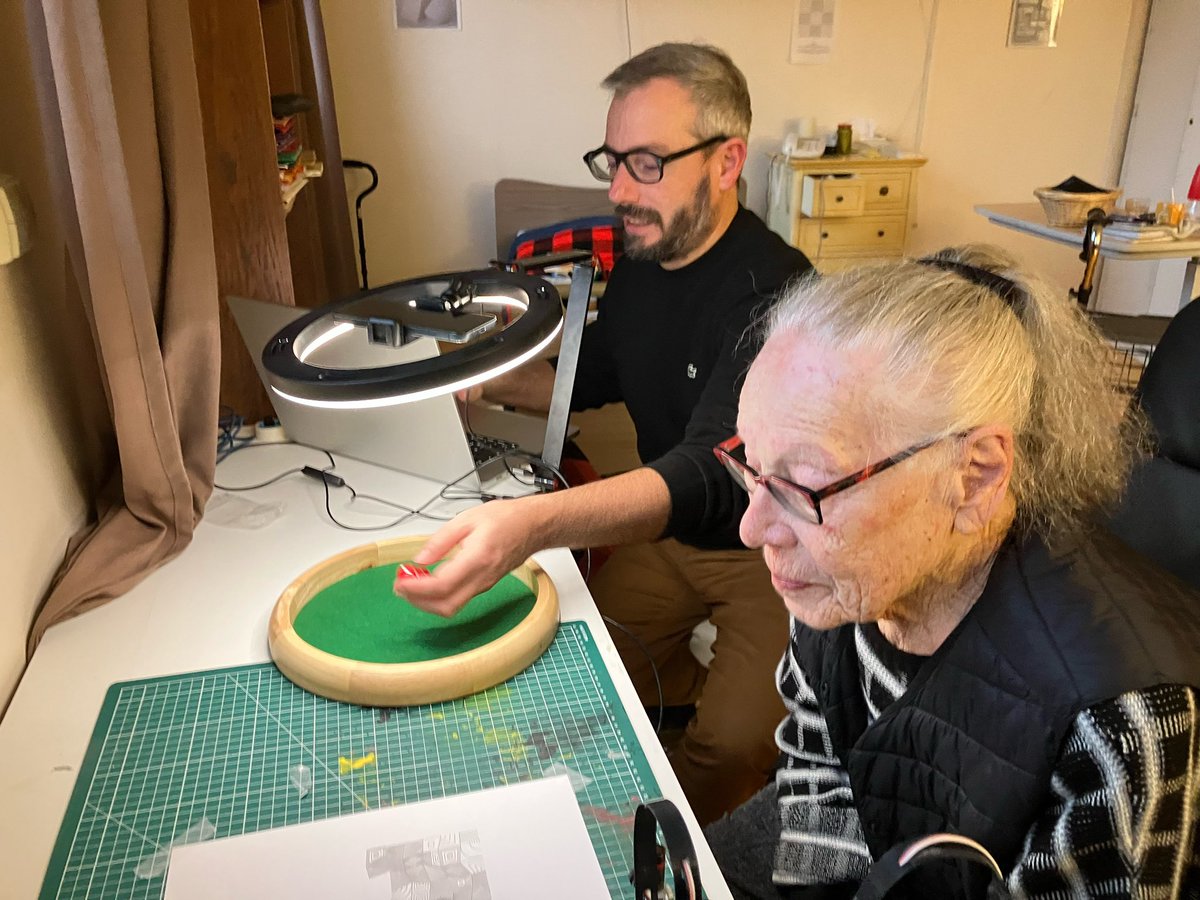
    In November, I had the immense honor of meeting Vera Molnar with whom I made a plotter drawing while playing dice with her. It was with emotion that I was able to listen to her talk about the first plotters she had used. This moment will definitely remain in my memory. [1/3]
    Download
    244035327.1K
  2. Julien Gachadoat✓@v3ga
    Julien Gachadoat
    RT @ragnar_art: Curating a (soon to be announced) exhibit of the beginnings of computer art - and fascinated right now with the original "programmers" who encoded punch cards with the images of paintings. The programmed punch cards were run through Jacquard looms to reproduce the images in silk. It's the beginnings of computer programming, punch cards, encoding information, computer memory, and more ... all in one work, incredibly, from the 1800s. This recently acquired work from 1844 memorializes a visit to a Jacquard loom by the son of the French king Louis-Philippe. What looks like a drawing or engraving is actually a woven work of silk! The work took about 72,000 cards that were punched over several months. It took 5 Jacquard mechanisms to create. The programmer was André Manin. Babbage credited Jacquard many times throughout his lifetime with inspiring the designs for his analytical engine. Ada Lovelace mentions Jacquard in her notes, writing that Babbage's engine "weaves algebraical patterns just as the Jacquard-loom weaves flowers and leaves." Howard Aiken's Harvard Mark 1 (one of the first true "computers") has a lineage directly to Jacquard. Jacquard was far ahead of his time.
    03032
  3. Julien Gachadoat✓@v3ga
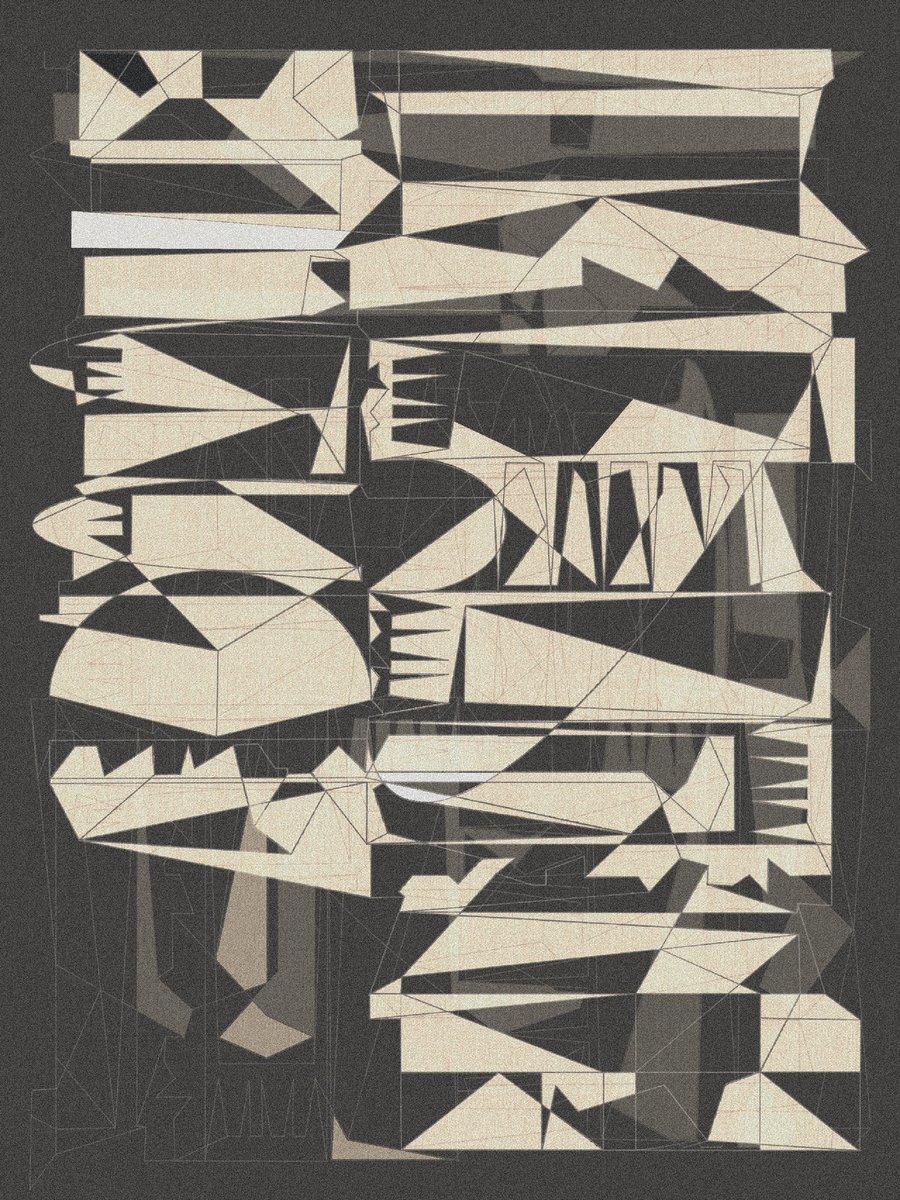
    Hyper¹⁸ • plotted in the sunny and early days of September 2026
    Download
    2219539
  4. Julien Gachadoat✓@v3ga
    Julien Gachadoat
    RT @ragnar_art: New essay up about computer art pioneer A Michael Noll written by @Noahbolanowski. Noah interviewed Noll extensively over the summer and has assembled perhaps the most thorough accounting of Noll's works and history. Link below. Over the past year I've had the pleasure of getting to know A Michael Noll. Noll is a true pioneer of computer art, creating some of the earliest (and most thoughtful) visual and animated computer art at Bell Laboratories as early 1962. His art directly influenced several popular artists of the time, including Salvador Dali. And it was a pleasure to work with @Noahbolanowski, who is incredibly knowledgeable and the premier researcher around historical digital and computer art.
    013044
  5. Julien Gachadoat✓@v3ga
    DiceGL will be presented at the accès(s) #26 — random / random festival in Pau October 7, 2026 to January 16, 2027. DiceGL is a generative protocol in which dice rolls determine certain parameters of a drawing algorithm: distortions, patterns, or formal variations. ↓
    Download
    25331.3K
  6. Julien Gachadoat✓@v3ga
    Posts @v3ga
    DiceGL was developed for a collaboration with pioneering generative artist Vera Molnár in 2023.
    Julien Gachadoat @v3ga
    I might call this "DiceGL" 🎲 🎲 The js framework makes it possible to map dice rolls to generate vector patterns and drive a plotter accordingly (.svg / .hpgl supported)
    007314
  7. Julien Gachadoat✓@v3ga
    I might call this "DiceGL" 🎲 🎲 The js framework makes it possible to map dice rolls to generate vector patterns and drive a plotter accordingly (.svg / .hpgl supported)
    Download
    4911073960.7K
  8. Julien Gachadoat✓@v3ga
    Julien Gachadoat
    RT @Noahbolanowski: NASA in 1969: "Because of the complex geometry associated with a lunar mission, it is difficult to visualize the various aspects of such a mission. The objective... is to depict what the crew will see during maneuvers and coast periods during the flight of Apollo 11..."
    0594038
  9. Julien Gachadoat✓@v3ga
    Julien Gachadoat
    RT @TeleCulture: Right after sending two New Year's cards I'd received from Vera and François Molnar 40 years ago back to France, I found a 3rd card. Completely forgotten this. Now considering to also return it so that it can join the original trio in its new home with Julien Gachadoat aka @v3ga
    03049
  10. Julien Gachadoat✓@v3ga
    End of the workshop and plotter exhibition at ESAD Orléans • revisiting classic algorithms, then plotting.
    Download
    012962.5K
  11. Julien Gachadoat✓@v3ga
    Julien Gachadoat
    RT @ragnar_art: In perhaps our most important acquisition to date, I'm honored to announce that we have welcomed 13 works by Computer Technique Group (CTG) into the Ragnar Digital collection. 7 of the 13 works are believed to be the last existing impression of that work. CTG is the pioneering computer art group from Japan. In just 3 short years (1966–1969) a group of ten young engineers and designers, most of them still students, created some of the most important and iconic early works of computer art, including Running Cola is Africa, Shot Kennedy, and Return to a Square. Unfortunately, most CTG works have been lost to time. Very few original works survive (my guess is around 30 total). Only two museums hold CTG's original prints: the V&A has one, MOT in Tokyo has about a dozen. Because so few works survive, exhibitions have been rare. So to gather 13 CTG works in one collection is an exceptional occurrence, and a responsibility that we take seriously. CTG is, in my opinion, among the very most important founders of computer art. The group created computer animations, music, poetry, interactive sculpture, algorithmic drawings, and more. 24 CTG graphic works, plus computer poems and music, were featured in Cybernetic Serendipity. CTG created not just algorithmic works like Nees and Nake, but they also uniquely created computer art works that explored pop art, featuring images of Kennedy and Monroe. CTG also explored if we should use computers for art, what it means to use computers for art, and how we should use computers for art. The same questions we ask today of AI. There will be much more information about these works to come. I believe that a collection has the responsibility to show works to the world, to contextualize them, to write about them, to tour them. We'll be doing all of the above, starting with a digital exhibition toward the end of this year. And in an interesting twist: CTG actually inspired the CAyC South American computer artworks we've been featuring this fall! Jorge Glusberg visited CTG in their Ginza studio in early 1969 and brought works back to Buenos Aires. He then convened the Grupo de Arte y Cibernética and toured their work, and CTG's, through South America for the next several years. More to come as we explore these works and their history with you over the coming months.

    018036
  12. Julien Gachadoat✓@v3ga
    Julien Gachadoat
    RT @dmitricherniak: As part of Infinite Images @ToledoMuseum, visitors could “make their own” Ringers and hang them on display until the end of the day, when the works were collected. I compiled all of those creations into this video. Thanks @juliaxgulia for developing the concept for the exhibition!
    012032
  13. Julien Gachadoat✓@v3ga
    Hyper¹⁷ • 50x50cm • plotted in the early and sunny days of September 2026 • daughter holding the artwork
    Download
    25601.3K
  14. Show more posts