American Physical Society✓

@APSphysics

Fostering a vibrant, inclusive, and global community dedicated to science and society. Join us: https://t.co/Jvs055fiDM

254 Following256K Followers18.9K Posts
  1. American Physical Society✓@APSphysics
    Two particles, levitated by sound, collide again and again. A study in Physical Review E tracks how electric charge builds up between them, a process called triboelectric charging. Read the study:
    Download
    15282.4K
  2. American Physical Society✓@APSphysics
    #APSSummit27 kicks off with 18 pre-conference workshops, short courses, and tutorials on Sunday, April 11. Data science and AI, advocacy, and more. Attend just the Sunday events or register for the full conference:
    Download
    0261.7K
  3. American Physical Society✓@APSphysics
    Researchers detected the kick from a single gas molecule hitting a laser-levitated nanosphere more than 10 million times its size, a study in Physical Review Letters reports. Read the study:
    Download
    14212.5K
  4. American Physical Society✓@APSphysics
    Latest science policy news from FYI in APS News: NSF ends FY2026 with more than $1 billion unspent, DHS proposes new fees for the OPT international student work program, and the White House announces $6 billion in science initiatives.
    02101.9K
  5. American Physical Society✓@APSphysics
    Physicists from every field connect at the APS Global Physics Summit ✨ Abstracts for #APSSummit27 are due today, by 5 p.m. ET. Don't miss this chance to share your research.
    Download
    17233.8K
  6. American Physical Society✓@APSphysics
    Why is the sun's corona millions of degrees hotter than its surface? A study in Physical Review Letters used powerful lasers to recreate solar nanoflares in the lab and watch them heat plasma. Read the study:
    Download
    313473.9K
  7. American Physical Society✓@APSphysics
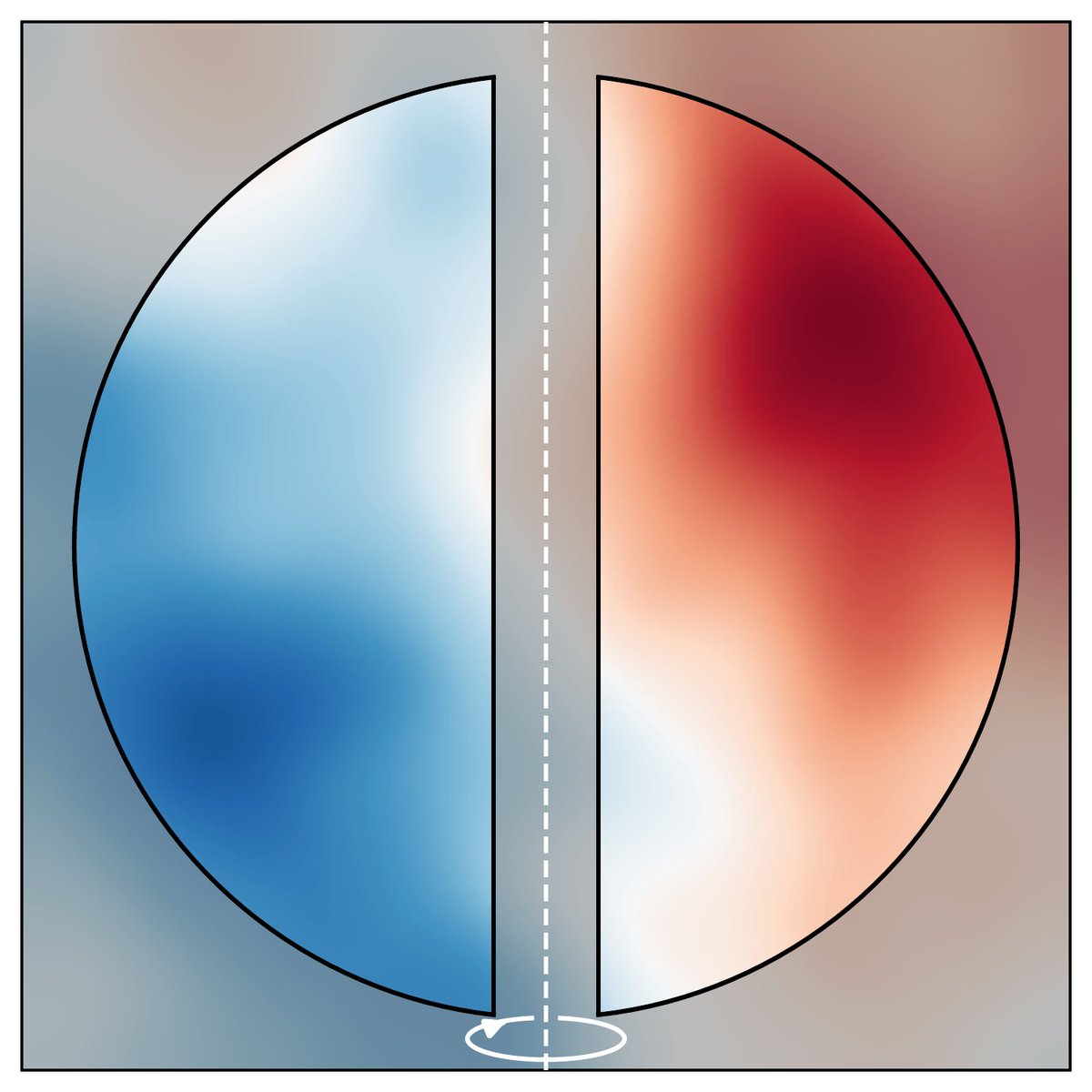
    Do galaxy clusters spin? A study in Physical Review Letters finds evidence that they do, from a faint warm-and-cool pattern their rotating gas leaves in the universe’s oldest light. Read the study:
    Download
    63252.2K
  8. American Physical Society✓@APSphysics
    When the dense helium cores of two red giants collide, the merger could produce high-energy neutrinos, finds a study in Physical Review D. IceCube could expect about one such neutrino from a single merger up to 180,000 light years away. Read the study:
    Download
    11162.6K
  9. American Physical Society✓@APSphysics
    A study in Physical Review D re-analyzes different mechanisms for primordial black hole formation under the dark dimension scenario and finds that, if these cosmic objects exist, they would be five dimensional. Read the study:
    Download
    5186214.5K
  10. American Physical Society✓@APSphysics
    Congratulations again to Francis Halzen, winner of the 2026 @NobelPrize in Physics. Physical Review Letters published two key IceCube Collaboration studies behind this prize. Swipe through 15 years of #NobelPrize-winning research that appeared in PRL.
    Download
    16332.9K
  11. American Physical Society✓@APSphysics
    American Physical Society
    RT @apsjournals: Know an early-career researcher whose astronomy or astrophysics paper stands out? Nominate them by Nov. 15 for the Emerging Astrophysicist Award. The recipient gets $2,000 and support to attend and a speaking opportunity at #APSSummit27. Learn more:
    020141
  12. American Physical Society✓@APSphysics
    American Physical Society
    RT @apsjournals: Since 2000, we’ve published the core discovery papers behind more than 60% of the Nobel Prizes in Physics. Those papers are available to read for free:
    Physical Review Letters @PhysRevLett
    Congratulations to @NobelPrize in #Physics winner Francis Halzen “for decisive contributions to @uw_icecube and the discovery of high-energy neutrinos of astrophysical origin." Read the prize-winning research from our journal:
    030142
  13. American Physical Society✓@APSphysics
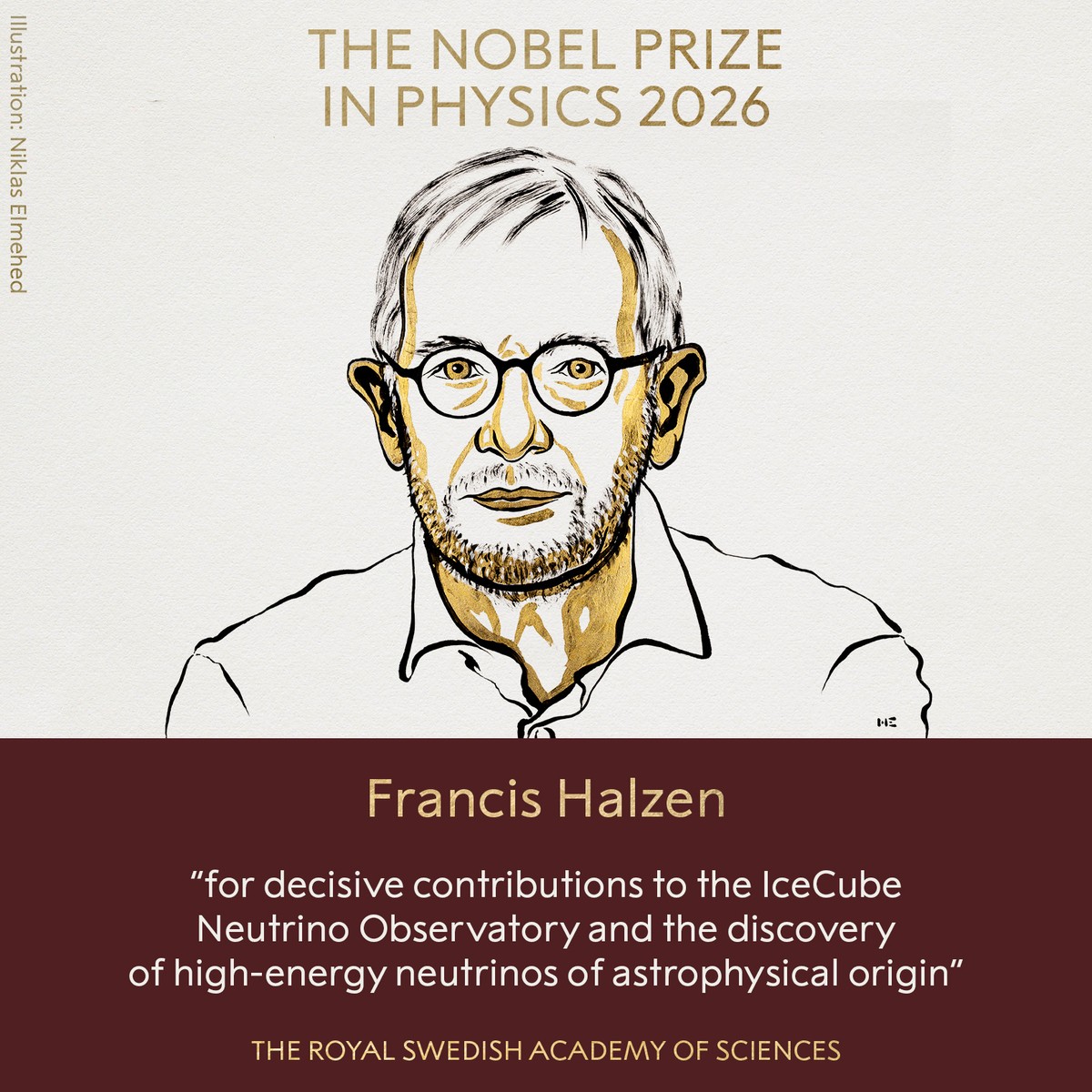
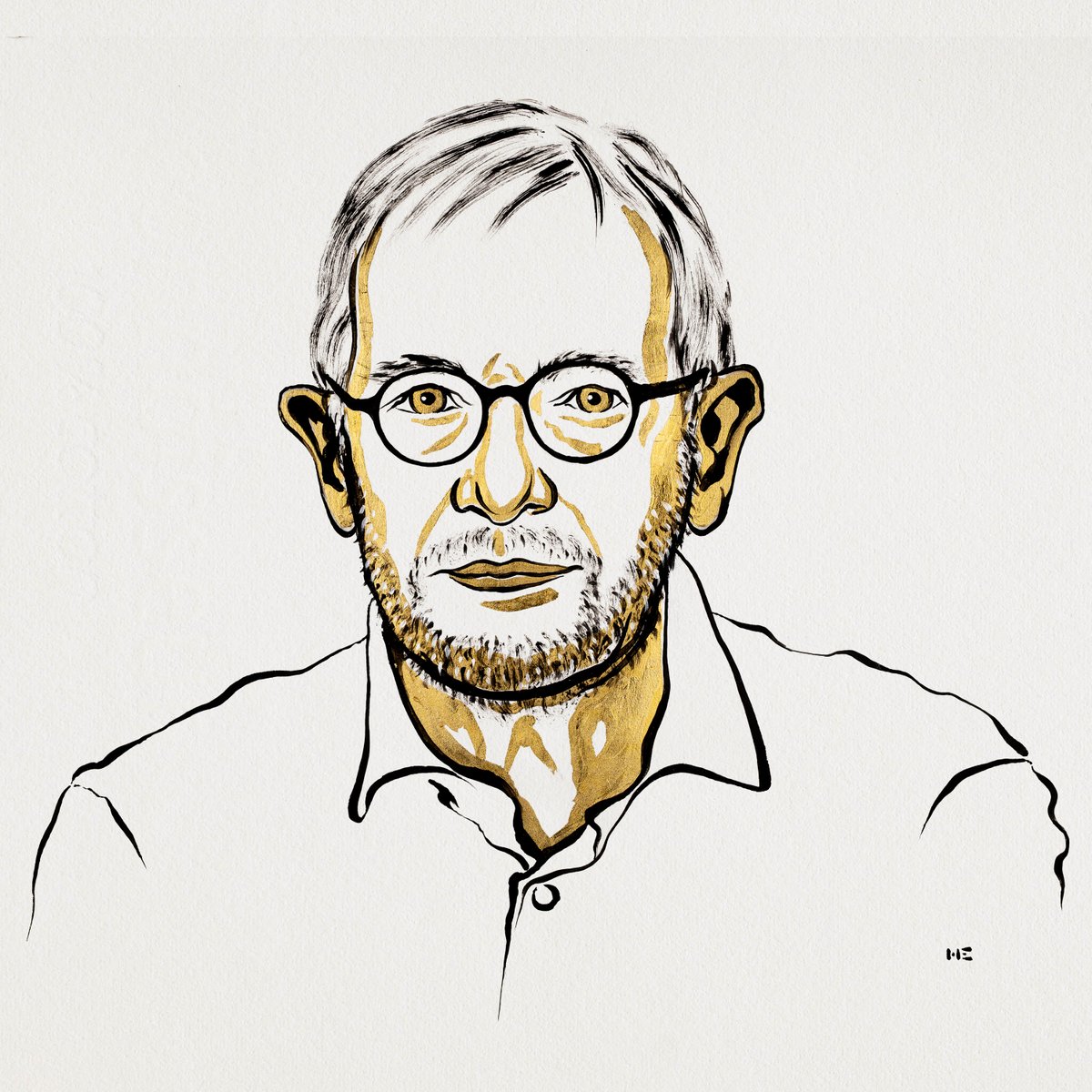
    Congratulations to Francis Halzen, winner of the 2026 @NobelPrize in #Physics, for contributions to @uw_icecube and the discovery of high-energy cosmic neutrinos. We're proud to have published his winning research in @PhysRevLett . Read it for free: Image: © Nobel Prize Outreach, Illustration: Niklas Elmehed
    Download
    15281938.7K
  14. American Physical Society✓@APSphysics
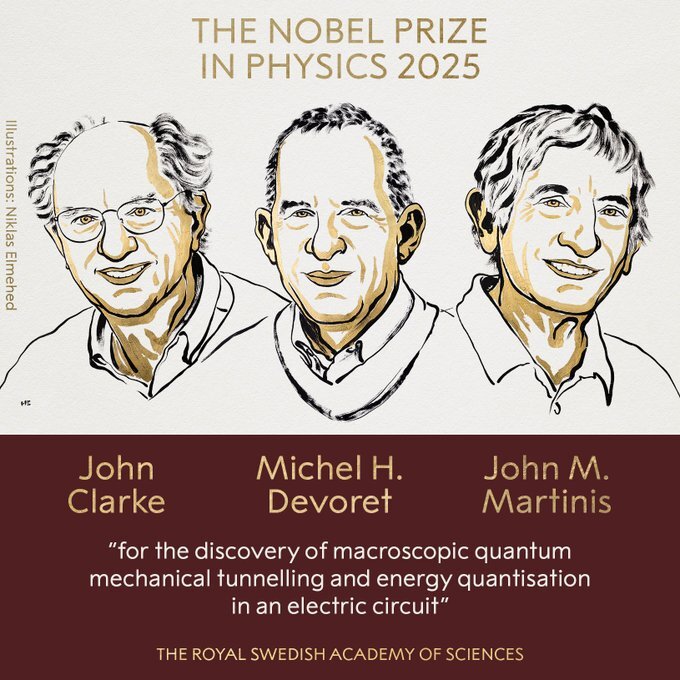
    One year ago, our members John Clarke, Michel H. Devoret, and John M. Martinis won the 2025 @NobelPrize in #Physics for experiments that revealed quantum tunneling in an electric circuit. The 2026 laureates will be announced next week. Any predictions? #NobelPrize
    Download
    94228413.7K
  15. American Physical Society✓@APSphysics
    A new study suggests the gallium anomaly, a neutrino mismatch between experiment and theory, could be solved by more precise calculations of electron-neutrino capture without new physics like sterile neutrinos. Read more in @physrevlett:
    15315.5K
  16. Show more posts