RT
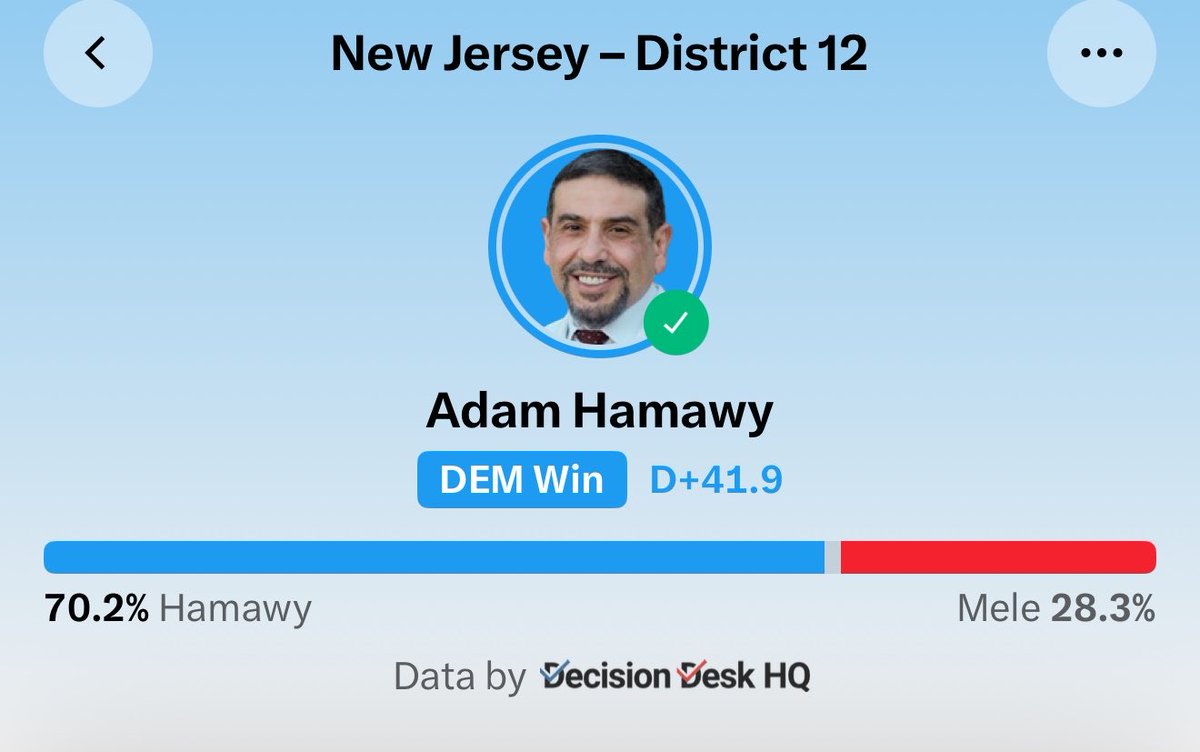
@RenuMukherjee1: A 40% Indian precinct in TX went from Trump +6 in 2024 to Talarico +30 and Hinojosa +19 in 2026. A complete political—and moral—failure.
Many in MAGA get very angry at me (You should see my comments over the last 1-2 years. It’s been a real treat.) and other Indian Republicans for stating that fact. In the aftermath of the election, they’re doubling down, saying the party has no business trying to court the votes of a demographic group in which a majority tend to vote Democrat. They say this about Latinos, too.
To that I say, it’s a shame you don’t understand how politics work. It’s a shame that you cannot comprehend the concept of an electoral coalition—which likely explains your earth-shattering failure on Tuesday. You don’t need a majority of Indian Americans to vote for your candidate; you just need to peel enough away from the other guy. The same goes for other demographic groups. Of course, this can change based on location/district, the specific election at hand, etc. But the basic idea remains: so long as you can cobble together a majority, you will win—even if that majority contains members from groups who typically vote for the other party, who are disparate in race and ethnicity, religion, income, and more. In fact, that’s the entire ballgame. That’s the American experiment—E Pluribus Unum.
A recent example that comes to mind is—wait for it—President Trump’s successful multiethnic, working class electoral coalition in 2024! He made historic gains with Indian Americans, black Americans, Hispanic Americans, Jewish Americans. That said, he did not win a majority of any of these groups. Enough, however, to help cobble together a winning electoral coalition.
That brings me to my second point. Electoral coalitions, especially in their infancy, can be extremely fragile. Political realignment takes time. I don’t think the 2026 midterms were a realignment just like I don’t think the 2024 presidential election was a realignment. Consider, as an example, the realignment of the American South from Democrats to Republicans—until, well, two days ago. That shift took years, decades of outreach, campaigning, careful cultivation of votes. So, if you start making in-roads with a particular demographic group (say, Indian Americans), and you want the group and its votes to realign with your party in your future elections, then you probably shouldn’t, you know, be viciously racist toward its members.
Almost one year ago exactly, I wrote an essay making the case for why I believed more Indian Americans should vote Republican. Our strong belief in faith, family, free markets, merit, and, most importantly, America’s founding principle—that all are created equal, regardless of skin color or one’s circumstances of birth—were my reasons.
I do not blame Indian voters, whether they be Republicans, Democrats, or Independents, for going the other way when that core principle in particular has been rejected, when they have been rejected simply because of their ethnicity and religion. For saying enough is enough. Who could?
For the record, I still believe in all those things—faith, family, free markets, merit, and colorblindness. And I believe in a Republican Party that can get back there someday, one genuinely committed to the project of E Pluribus Unum.