🕸️Dr.T, PhD✓

@chydorina

PhD in Biology (not an MD). Cognitive health and chronic disease recovery.

  • Canada
  • Joined
5.8K Following18.2K Followers38.5K Posts
  1. 🕸️Dr.T, PhD✓@chydorina
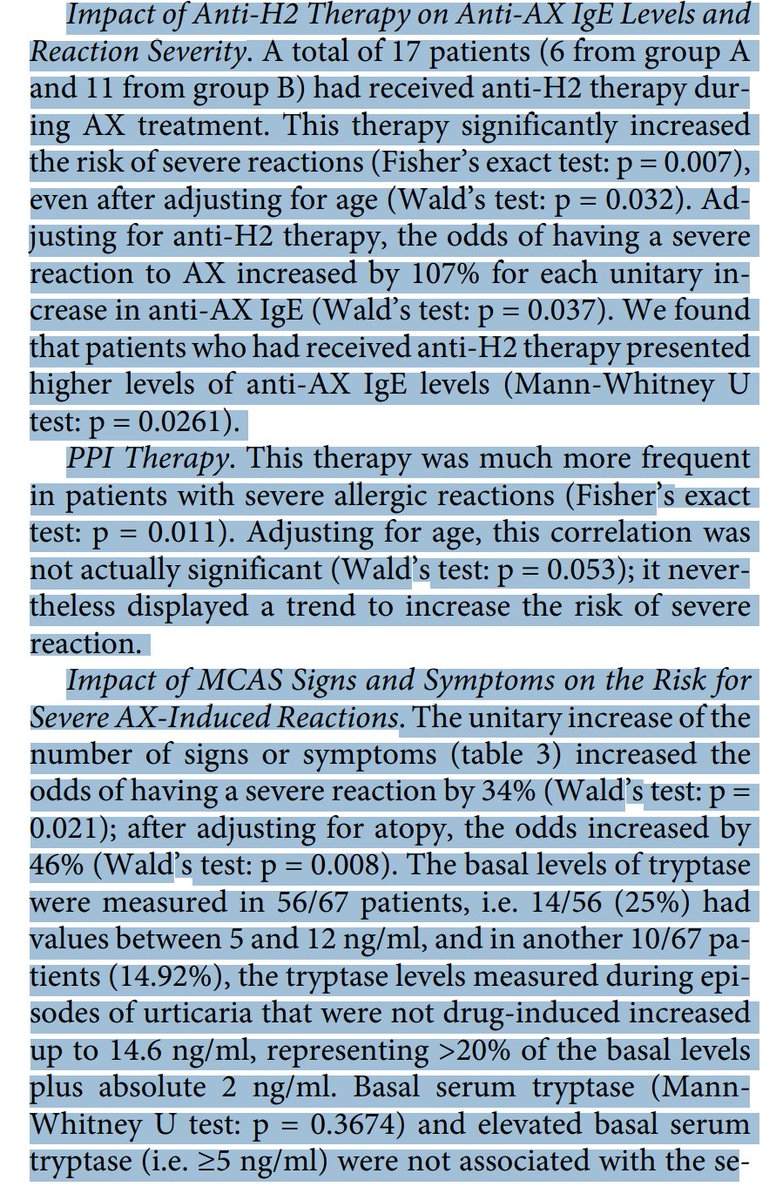
    Please be cautious: #MCAS and H2 blockers may increase the risk of hypersensitivity reactions to Amoxicillin-Clavulanate (Augmentin) We learn by doing research. We learn by watching. The 'biggest fail' that academics can make is getting so attached to their pet theories that they are no longer objective. They literally cannot see the truth even when it is staring them in the face. I recently tweeted that i no longer believe that Augmentin (Amoxicillin-Clavulanate) is safe enough to use in the #MECFS #LongCovid patient population without extensive medical oversight and personal health histories. I have always maintained that MCAS must be incredibly well-controlled but just how crucial this was has only recently been expanded upon. This past week a crucial clinical study was found by @arta_semita that calls its use into question even further - especially in patients with MCAS. In this clinical hospital based study they looked at hypersensitivity reactions to Augmentin. It is well known beta-lactam antibiotics (Augmentin is most commonly used) are the drugs that most frequently induce systemic drug allergy (of all drugs, not just antibiotics). BUT they found 3 additional risk factors that directly affect many people with #MECFS #LongCovid 1. That pre-existing MCAS made the chance of a hypersensitivity reaction 36% higher 2. That those taking H2 blockers had more severe reactions 3. Those taking PPIs also had increased risk Given that a large majority of us have MCAS (even if we dont know it) this is incredibly worrisome. Given that most of us take anti-histamines this is even more worrisome. This is one study out of dozens that have led me to the conclusion that Amoxicillin-Clavulanate is not safe enough to be taken without extensive medical oversight and emergency preparation for anaphylaxis. This treatment was the cornerstone of the remissionbiome acute phase. I no longer believe that people should do the 'acute phase' - without extensive medical oversight including complete medical history, liver and kidney function tests. I no longer believe it is safe enough for moderate or severe patients even with medical supervision due to symptom cycling related to beta-lactams activating NF-kB via Akt - which likely causes the cycling and could result in either declines or improvements depending on where in the cycle people end treatment (@arta_semita figured out this potential mechanism for symptom cycling). I did not know this when I started out. I started seeing MCAS reactions in many (if not most) people. This worried me. As we continued to dig into the research the picture became clearer. This was simply not as safe as I had hoped or thought it was. Please be safe out there! Anti-Amoxicillin Immunoglobulin E, Histamine-2 Receptor Antagonist Therapy and Mast Cell Activation Syndrome Are Risk Factors for Amoxicillin Anaphylaxis (link to paper in replies)
    Download
    386228442.3K
  2. 🕸️Dr.T, PhD✓@chydorina
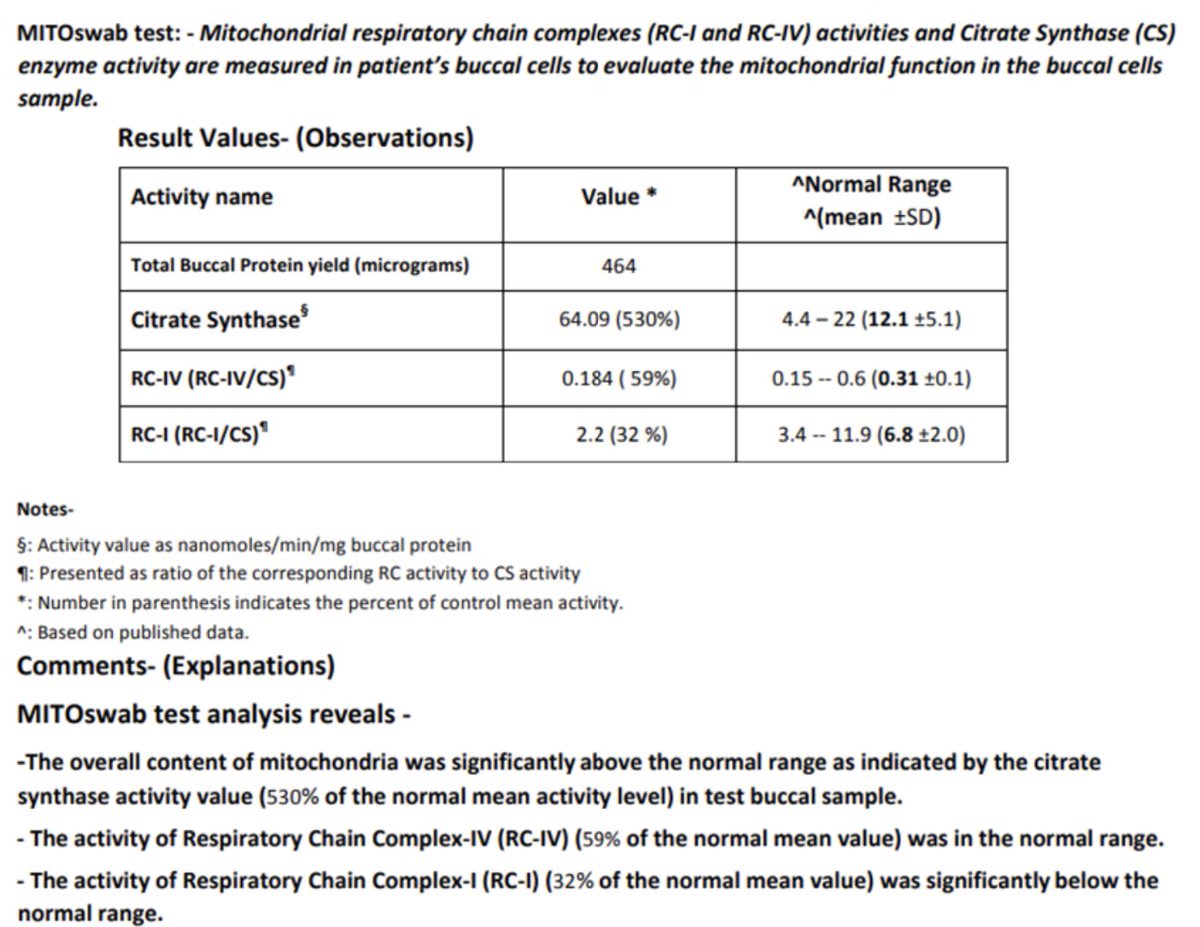
    What??? This is amazing!! Any ideas on when this might be available to a broader range of people with mitochondrial dysfunction?
    Download
    Mitrix Bio @PathfinderEq
    Note that the Magic Clinic in Calgary and Mitrix are doing a MELAS/MILS/MERFF trial, using a simple form of mitochondrial transplantation to reduce the severity of the infections (sepsis, pneumonia, influenza) that frequently endanger these patients. @MitoPsychoBio @MitoCanada @UMDF @BillAckman @JeffBezos @Mito_Therapy @ClevelandClinic @ChildrensPhila @PolGFoundation @BillGates @SecKennedy
    37692K
  3. 🕸️Dr.T, PhD✓@chydorina
    Crashing and permanent lowering of baseline from new interventions is for most of us one of our greatest fears and for good reason - crashes and the possibility of permanently lowering our baseline is why many of us feel 'frozen' about trying new interventions.
    🕸️Dr.T, PhD @chydorina
    I want to talk about crashes from interventions and how the broken "stress response" or "adaptation-dysfunction" reactions make trying new stuff difficult. "Adaptation dysfunctions" means its hard to ADAPT to new things (and it is physiological). Crashing and permanent lowering of baseline from new interventions is for most of us one of our greatest fears and for good reason - crashes and the possibility of permanently lowering our baseline is why many of us feel 'frozen' about trying new interventions. The reality is we do often experience worsening of symptoms when we try new interventions. I think it is important to separate these responses into categories. We can have MCAS responses that affect MCAS symptoms. A very obvious example would be that for many of us taking Niacin results in the typical skin flushing (which also affects healthy people) but can in addition become a rash or leave welts (which is a skin sign of MCAS). While MCAS-autoimmune or sensitivity-polyreactivity reactions are important this is not the category I want to talk about here. The reactions I want to focus on are "adaptation dysfunction" reactions or dysfunctions related to an absent "stress response" (please read the articles linked below. they will REALLY help with understanding these concepts). "Adaptation dysfunction" reactions are common in #MECFS #LongCovid and are part of a wider part of what makes these diseases what they are. We have trouble adapting to stressors. Stressors can be cognitive, physical, emotional. Stress is PHYSIOLOGICAL. We all know what this means. This is why activity causes problems in these conditions. We can DO the 'thing', but the necessary physiological responses necessary to manage the consequences of the 'thing' dont turn on or dont operate as they once did. We often think about this as applying to exercise - and this is where a lot of evidence has been amassed. The normal genetic and biochemical and metabolomic responses that turn on after a stressor in healthy people seems itself to be broken or dysfunctional in these conditions. What does this means for reacting adversely to interventions? Interventions are in the same basket as any type of activity. Anything that pushes the system and requires a pull reaction to re-stabilize or reach homeostasis or balance is going to present a potential stumbling block. Physiologically and even in terms of our brain function - we just dont 'adapt' and 'respond' properly. The programmed responses that turn on in healthy people to help manage CHANGE do not work the same way for us. When talking about interventions this means that we need to expect that we might feel worse for a while. Any substance we put in the body at a sufficiently high enough dose to DO something will require that other parts of the system adapt. When the adaptation machinery itself is dysfunctional there will be more challenges. How to manage this practically: 1. Work on foundational aspects of managing chronic illness before we add in "disease modifying treatment" - this means get the biochemistry and nutrition working well enough so that normal physiological can happen. 2. Be aware of push-pull dynamics with meds and supplements. Go in with the recognition that you will react and indeed, you want to react. You are taking an intervention to CHANGE the system. This change will initially cause some disequilibrium and variability. Your system is trying to adapt to the intervention but because of dysfunctional adaptation responses it will take longer or need some help. 3. Stick with theory. There are things we know will help theoretically and which there is good patient-evidence for. Dont just throw these away if there is a short-term worsening of symptoms. Ask what could be done to help support the transition or what else might need to be added or removed to make the intervention less stressful on the body. This is always one of the biggest worry areas, and rules are hard. We need to learn to listen to our own bodies but this doesnt mean always trusting that our bodies initial reaction to something is the 'right' reaction. Often this is a push-pull dynamic and in a short period of time a more balanced response can be reached. Finally, an analogy: ORDER of interventions is often the failure point for people. Say your car broke down and it was a mechanical issue with the engine. No amount of gas or oil is going to fix the problem. Ask yourself where you in terms of your foundational basics (minerals, nutrients, electrolytes, microbiome). If these are still super dysfunctional it will be hard (maybe nearly impossible) for any intervention to work properly. We all know there are some people who respond well to interventions and some that respond badly and some that get no response. Ask yourself based on your foundational dysfunctions where you would most likely to be if you trailed something new (that required biochemical/physiological adaptation). Must read hypothesis paper on the broken stress response: by @RenzPolster and
    37371.1K
  4. 🕸️Dr.T, PhD✓@chydorina
    I want to talk about crashes from interventions and how the broken "stress response" or "adaptation-dysfunction" reactions make trying new stuff difficult. "Adaptation dysfunctions" means its hard to ADAPT to new things (and it is physiological). Crashing and permanent lowering of baseline from new interventions is for most of us one of our greatest fears and for good reason - crashes and the possibility of permanently lowering our baseline is why many of us feel 'frozen' about trying new interventions. The reality is we do often experience worsening of symptoms when we try new interventions. I think it is important to separate these responses into categories. We can have MCAS responses that affect MCAS symptoms. A very obvious example would be that for many of us taking Niacin results in the typical skin flushing (which also affects healthy people) but can in addition become a rash or leave welts (which is a skin sign of MCAS). While MCAS-autoimmune or sensitivity-polyreactivity reactions are important this is not the category I want to talk about here. The reactions I want to focus on are "adaptation dysfunction" reactions or dysfunctions related to an absent "stress response" (please read the articles linked below. they will REALLY help with understanding these concepts). "Adaptation dysfunction" reactions are common in #MECFS #LongCovid and are part of a wider part of what makes these diseases what they are. We have trouble adapting to stressors. Stressors can be cognitive, physical, emotional. Stress is PHYSIOLOGICAL. We all know what this means. This is why activity causes problems in these conditions. We can DO the 'thing', but the necessary physiological responses necessary to manage the consequences of the 'thing' dont turn on or dont operate as they once did. We often think about this as applying to exercise - and this is where a lot of evidence has been amassed. The normal genetic and biochemical and metabolomic responses that turn on after a stressor in healthy people seems itself to be broken or dysfunctional in these conditions. What does this means for reacting adversely to interventions? Interventions are in the same basket as any type of activity. Anything that pushes the system and requires a pull reaction to re-stabilize or reach homeostasis or balance is going to present a potential stumbling block. Physiologically and even in terms of our brain function - we just dont 'adapt' and 'respond' properly. The programmed responses that turn on in healthy people to help manage CHANGE do not work the same way for us. When talking about interventions this means that we need to expect that we might feel worse for a while. Any substance we put in the body at a sufficiently high enough dose to DO something will require that other parts of the system adapt. When the adaptation machinery itself is dysfunctional there will be more challenges. How to manage this practically: 1. Work on foundational aspects of managing chronic illness before we add in "disease modifying treatment" - this means get the biochemistry and nutrition working well enough so that normal physiological can happen. 2. Be aware of push-pull dynamics with meds and supplements. Go in with the recognition that you will react and indeed, you want to react. You are taking an intervention to CHANGE the system. This change will initially cause some disequilibrium and variability. Your system is trying to adapt to the intervention but because of dysfunctional adaptation responses it will take longer or need some help. 3. Stick with theory. There are things we know will help theoretically and which there is good patient-evidence for. Dont just throw these away if there is a short-term worsening of symptoms. Ask what could be done to help support the transition or what else might need to be added or removed to make the intervention less stressful on the body. This is always one of the biggest worry areas, and rules are hard. We need to learn to listen to our own bodies but this doesnt mean always trusting that our bodies initial reaction to something is the 'right' reaction. Often this is a push-pull dynamic and in a short period of time a more balanced response can be reached. Finally, an analogy: ORDER of interventions is often the failure point for people. Say your car broke down and it was a mechanical issue with the engine. No amount of gas or oil is going to fix the problem. Ask yourself where you in terms of your foundational basics (minerals, nutrients, electrolytes, microbiome). If these are still super dysfunctional it will be hard (maybe nearly impossible) for any intervention to work properly. We all know there are some people who respond well to interventions and some that respond badly and some that get no response. Ask yourself based on your foundational dysfunctions where you would most likely to be if you trailed something new (that required biochemical/physiological adaptation). Must read hypothesis paper on the broken stress response: by @RenzPolster and
    102611924.6K
  5. 🕸️Dr.T, PhD✓@chydorina
    🕸️Dr.T, PhD
    RT @chydorina: If you are experiencing new or increased Anxiety/Depression/Panic Attacks and have #LongCovid it may be MCAS (mast cell activation disorder). It is a well known trigger of neuropsychiatric-like conditions and is usually treatable. I have dozens of posts and videos on MCAS: search @chydorina MCAS @chydorina kitchen sink Neuropsychiatric Manifestations of Mast Cell Activation Syndrome and Response to Mast-Cell-Directed Treatment: A Case Series
    061029.8K
  6. 🕸️Dr.T, PhD✓@chydorina
    Try these additive-free milk substitutes from Joi. They have none of the nasty additives like carrageenan or the 'gums'. The trick is to use organic lecithin (powder) to emulsify and stabilize. Are they as good as a high-end milk substitute like Sproud? No. But they are free from the additives that often trigger reactions. You can buy bulk pails which really helps with cost.
    Ami @amislifexx
    Tried some gluten free oats with milk will probably react but I physically couldn’t eat oats with water. 💔💔💔 #mcas #longcovid
    000509
  7. Ami@amislifexx
    Tried some gluten free oats with milk will probably react but I physically couldn’t eat oats with water. 💔💔💔 #mcas #longcovid
    100133.1K
  8. 🕸️Dr.T, PhD✓@chydorina
    Sigh. We just can't get away from this psychosomatic crap. Here, @TheNerveShow postulates that Celine Dion suffers from "Conversion Disorder" aka Functional Neurological Disorder aka Hysteria. This is her 'most likely 'conclusion - that sexual trauma somehow "converted" into Stiff Person Syndrome. There is so much wrong with what is being said in this segment that it would take an essay to address. Jumping from miraculous recovery - to conversion disorder aka Hysteria - is ridiculously flawed and dangerous reporting. SPS is an autoimmune condition and is diagnosed in part based on autoantibodies being present. It is very likely she was receiving treatments that are currently in trials or that have not yet made it into trials. She was a positive responder to IVIG, and while it alone did not cure her it enabled her to do physical therapy. Just pop your question into @grok - detail the ongoing and upcoming clinical trials for SPS. CAR-T is being trialled and talked about as a 'one and done' intervention for SPS. It is WAY more likely that Dion has received treatments not available to general public. Jumping to "Conversion Disorder" was frankly - disgusting. Note: I am not a celine fan and after watching her documentary...well...I am really not a fan - what angers me about this is that it is so often women who jump to this type of bullying by other women. It would have taken you 3 f-ing seconds to ask AI about trials and to ensure that you did not spread disinformation.
    The Nerve with Maureen Callahan @TheNerveShow
    Céline Dion’s “miraculous” recovery from an incurable disease. Watch below and download the full episode:
    46685.1K
  9. 🕸️Dr.T, PhD✓@chydorina
    Given the recent news that Christina Applegate was incorrectly diagnosed with MS - it seems timely to remind people that autoantibodies to Myelin Basic Protein show up in about 30% of ME patients. Protect your brains! "My take on this (or at least one possibility) is that we are seeing a rise in autoantibody markers in #ME and #LongCovid - similar to the ones seen in #MS - Multiple Sclerosis. In particular Myelin Basic Protein (MBP) might be being attacked in ~30% of us."
    🕸️Dr.T, PhD @chydorina
    The neurological processes of 'sending signals' seems to be disrupted and can affect both body and brain. My take on this (or at least one possibility) is that we are seeing a rise in autoantibody markers in #ME and #LongCovid - similar to the ones seen in #MS - Multiple Sclerosis. In particular Myelin Basic Protein (MBP) might be being attacked in ~30% of us. Given what I am seeing on @CyrexLabs testing - this seems about right. This is also an issue for me and my MBP is abnormal in testing. I have been managing this by using plasmalogens. In particular Prodrome Neuro. I typically talk about Prodrome Glia as microglial activation is widespread in these functions but MBP autoantibodies directly affect nerve communication - and so treating this directly seems the right approach. With Prodrome Neuro 2 a day is recommended (unlike Glia, where a loading dose of 6-8 a day is suggested).
    313987.3K
  10. 🕸️Dr.T, PhD✓@chydorina
    The neurological processes of 'sending signals' seems to be disrupted and can affect both body and brain. My take on this (or at least one possibility) is that we are seeing a rise in autoantibody markers in #ME and #LongCovid - similar to the ones seen in #MS - Multiple Sclerosis. In particular Myelin Basic Protein (MBP) might be being attacked in ~30% of us. Given what I am seeing on @CyrexLabs testing - this seems about right. This is also an issue for me and my MBP is abnormal in testing. I have been managing this by using plasmalogens. In particular Prodrome Neuro. I typically talk about Prodrome Glia as microglial activation is widespread in these functions but MBP autoantibodies directly affect nerve communication - and so treating this directly seems the right approach. With Prodrome Neuro 2 a day is recommended (unlike Glia, where a loading dose of 6-8 a day is suggested).
    263910.5K
  11. 🕸️Dr.T, PhD✓@chydorina
    Posts @chydorina
    Debbie @ Genetic Lifehacks @GeneticLifehack
    This is a surprising story - Christina Applegate was diagnosed with MS in 2021 and has been public about her condition. Now doctors are saying it was a misdiagnosis. Unfortunately, it is a story that many with MS also share, with some estimates showing that up to 20% are misdiagnosed. I was surprised, though, since Christina Applegate should have had the best doctors and money for testing, treatments, etc. My assumptions (biases) were in error here - money doesn't always mean the right diagnosis, the right treatment. My heart goes out to her as she starts back over with trying to find the cause of her condition.
    000410
  12. Debbie @ Genetic Lifehacks✓@GeneticLifehack
    This is a surprising story - Christina Applegate was diagnosed with MS in 2021 and has been public about her condition. Now doctors are saying it was a misdiagnosis. Unfortunately, it is a story that many with MS also share, with some estimates showing that up to 20% are misdiagnosed. I was surprised, though, since Christina Applegate should have had the best doctors and money for testing, treatments, etc. My assumptions (biases) were in error here - money doesn't always mean the right diagnosis, the right treatment. My heart goes out to her as she starts back over with trying to find the cause of her condition.
    40221.7K
  13. 🕸️Dr.T, PhD✓@chydorina
    🕸️Dr.T, PhD
    RT @chydorina: Is leaky gut an autoimmune process? Most of us would say No. Leaky gut might contribute to autoimmune dysfunction but in and of itself it is not caused by autoimmune response per se. Some recent evidence however suggests that we may need to re-think this commonly accepted view. The clearest evidence for this is that autoantibodies are showing up to leaky gut proteins such as zonulin and occludin. This would partially explain how leaky gut gets going in the first place. If viral or other triggers end up promoting autoantibodies to leaky gut proteins this would explain why leaky gut can develop so quickly in conditions like #LongCovid and why leaky gut appears to be so common, even in those that never had GI issues. Leaky gut is damage to the intestinal epithelium (lining of the intestine). No mystery there. But how and why does it get going? What is the trigger for leaky gut itself? It seems to me that it is likely that a viral trigger followed by latent viral reactivations (such as EVB) are what is behind the development of autoimmune processes in #LongCovid and that leaky gut is the first stage of this process. The viral trigger and the latent reactivations set the stage for the immune system mistakes to be made. The first autoantibodies might be against leaky gut proteins causing rapid damage to the lining of the gut. Why these proteins? Bacteria and pathogens are well known to cross-react with tissues and due to molecular mimicry mistakes get made. As more bacteria translocate to the blood stream more mistakes are made. We often think just of the Lipopolysaccharides (LPS) in gram-negative bacteria as being a problem but these cross-reactivities can occur as well in bacterial cytolethal distending toxin, Gram‐positive bacteria, and various viruses. At that point it is easy for bacteria and food particles to translocate to the blood stream where the strong immune response kicks in and we see a rapid rise in autoantibodies to foods such as gluten and casein containing foods - many of which cross-react with tissue like Myelin Basic Protein (MBP) and other neurological tissues as well as to foods. At this point we are moving towards the first hints of the development of autoimmune disorders unless we turn things around. This is where it becomes crucial to remove the triggers from the environment (pathogens, foods, chemicals etc.) as well as to treat the leaky gut. It may even be that treating leaky gut continually will be essential until we figure out a way to half the disease process and get the triggers removed. If you are wondering if you have autoantibodies to leaky gut you can find out using @CyrexLabs testing. Panels 2, 20, 22 cover leaky gut, sibo, and leaky brain and will show if you have autoantibodies to zonulin and occuldin (leaky gut proteins). From human herpes virus‐6 reactivation to autoimmune reactivity against tight junctions and neuronal antigens, to inflammation, depression, and chronic fatigue syndrome due to Long COVID
    02004.8K
  14. 🕸️Dr.T, PhD✓@chydorina
    🕸️Dr.T, PhD
    RT @chydorina: Why do I think autoimmune testing is so important and why is it still the #1 testing I recommend if you have a complex condition but don't have a diagnosis? Simple. The right test will tell you which systems are most affected, such as 'neurological' vs. "cardiovascular' and can identify the specific markers such as Myelin Basic Protein (MBP) that is being 'attacked'. Most importantly - it will tell you what the triggers are likely to be such as food (gluten, dairy, soy, corn are frequent offenders), pathogens, and chemicals so that you can remove them. When the triggers are removed within a few months we typically see a reduction in the problem markers. These tests function a bit like predictions of future disease. They can suggest that a certain pattern exists that is often seen in people that later get diagnosed with for example MS or RA or other conditions such as Alzheimer's. Because of this they are extremely powerful especially when used early on in a disease course - when it can still be turned around or successfully treated. It is important to note that many of these markers are also shown to be abnormal in #MECFS - such as MBP - around 30% of ME patient tested showed abnormalities. Check out @CyrexLabs
    01604.7K
  15. 🕸️Dr.T, PhD✓@chydorina
    🕸️Dr.T, PhD
    RT @chydorina: This is EXACTLY why I am so bullish on Plasmalogens. If you know you know (they target neuroinflammation AND microglia AND myelin). If you don't know its easy to get up to speed (see post in comments).
    Danielle Beckman, PhD @DaniBeckman
    A paper came out today at @NatureNeuro showing neuroinflammation, microglia activation, and myelin loss associated with #NeuroCovid. I have been seeing and showing the same data. It is consistent across monkeys and humans.
    013012.8K
  16. Danielle Beckman, PhD@DaniBeckman
    A paper came out today at @NatureNeuro showing neuroinflammation, microglia activation, and myelin loss associated with #NeuroCovid. I have been seeing and showing the same data. It is consistent across monkeys and humans.
    194031.1K70.6K
  17. 🕸️Dr.T, PhD✓@chydorina
    🕸️Dr.T, PhD
    RT @chydorina: Wow. I hardly know what to say. Feel a bit embarrassed that I didn't pick up on this before. For years now I have been talking about using plasmalogens in ME and other post-viral conditions - mostly as they are great for: * neuroinflammation (calm microglia) * help mitochondrial and peroxisomal function * cell membrane integrity * rebuild myelin/brain tissue They just hit so many of the dysfunctions areas in ME at once - that using them seems like a no-brainer. But I was missing one. Maybe even one of the most important ones. Mast cell interactions. I had no idea that one of the mechanisms by which they were helping in ME was through mast cells and MCAS. Well, it turns out that plasmalogens affect the maturation of mast cells - when they are too low - mast cells are abnormal and also more reactive leading to stronger allergic and MCAS reactions. New research shows plasmalogens play a direct role in how mast cells mature and how they react to triggers. In a major 2024 study, scientists discovered that plasmalogen-type lipids help mast cells mature properly through conversations with nearby connective tissue cells. When this process is disrupted, mast cells behave abnormally and trigger stronger allergic reactions. Why does this matter? Plasmalogens seem to be stabilizing cells to prevent overreactions. Low plasmalogen levels (common with age or certain conditions) might be making mast cell problems worse. It makes sense to me that they are useful in ME for more reasons than the ones I initially listed. One of the major clues here is how KEY they have been in treating mold damage (in the brain) and CIRS-like conditions. The MCAS reactivity associated with mycotoxin illnesses can be extreme. The two hit punch of PC + plasmalogens thus makes a ton of sense for treating mold triggered issues. The supplemental PC helps by repairing damaged cellular structures and supporting detoxification and the plasmalogens through mast cell stabilization in addition to all the other positive effects. If anyone is interested in using plasmalogens - please DM me - promise it will be worth your while. see link in comment for the paper I referenced above
    036013.9K
  18. 🕸️Dr.T, PhD✓@chydorina
    🕸️Dr.T, PhD
    RT @chydorina: There is something special about brain scans - while they should depress us (and of course in a way they do) there is also a strong sense of vindication and relief. We can look at them and say, "you see! there is actual tangible visible evidence of brain dysfunction". I think for many of us there is hope that brain imaging could eventually help guide diagnosis and treatment such as in MS - indeed, Multiple Sclerosis was in somewhat of the same boat we were in 30 years ago (i.e. it was often ignored and thought to be psychosomatic), before brain scans (MRIs) showed obvious lesions/damage in the brain. The following study uses fMRI (the functional variant, where you see brain activation differences) as well as magnetic resonance spectroscopy (SV-MRS). While all the usual limitations apply such as being underpowered and lacking in more severe patients - it does show some pretty clear evidence of brain dysfunction in parts of the frontal lobe and the brainstem and that these are correlated with poorer fatigue, pain, and sleep quality scores. "An increase in brain activation involving the frontal lobe and the brainstem was observed in ME/CFS compared to HCs (Z > 3.4, p’s < 0.010)." A Multimodal Magnetic Resonance Imaging Study on Myalgic Encephalomyelitis/Chronic Fatigue Syndrome: Feasibility and Clinical Correlation (2024) (link in comments). These are types of results/scans that suggest that plasmalogens and lipid replacement therapies are the best treatment options we have right now in terms of treating brain dysfunction. Dealing with neuroinflammation is obviously important but providing the basic building blocks of neurons, glia, and myelin are going to be crucial. Actually directing treatment to the white and grey matter of the brain is crucial. This is where plasmalogens excel and why they are becoming front-line treatment in neurodegenerative conditions.
    01504.4K
  19. 🕸️Dr.T, PhD✓@chydorina
    "I focus on what I am grateful for now, I focus on what I have, I focus on what I can do and what I can control" - it's odd hearing your own survival mindset coming out of someone else's mouth - @leahfiles
    0116866
  20. 🕸️Dr.T, PhD✓@chydorina
    We will likely never know the exact medical condition Charles Darwin had - but it is clear that the symptoms are uncannily similar to what we would today label as MECFS and related conditions. Given his tropical travel it is likely he had numerous pathogen exposures throughout his life.
    🕸️Dr.T, PhD @chydorina
    Cant help but feel a sliver of anger about this - one of the most respected male scientists of all time - Darwin - had - fundamentally - the same type of infection associated chronic illness that I have (mine from a tropical illness as well, that I also picked up while doing research in the tropics - Dengue) yet I was labelled with 'conversion disorder' and if i had lived in Darwin's time would have been institutionalized with 'Hysteria'. This sounds exactly like MECFS: *episodic palpitations = tachycardia (especially when standing) *profound fatigue = profound fatigue/mitochondrial dysfunction *GI symptoms = MCAS, leaky gut, autoimmune issues etc. *dizziness=POTS *anxiety-like attacks=mast cell related anxiety and panic attacks/SNS dysfunction/dysautonomia
    5171766.8K
  21. 🕸️Dr.T, PhD✓@chydorina
    Cant help but feel a sliver of anger about this - one of the most respected male scientists of all time - Darwin - had - fundamentally - the same type of infection associated chronic illness that I have (mine from a tropical illness as well, that I also picked up while doing research in the tropics - Dengue) yet I was labelled with 'conversion disorder' and if i had lived in Darwin's time would have been institutionalized with 'Hysteria'. This sounds exactly like MECFS: *episodic palpitations = tachycardia (especially when standing) *profound fatigue = profound fatigue/mitochondrial dysfunction *GI symptoms = MCAS, leaky gut, autoimmune issues etc. *dizziness=POTS *anxiety-like attacks=mast cell related anxiety and panic attacks/SNS dysfunction/dysautonomia
    113444834.1K
  22. 🕸️Dr.T, PhD✓@chydorina
    I believed them - for years. I believed the doctors and accepted and internalized that I must have a 'conversion disorder'. For three years all the treatment I had was focused on my mind or was for pain - during this period my physical function collapsed from mostly normal to being bedridden and on full-time disability leave. No one ever mentioned MECFS. No one ever raised issues with polypharmacy of psych meds. They just watched the decline. Until I was dx'd with hEDS (I had never heard of it) by a visiting specialist who just happened to be on staff for a couple of weeks - my file was psychological issues + fibromyalgia (maybe). Tragically, sadly, I trusted and believed them (the doctors, the shrinks, the experts). For three years I accepted that somehow I was doing it to myself and if I only did the right type of therapy and thought the right type of thoughts I would get better. I did all the stuff: CBT, GET, hypnosis, EMDR, meditation, breath work, qi gong (and many many more). I jumped in 1000% and did it all - as hard as I could - because I wanted to get better. You all know how the story went (bedridden in a dark room 24/7, full-time disability, had to sell home and move in with family). When people claim to have had MECFS and to have gotten better just by deciding they are not going to be sick anymore - it is dangerous - its insidious - its cruel. I am sick of being nice. If you do this I am going to shame you.
    20623696.4K
  23. 🕸️Dr.T, PhD✓@chydorina
    Posts @chydorina
    Search string for all my posts on "conversion disorder" aka FND...aka Hysteria... FND (functional neurological disorder) was such an insidious name - the point was to get people to accept the diagnosis without the initial negative reaction that people would typically have when being told things are all in their head and not really real.
    011146
  24. 🕸️Dr.T, PhD✓@chydorina
    Great question! Look up history of conversion disorder. It will become clear. FND is the current name for what was initially labelled 'Hysteria'. They changed the name to Conversion Disorder due to obvious backlash and then to FND. It sounds like a real neurological condition - that was the whole point of the name-change. There might be very rare cases that are FND - but my guess is that these are just poor diagnostics - current methods can only tell us so much and advanced imaging is rarely used. Neurologists use FND as a fancy way of saying its all in your head - and really they mean its within your control and with 'proper' treatment aka psychotherapy and often psychotropic drugs it will get fixed. This is simply silly and from where I stand pretty much invalidates hugs swaths of neurology. Its pseudoscientific nonsense. MECFS is an organic condition. Your mind has not caused it and your mind is not keeping you sick. You cannot cure it by changing your mind or lying to yourself about not being sick.
    Jake @justenoughJake
    @chydorina If I may ask as someone with ME/CFS and hEDS who recently got an FND diagnosis through neurology, what symptoms of FND did you have that were actually caused my ME/CFS and hypermobility? I’m seeing a lot of FND hate by the ME/CFS community and I’m wondering why we can’t have both
    5241245.4K
  25. 🕸️Dr.T, PhD✓@chydorina
    Posts @chydorina
    Search string for all my posts on "conversion disorder" aka FND...aka Hysteria... FND (functional neurological disorder) was such an insidious name - the point was to get people to accept the diagnosis without the initial negative reaction that people would typically have when being told things are all in their head and not really real.
    000108
  26. 🕸️Dr.T, PhD✓@chydorina
    today they are using the word "neuroplastic" yesterday is was "functional neurological disorder" the day before it was "somatization disorder" before that it was "conversion disorder" before that it was "hysteria" the evolution of "it's all in your mind" (or uterus)
    108242710.3K
  27. 🕸️Dr.T, PhD✓@chydorina
    Posts @chydorina
    Search string for all my posts on "conversion disorder" aka FND...aka Hysteria... FND (functional neurological disorder) was such an insidious name - the point was to get people to accept the diagnosis without the initial negative reaction that people would typically have when being told things are all in their head and not really real.
    000101
  28. 🕸️Dr.T, PhD✓@chydorina
    I threw myself into psychotherapy and mind-body stuff like brain-retraining and meditation as soon as I was dx'd with 'Conversion Disorder' - by a Neurologist. It seemed highly unlikely to me that what was going on was 'psychological' and not simply post-infectious (given that I had had Dengue and did field work in the Tropics) but I had had some recent trauma related to student gun violence and thought maybe it was a mind issue. I was a tenured professor of Biology at the time - giving international invited talks and supervising dozens of students and teaching huge undergrad courses and small advanced graduate courses. I was publishing and getting grants and doing field work and working my ass off and loving it. Life was an adventure. For 3 years after the diagnosis I Iived and breathed meditation and CBT and GET and brain re-training. I followed doctors suggestions and took anti-depressants and anti-anxiety meds and later even antipsychotics. I was going to recover. There was simply no other option I was willing to entertain and if the experts said this was the way - well.... of course I jumped on the bandwagon. Having conversion disorder was a much better option than an incurable untreatable invisible mystery disease. Unfortunately, during this period I kept declining and finally I was bedridden and severe - unable to care for myself and had to move in with family and sell my house. I was in my mid 40s. It was not until I started treating my dysfunctional biochemistry, pathogens, mitochondrial dysfunction, and hypometabolism that I began to stabilize and my baseline began to increase. I wasted years on mind-body interventions - years that I could have spent focused on recovering from post-infectious dysfunction. I truly believe that if I had been given the right diagnosis to start I would not have declined to severe and lost my entire life. Its so crazy - its like these bozos think we didnt try all this stuff. Many if not most of us have tried everything - from God to psychedelics and everything in between.
    Rhi @rhirhiarhii
    It’s been around as the only option since I was a child with me/cfs I’m now 35 And I’ve done them Guess who is still bed ridden
    178951119.1K
  29. Rhi@rhirhiarhii
    It’s been around as the only option since I was a child with me/cfs I’m now 35 And I’ve done them Guess who is still bed ridden
    81624519.9K
  30. 🕸️Dr.T, PhD✓@chydorina
    Posts @chydorina
    Search string for all my posts on "conversion disorder" aka FND...aka Hysteria... FND (functional neurological disorder) was such an insidious name - the point was to get people to accept the diagnosis without the initial negative reaction that people would typically have when being told things are all in their head and not really real.
    000101
  31. Jake@justenoughJake
    Posts @chydorina
    @chydorina If I may ask as someone with ME/CFS and hEDS who recently got an FND diagnosis through neurology, what symptoms of FND did you have that were actually caused my ME/CFS and hypermobility? I’m seeing a lot of FND hate by the ME/CFS community and I’m wondering why we can’t have both
    50118.1K
  32. 🕸️Dr.T, PhD✓@chydorina
    Neurologists falsely diagnosing people with Functional Neurological Disorder (FND) really matters. It destroys peoples lives. I was diagnosed by a neurologist with Conversion Disorder (what FND was known as before they changed the name). I believed him and spent the next few years treating what I now know is ME and hEDS as if I had a psychological condition - they even put me on a bunch of psychotropic meds. The province paid for me to get weekly Hypnosis. Eventually I was bedridden, had to give up my career as a professor, had to go on 100% disability leave and move back in with family. If I had gotten the right diagnosis early enough I might not have declined to severe.
    188047121.6K
  33. 🕸️Dr.T, PhD✓@chydorina
    Posts @chydorina
    Search string for all my posts on "conversion disorder" aka FND...aka Hysteria... FND (functional neurological disorder) was such an insidious name - the point was to get people to accept the diagnosis without the initial negative reaction that people would typically have when being told things are all in their head and not really real.
    00086