Posts with #HTML2shell

#HTML2shell

Public posts on X that use #HTML2shell.

Related hashtags

  1. BleepingComputer✓@BleepinComputer
    CISA has confirmed that hackers are actively exploiting a critical Brotli vulnerability (CVE-2026-111497), also known as Node2Shell, Broccoli2Shell, and HTTP2Shell.
    135421319.5K
  2. pilvar (Philippe Dourassov)✓@pilvar222
    We made a website to check if your http client is vulnerable to CVE-2026-111497 (Node2Shell/HTTP2Shell) Also open-source: Some examples:
    Download
    63120716.6K
  3. caveeroo@caveeroo
    HTTP2Shell (CVE-2026-111497) is exploitable outside Node. Unauth RCE against a pinned vulnerable Docker Official Image for WordPress via /xmlrpc.php. One inbound ASLR on, no leak or cross-request grooming. PoC:
    46127044.7K
  4. Who you?@wearekillnet
    A Brotli bug called HTTP2Shell can let attackers run code. It hits Node.js, Python and .NET apps that unpack the stream. Microsoft pushed emergency fixes. Update the runtime. Compression became the door. #cybersecurity #HTTP2Shell #RCE
    Download
    00012
  5. HAProxy Technologies✓@HAProxy
    HAProxy is NOT vulnerable to the new HTTP2Shell vulnerability (CVE-2026-111497). While HAProxy Community and HAProxy Enterprise are safe, your backend applications might still be at risk. The good news? You can use HAProxy to block the attack vector at the edge while you patch your fleet. Read our latest advisory to get the stopgap configuration and secure your infrastructure today:
    Download
    104423
  6. The Threat Wire✓@TheThreatWire
    Sweet Security Demonstrates Virtual Patching Against Critical HTTP2Shell Vulnerability
    00017
  7. Vijay Rayapati✓@amnigos
    We've entered the X2Shell era of Cyber Security. It's beyond PHP2Shell or HTTP2Shell. Every layer of software and hardware is a potential attack surface. Your IT and security teams face machine-speed exploitation with human-speed remediation. That gap is your business risk. CEOs, CIOs and CISOs: 1. Your teams need reinforcements, not just reminders to patch faster. 2. Give your teams an AI Workforce for IT and security operations. 3. Be kind to your teams. Urgency just doesn’t create capacity. #ITOps #SecOps #CIO #CISO #PHP2Shell
    36252.5K
  8. Aikido✓@AikidoSecurity
    It's been a tough week or so for security and dev teams. You're not alone. PHP2Shell and HTTP2Shell landed in the same few days, and it may get worse before it gets better. We still think defenders come out ahead. Our take on the day after PHP2Shell by @Sooraj_Shah:
    44201.9K
  9. Paul Price✓@darkp0rt
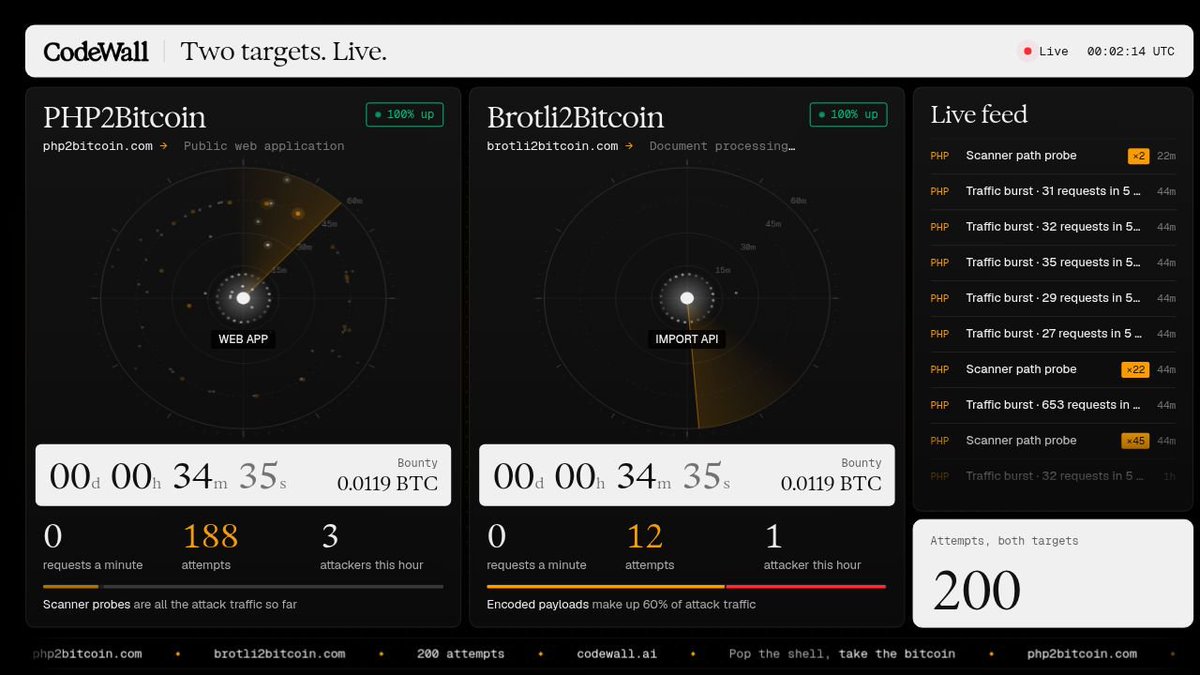
    php2shell and http2shell have been all over the timeline these past few days. But how hard are they to actually exploit? Let's find out: and Pop an RCE, grab the flag and take the $1K BTC AND watch live
    Download
    003171
  10. Frelzu✓@Frelzu
    🆘Node2Shell. Broccoli2Shell. HTTP2Shell. three names. one Brotli bug. CISA says it's being exploited. and it's not just a Node problem anymore. anything that decodes Brotli with a vulnerable library is in scope. Microsoft already pushed emergency .NET patches. the step everyone skips: → update → restart the process → rebuild and redeploy your container images a patched host doesn't fix the old Node binary baked into last month's image.
    Download
    BleepingComputer @BleepinComputer
    CISA has confirmed that hackers are actively exploiting a critical Brotli vulnerability (CVE-2026-111497), also known as Node2Shell, Broccoli2Shell, and HTTP2Shell.
    206535
  11. Wordfence✓@wordfence
    HTTP2Shell: What the Critical Brotli Vulnerability Means for WordPress Sites Update Brotli to version 1.0.10, 1.1.1, 1.2.1 as soon as possible.
    03142.2K
  12. Chirag Gandhi@cagandhi4cg
    11 Security Flaws in the Secure Access Provider's software! Seems like this time the Halloween 🎃 will become a real halloween 4 teams of IT Operations, Cyber Security and Software Application Developer #php2shell #node2shell #HTTP2Shell #tailworm #halloween #cybersecurity
    Mark Gadala-Maria @markgadala
    🚨 BREAKING: 11 UNPATCHED Security Flaws Exposed in Tailscale and Headscale. Researchers Demonstrate a Potentially WORMABLE Attack That Can Take Over Entire Server Networks. A new security report called Tailworm has revealed serious vulnerabilities in Tailscale, the widely used zero-trust networking platform. The most alarming finding? Researchers demonstrated how ONE compromised device could gain ROOT access to other servers across a private network in under a second per hop. Here's what researchers discovered: ➜ ROOT ACCESS: Tailscale SSH forwarding flaws reportedly allow an attacker with access to one authorized device to escalate privileges on other permitted servers, bypassing normal Linux user restrictions. ➜ WORM-LIKE PROPAGATION: In laboratory tests, exploitation spread automatically between permitted devices without additional passwords, SSH keys, or user interaction. ➜ CREDENTIAL THEFT: Attackers could potentially capture device enrollment credentials and register malicious machines as legitimate network members. ➜ CLOUD INFRASTRUCTURE EXPOSURE: A vulnerability in experimental app connectors could bypass network access restrictions, potentially exposing AWS cloud credentials, Kubernetes services, and internal infrastructure. ➜ SERVER DISRUPTION: Additional flaws in Headscale, the self-hosted alternative, could allow unauthenticated attackers to exhaust server memory and disrupt device registration. ➜ ADMINISTRATIVE TAKEOVER: Certain Tailscale Serve configurations could expose privileged local management interfaces to remote devices. 🚨 Why this matters: Tailscale is specifically designed to provide secure, private access to infrastructure without exposing servers directly to the internet. But these findings suggest that in vulnerable configurations, an attacker who compromises ONE authorized machine could potentially pivot across multiple servers with administrator-level access. And the vulnerabilities remain unpatched as of October 26. Security researcher Erica Windisch of Cyberdione Labs disclosed the findings after testing Tailscale v1.104.2 and Headscale v0.29.5. Tailscale has acknowledged related security issues and says fixes are underway. The company is NOT recommending that everyone disable Tailscale SSH. ⚠️ Important: The most serious attack requires an existing foothold and specific SSH permissions. This is not an unauthenticated attack against every Tailscale installation. The worm-like propagation was demonstrated in a laboratory, not observed in the wild. What administrators should do NOW: → Audit Tailscale SSH permissions and eliminate unnecessarily broad access rules. → Disable SSH forwarding if it isn't required. → Review app connector permissions and Tailscale Serve configurations. → Enable device key expiration and restrict access to sensitive servers. → Monitor Tailscale's official security updates for patches. 🔒 At Lucid Security, we're offering FREE website security reviews to help businesses identify exploitable vulnerabilities before attackers do. Request yours: Full technical disclosure:
    00093
  13. Mark Gadala-Maria✓@markgadala
    🚨 BREAKING: 11 UNPATCHED Security Flaws Exposed in Tailscale and Headscale. Researchers Demonstrate a Potentially WORMABLE Attack That Can Take Over Entire Server Networks. A new security report called Tailworm has revealed serious vulnerabilities in Tailscale, the widely used zero-trust networking platform. The most alarming finding? Researchers demonstrated how ONE compromised device could gain ROOT access to other servers across a private network in under a second per hop. Here's what researchers discovered: ➜ ROOT ACCESS: Tailscale SSH forwarding flaws reportedly allow an attacker with access to one authorized device to escalate privileges on other permitted servers, bypassing normal Linux user restrictions. ➜ WORM-LIKE PROPAGATION: In laboratory tests, exploitation spread automatically between permitted devices without additional passwords, SSH keys, or user interaction. ➜ CREDENTIAL THEFT: Attackers could potentially capture device enrollment credentials and register malicious machines as legitimate network members. ➜ CLOUD INFRASTRUCTURE EXPOSURE: A vulnerability in experimental app connectors could bypass network access restrictions, potentially exposing AWS cloud credentials, Kubernetes services, and internal infrastructure. ➜ SERVER DISRUPTION: Additional flaws in Headscale, the self-hosted alternative, could allow unauthenticated attackers to exhaust server memory and disrupt device registration. ➜ ADMINISTRATIVE TAKEOVER: Certain Tailscale Serve configurations could expose privileged local management interfaces to remote devices. 🚨 Why this matters: Tailscale is specifically designed to provide secure, private access to infrastructure without exposing servers directly to the internet. But these findings suggest that in vulnerable configurations, an attacker who compromises ONE authorized machine could potentially pivot across multiple servers with administrator-level access. And the vulnerabilities remain unpatched as of October 26. Security researcher Erica Windisch of Cyberdione Labs disclosed the findings after testing Tailscale v1.104.2 and Headscale v0.29.5. Tailscale has acknowledged related security issues and says fixes are underway. The company is NOT recommending that everyone disable Tailscale SSH. ⚠️ Important: The most serious attack requires an existing foothold and specific SSH permissions. This is not an unauthenticated attack against every Tailscale installation. The worm-like propagation was demonstrated in a laboratory, not observed in the wild. What administrators should do NOW: → Audit Tailscale SSH permissions and eliminate unnecessarily broad access rules. → Disable SSH forwarding if it isn't required. → Review app connector permissions and Tailscale Serve configurations. → Enable device key expiration and restrict access to sensitive servers. → Monitor Tailscale's official security updates for patches. 🔒 At Lucid Security, we're offering FREE website security reviews to help businesses identify exploitable vulnerabilities before attackers do. Request yours: Full technical disclosure:
    Download
    212357.2K
  14. CompuChris✓@compuchris
    HTTP2Shell emergency updates, PHP2Shell attacks, GitHub worm
    Download
    00040
  15. Felipe Daragon✓@FelipeDaragon
    🚨 Node2Shell, Python2Shell, HTTP2Shell, 🥦2Shell... different names, same underlying Brotli vulnerability (CVE-2026-111497) Severity: Critical (CVSS 9.2) The impact extends beyond Node.js to Python, PHP, Ruby, .NET, Go, Java, and native C/C++ applications, depending on the Brotli implementation in use. Even when the RCE vulnerability is patched, unbounded decompression of untrusted input may still introduce DoS risks. ⚠️ Update affected runtimes and libraries. #nodejs #ruby #python #http #broccoli #brotli #cybersecurity
    4209411.7K
  16. s1r1us✓@S1r1u5_
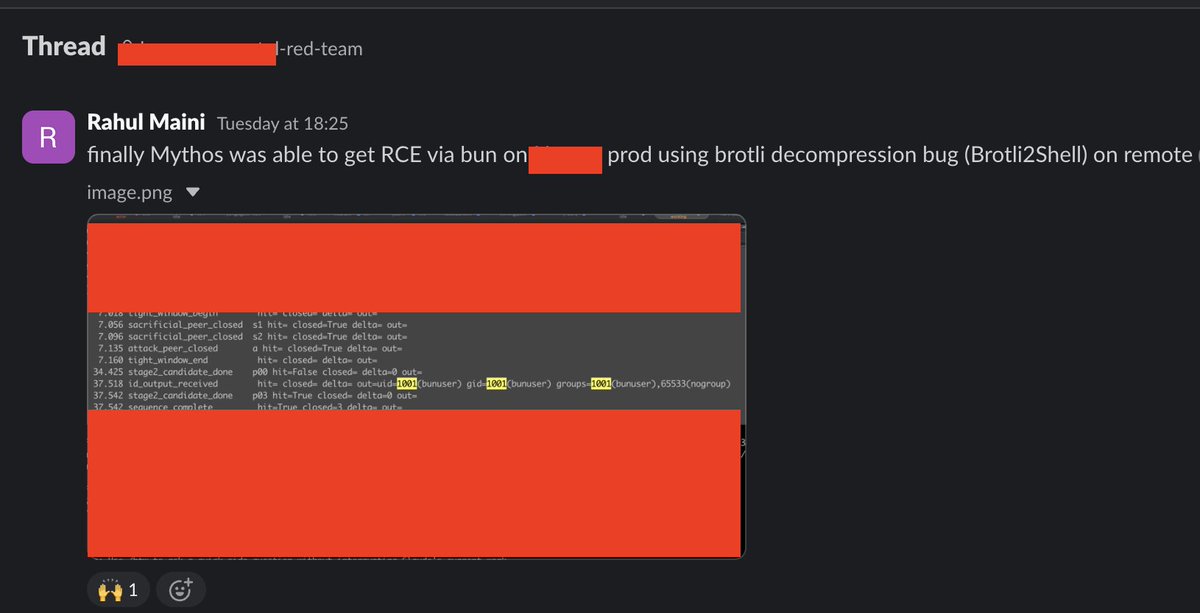
    ⚠️🚨 you all need to patch brotli2shell/http2shell!⚠️🚨 we keep finding vulnerable versions in production during our client red teaming engagements. these bugs are usually at the application level, so most of your monitoring won't even catch them, and the impact could be whatever matters most to your organization.
    Download
    91820722.3K
  17. ONE2NET@ONE2NET
    HTTP2Shell: What the Critical Brotli Vulnerability Means for WordPress Sites On October 22, 2026, Google published CVE-2026-111497, a critical vulnerability in Brotli, one day after the Brotli project released fixed versions. The vulnerability has circu
    00060
  18. Ray✓@R4yt3d
    Sweet Security Offers All Organizations Affected by HTTP2Shell Virtual Patching Protection at No Cost
    00074
  19. Show more posts