"Machine Learning: The Basics" by Alexander Jung
A great, compact refresher on the core concepts of machine learning through the data–model–loss framework.
It explains:
- hypothesis spaces
- model selection
- empirical risk minimization and regularization
- probabilistic models and clustering
- federated learning
- privacy and explainability
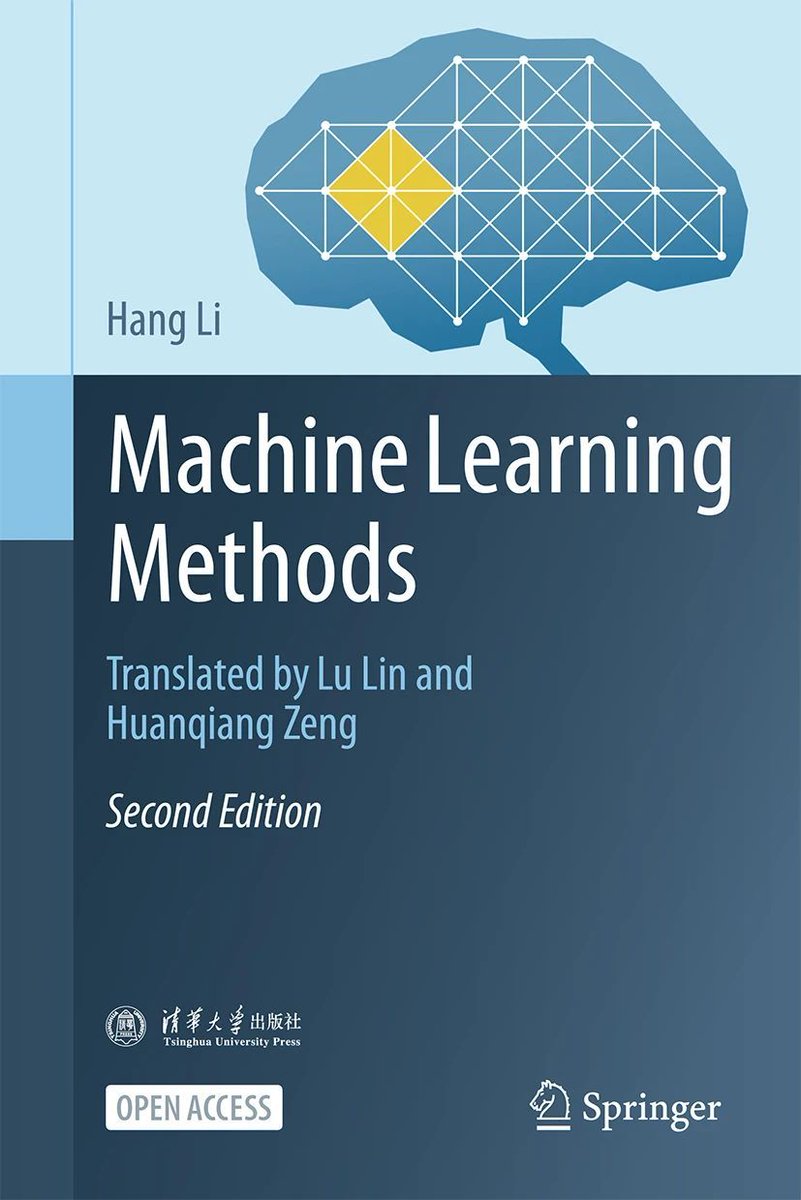
Machine Learning Methods — Free 874-Page Open Access Textbook! Pre-Order, Now!
Hang Li’s Springer 2026 book, a follow up 2nd Edition is an enormous reference spanning the four core branches of Machine Learning:
• Supervised Learning
• Unsupervised Learning
• Deep Learning
• Reinforcement Learning
• 80+ essential algorithms
• GBDT + EM Algorithm
• Transformers
• Diffusion Models
• PPO
• Mathematical formulations + intuitive explanation
• Practical examples+ Machine Learning real-world relevance
At 874 pages with 260 illustrations, it is designed for advanced undergraduate/graduate students of ML, educators and AI professionals. Springer explicitly marks the textbook Open Access, free and unlimited access.
#BigData#Analytics#DataScience#AI#MachineLearning#IoT#IIoT#PyTorch#Python#RStats#TensorFlow#Java#JavaScript#ReactJS#GoLang#CloudComputing#Serverless#DataScientist#Linux#Mathematics#Programming#Books#Coding#100DaysofCode
Free Open Access:
Amazon:
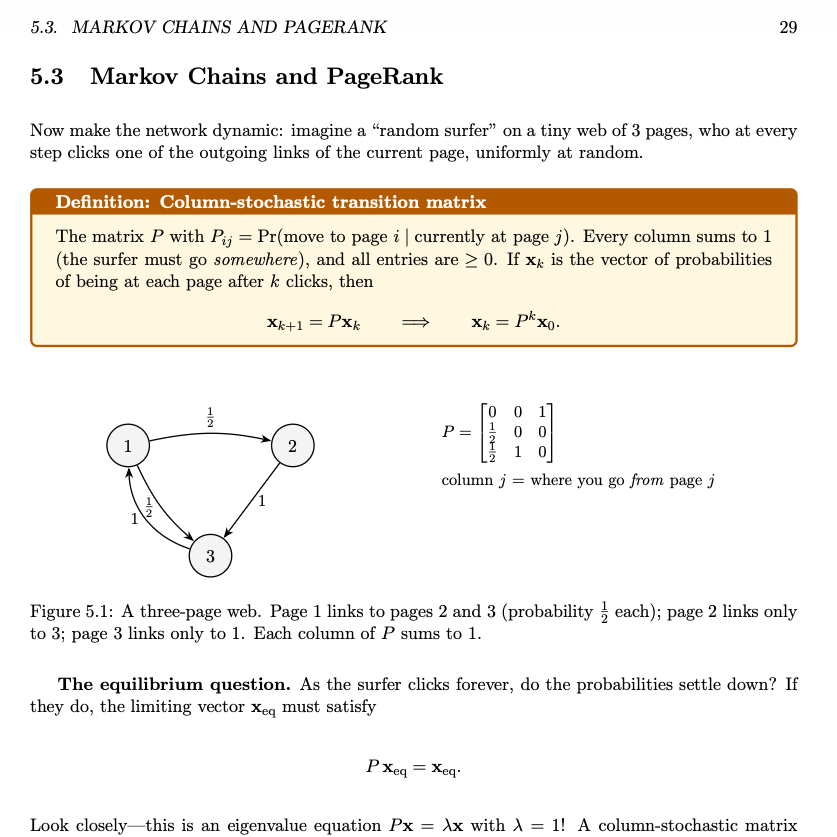
"Mathematical Pathways to Machine Learning" is a new introduction to the mathematical foundations of machine learning, published in August 2026.
It is a collection of lecture notes that develops the mathematics from first principles and covers vectors and matrices, inner and outer products, orthogonality and projections, Gram–Schmidt and QR factorization, eigenvalues and eigenvectors, SVD, PCA, derivatives and gradients, Jacobians, Hessians, Taylor approximations, convexity, least squares, gradient descent, convergence and conditioning, Newton's method, momentum, Lagrange multipliers, KKT conditions, duality, and support vector machines.
The mathematical concepts are directly connected to actual machine learning applications, including neural networks and backpropagation, PageRank, recommender systems, dimensionality reduction, regression, optimization, and SVMs.
The presentation is accessible and very well structured, with worked examples and exercises throughout, including exam-practice problems and small computational exercises.
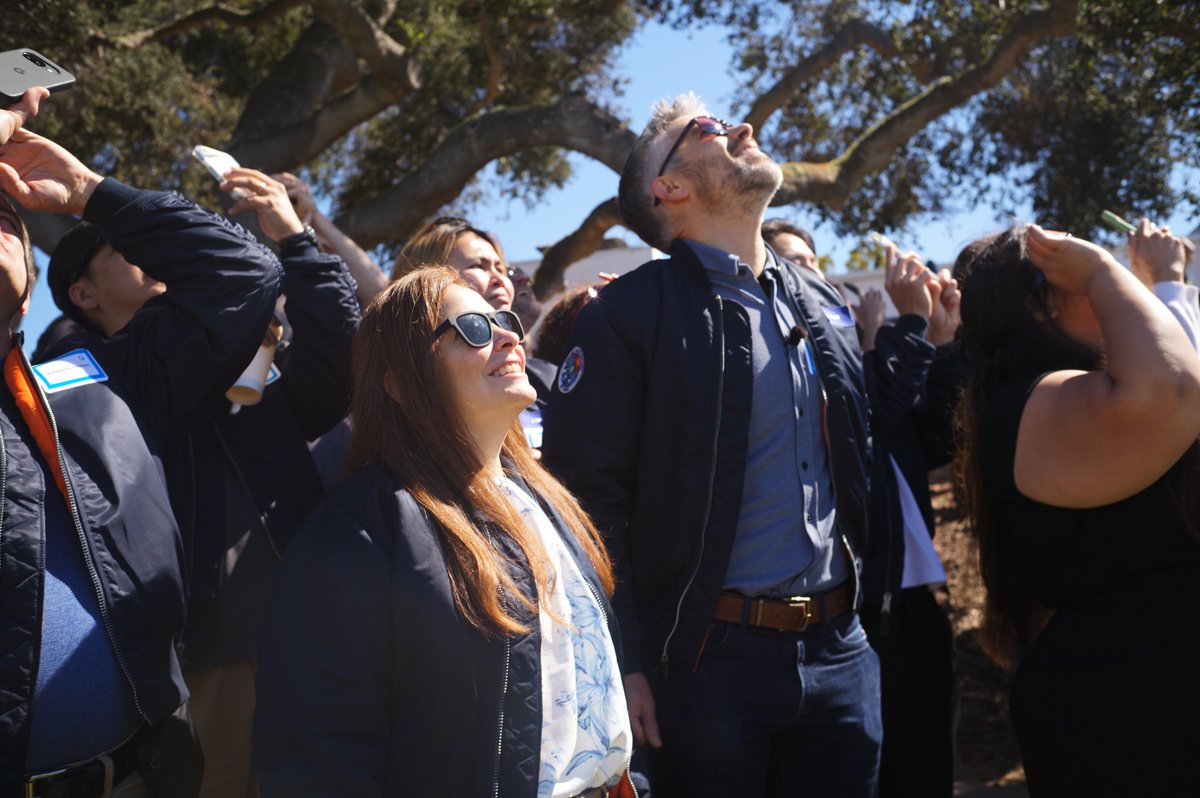
Project Suncatcher has liftoff! ☀️🚀
Announced last year, this moonshot project explores if we can one day host machine learning infrastructure in space. After years of research, we’ve just launched a prototype satellite, built in partnership with @planet, into orbit on @SpaceX's Transporter-18 rideshare mission.
This initial mission will gather data on how @Google TPUs handle the physical stress and extremes of spaceflight. Ultimately, these findings will help us explore how to potentially link multiple satellite constellations for scaled machine learning. By operating in low Earth orbit, these systems can tap into near-constant sunlight to generate up to 8x more solar power than on Earth.
This is free f*cking gold for AI engineers..
10 repos worth keeping, from Python basics all the way to LLMs, agents and production AI.
Forget the random tutorials.
1. Python-100-Days -- 100 days through fundamentals, data analysis and web dev.
↳
2. Generative AI for Beginners -- LLM basics, prompting, RAG, agents and fine-tuning.
↳
3. LLMs from Scratch -- build one yourself: tokenization, attention, transformers, training.
↳
4. ML for Beginners -- 26 lessons of classical ML across 12 weeks.
↳
5. OpenAI Cookbook -- working examples that take you from reading to building.
↳
6. Stable Diffusion -- the original implementation and the research code behind it.
↳
7. AI Agents for Beginners -- tool use, RAG, agent frameworks and multi-agent systems.
↳
8. AI for Beginners -- 24 lessons over 12 weeks: neural nets, vision, NLP.
↳
9. LLM App -- RAG pipelines, enterprise search, real-time data and vector search.
↳
10. Segment Anything -- Meta's foundation model for image segmentation.
↳
Start from wherever you are:
> Python -> Python-100-Days.
> ML -> ML-For-Beginners.
> LLMs -> LLMs-from-scratch.
> Agents -> AI-Agents-for-Beginners.
> Building -> OpenAI Cookbook, LLM App.
> Vision -> Segment Anything.
Pick one, build something real with it, then move on to the next.
#MachineLearning can connect laser processing conditions with material structure and performance. This review explores its potential for defect prediction, #Microstructure optimization and improved mechanical properties. @NUSingapore#IJEM#OpenAccess:
Good, accessible datasets drive progress in radiology AI, but not all datasets fulfill their promise of public access. The TRAM-AI Checklist was designed to change that. #AI#ML#MachineLearning
Machine Learning Engineers, where are you? 👀🔥
I have a remote opportunity for talented ML engineers! 🌍💻
💰 $60–$120/hour
⏰ 15 hours/week
🎓 MSc. or PhD preferred
🐍 Python + ML expertise required
👇 Comment “ML” if you're interested!
#MachineLearning#AIJobs#RemoteWork
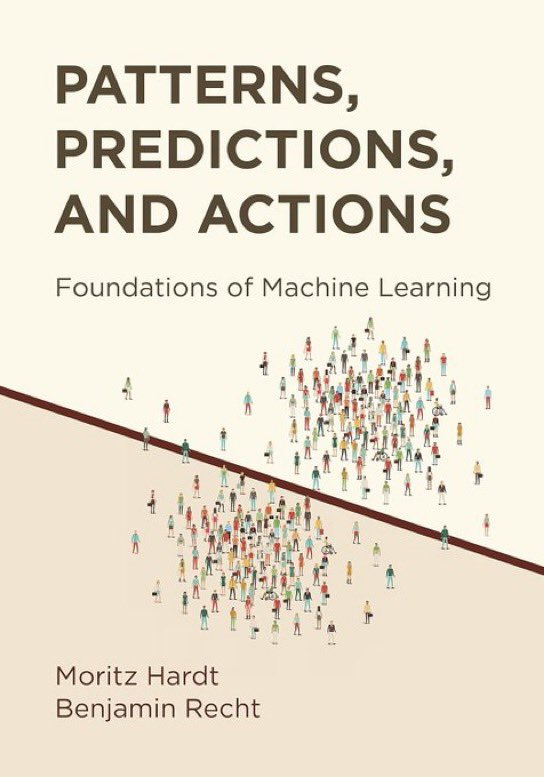
Awesome updated 309-page PDF eBook >> "Patterns, Predictions, and Actions: Foundations of Machine Learning" at
…sharpen your Probability, Calculus, and Linear Algebra knowledge with this!
—————
#ML#DataScience#DataScientist
🌟AI & ML Potential lies in balanced datasets.
It's like a scale - too much on one side & the insights tip over.
Harmonize your data for robust, fair, and accurate predictions!
#MachineLearning#DataScience#BalancedDatasets"
🚀 30 AI Algorithms Every Data Scientist Should Know
From Machine Learning to Deep Learning, these algorithms are essential for understanding how AI works.
Save this cheat sheet for future reference!
#AI#MachineLearning#DataScience