GPT-6.1 Terra: delivering fast and capable computer use at a lower price.
GPT-6.1 Terra understands what’s on screen, takes action across apps, writes naturally, and is a more capable model for your whole workday with the efficiency to take on more of it.
This is a drum-type hydroponic system in China's modern smart agriculture.
It grows potted plants on a rotating drum, with advantages like high space efficiency, uniform plant growth, efficient resource use, and less manual labor.
MiniMax M3.1 Flash weights are now public. 428B parameters total, 23B activated per token.
Agentic performance: A generational leap in agentic tasks, coding, and cybersecurity — 76.2 on BankerToolBench, 73.7% on DeepSWE v1.1, 61.7 on OSWorld V2, 29.6 on Agents' Last Exam, and 82.2 on CyberGym.
Efficient by design: MiniMax Sparse Attention and DSpark speculative decoding improve inference efficiency.
Hugging Face:
ModelScope:
API:
M Plan:
MCode for desktop:
Share
Copied
MiniMax (official)@MiniMax_AI
MiniMax M3.1 Flash: Space Performance + Bunny Speed
🚀🐰 Yes, Space Bunny - which has topped global leaderboards with 200T+ tokens - was an earlier version of M3.1 Flash.
💰Redefining the performance economics of agentic AI. M3.1 Flash achieves frontier-level intelligence across key tasks such as Cowork (Automation-Bench: 62%; ALE: 30%), Coding (DeepSWE: 74%) and Visual Reasoning (BabyVision: 91%), at 1/3 the cost of M3 and 3x the speed.
API pricing (flat rate): $0.15 / $0.60 per 1M input/output tokens, with cache reads at $0.015 / 1M tokens.
Model weights will arrive on Oct 23.
API:
M Plan:
MiniMax Code for desktop:
Microsoft trained a language model on 4 TRILLION tokens using just three possible weight values: -1, 0, and +1.
And the GitHub repo behind it has crossed 41,000 stars.
It's called BitNet, and the engineering is fascinating.
Most language models rely on weights stored in formats like FP16 or BF16, requiring 16 bits per weight. BitNet b1.58 uses ternary weights, meaning each quantized weight has only three possible states.
That's where the 1.58-bit name comes from. Three states contain approximately 1.58 bits of information.
Microsoft didn't simply take an existing full-precision model and compress it after training.
Its BitNet b1.58 2B4T model was trained from scratch using ternary weights during the forward pass, with 8-bit activations. The model has roughly 2.4 billion parameters and was pretrained on 4 trillion tokens.
The results are impressive.
In Microsoft's published evaluation, the non-embedding weights occupy approximately 0.4 GB. The model also achieves competitive results against several full-precision language models in the 1B to 2B class.
And Microsoft open-sourced the inference engine needed to exploit this architecture.
It's called bitnet.cpp.
The implementation includes specialized CPU kernels, packed ternary-weight representations, lookup-table computation, and GPU inference support.
In the team's original CPU experiments:
→ Up to 6.17× faster inference on x86
→ Up to 5.07× faster inference on ARM
→ Up to 82.2% lower energy consumption on x86
Those results come from controlled tests using synthetic model configurations, rather than a guarantee for every deployed model.
What makes BitNet particularly interesting is that the efficiency comes from the model architecture, the training method, and the inference implementation working together.
The model weights, research papers, and inference framework are publicly available.
Open source under MIT.
GitHub:
Scared of DL systems 🎃?
I made a Meticulous Guide to Advances in Deep Learning Efficiency over the Years, which is a detailed story from pre-AlexNet to foundation model training centered on #efficient#deeplearning from the hardware, libraries, algorithms, compilers... 🧵(1/7)
Making AI models more energy-efficient won't necessarily reduce overall energy consumption.
As inference gets cheaper and faster, demand could grow faster than efficiency improves. This is the logic behind Jevons paradox.
The real question isn't just how much energy each AI task consumes, but whether efficiency gains can outpace the growth in demand.
For the first time, we're watching plants breathe in real time.
Plants "breathe" through minuscule openings on their leaves known as stomata—a term derived from the Greek word for "mouths." These tiny pores perform a critical balancing act: they open to allow carbon dioxide (CO₂) to enter for photosynthesis, while simultaneously permitting water vapor to escape into the atmosphere through transpiration. This ongoing compromise influences a plant's growth rate, water requirements, and overall resilience, especially in challenging environments.
Historically, scientists faced significant limitations in studying this dynamic process directly. They could either observe stomatal movements under a microscope (often in artificial or uncontrolled settings) or measure overall leaf gas exchange (which reflects aggregate behavior but obscures microscopic details). A recent breakthrough from the University of Illinois Urbana-Champaign overcomes this divide with an innovative system called Stomata In-Sight.
This integrated tool combines three key technologies in real time:
- A live confocal microscope (specifically laser scanning) that captures high-resolution, three-dimensional images and videos of living stomatal cells and pores without damaging the tissue.
- Precise gas exchange sensors that quantify CO₂ uptake and water loss (stomatal conductance, photosynthesis, and transpiration) from the same leaf section.
- A controlled environmental chamber that maintains specific levels of light, humidity, temperature, and CO₂ to simulate real-world conditions.
By linking microscopic stomatal aperture changes (tracked via machine-learning image analysis for dozens of pores simultaneously) with whole-leaf physiological responses, researchers can now observe how individual stomata behave and contribute to the plant's overall performance under varying scenarios.
The implications are profound, particularly for agriculture. Water scarcity remains the primary constraint on crop yields worldwide. By identifying the genes and mechanisms that govern stomatal efficiency—such as opening/closing speed, density, or aperture size—scientists can develop breeding strategies for crops that conserve water more effectively while maintaining or boosting photosynthesis. This could lead to varieties better equipped to withstand drought, heat, and other effects of climate change, ultimately supporting higher food production with fewer resources.
Stomata In-Sight represents a major advance in plant science, transforming our ability to study—and ultimately engineer—plants that not only endure environmental stress but actively help humanity adapt to a changing climate.
[Crawford, J. D., Mayfield-Jones, D., Fried, G. A., Hernandez, N., & Leakey, A. D. B. (2025). Stomata in-sight: Integrating live confocal microscopy with leaf gas exchange and environmental control. Plant Physiology, 199(4), kiaf600. DOI: 10.1093/plphys/kiaf600]
Day 25/
We are doubling all usage limits for all Pro 100/200/500 tiers and Business Premium, effective today.
We heard your kind feedback and won’t be reducing usage limits for Pro 200, so your Work and Codex usage will stay the same. We’re also going to continue offering extended limits for dots for now, and usage of your dot will still continue to be separate from your default usage.
And we'll of course also keep shipping better models and other efficiency improvements that increase your effective usage over time.
Quantifying the Future
This is what a $2 trillion economy will look like by 2040…
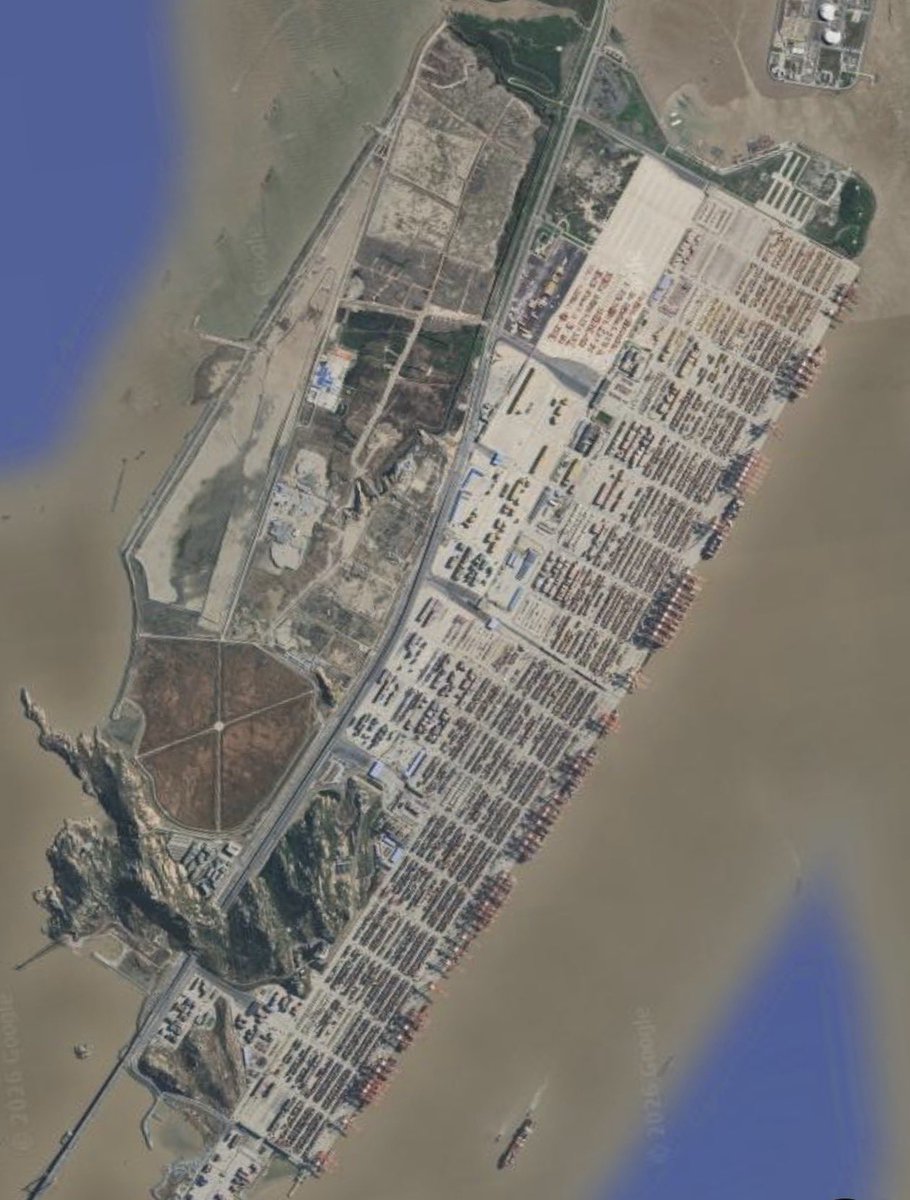
+ 1x port facility with 3x8km lay down area
+ 1x robot fab plant producing 100 bots / hr
+ 1x 1GW datacenter running inference
+ 1x 3GW nuclear power station
= 2 million robots labouring 24/7
We know enough today to model the thermodynamics and the market economics of such a site already. The numbers above are the ballpark numbers you end up with, feel free to challenge or change for your own assumptions.
Embodiment is the ceiling for both the thermodynamics and economics, as compute (and intelligence) pretty much trends towards zero under Moore’s Law.
Assuming a robot is 500W of Newtonian motion, as humanoids are, then 2,000,000 robots working 24/7 is 1GW of demand for the robots’ actuators.
Let’s also assume a 1GW datacenter is required for inference for 2m robots, supervised by a central monolithic superintelligence. That’s 2GW total.
Then for the sack of maintenance and replacement, we assume 500MW robot fab can produce 100 robots an hour (only ~ 5 ton of product / hr, below a car plant, but includes chips). That’s now 2.5GW site total.
For 2,000,000 robots to create $2T of value, each bot needs to add $1m of value each year
Seems a lot, but each robot is assumed to work 24/7 and only last ~2 years before it is defunct.
24x365 =8,760 hrs/yr
=>$114/hr
Seems high at first, but this is a hyper collaborative hive mind marshalled by 2040 superintelligence. $114/hr is what you pay for a car mechanic in 2026, and we are using 2026 dollars here.
We can even look at the thermo and economic density and the total footprint of this economy is just tiny.
3x8km is 24km^2 (about 6,000 acres).
= 83,000 robots / km^2 = 12m^2 per robot
Thermal dissipation
= 500W / 12m^2
= 41.7W/m^2 (just 2-3% of solar insolence)
Value add density
=$1m / 12m^2
=$83k / m^2 <- Wow!!
This is $2T GDP from just 8km of coastline
Or $500bn of GDP per km of dockside
The entire economy can be compressed into the 3km deep dockyard behind the dockside.
That’s an economy the size of Australia or Mexico in a land area the size of San Francisco Airport.
This is absolutely where the future economy is going, nothing can compete with the capital efficiency of this setup. Nothing.
Docks are also crucial as it’s simply not possible to handle the prerequisite volume of cargo and goods for such an economy using anything other than isomodal freight handling systems.
If your nation state is interested in adding $2 trillion to its tax base… my DMs are open.
A lot more goes into building a software factory than you might think. There are 7 must-haves we've landed on:
- Configured as code
- Central conversation history
- Benchmarking tools
- Factory chat
- Artifacts
- Computer use
- Agent debugger
In detail: