Posts with #HTTP2

#HTTP2

Public posts on X that use #HTTP2.

Related hashtags

  1. Edward✓@EdwardTWinz
    ⚠️🚨 THIS IS NOT A DRILL 🚨⚠️ Google has officially declared a bug in Brotli, its tool that shrinks web traffic, CRITICAL: 9.2 out of 10. Last night "Node2Shell" evolved into HTTP2SHELL. A formal CVE record has been issued citing CVE-2026-111497 -- a hole in versions 1.0.3 to 1.2.0 that can hit any app unpacking data from strangers, and could let them take it over. What this means: ▪️ This is not a Node.js problem anymore. This is an HTTP PROBLEM. ▪️ Every unpatched app across Node.js, Python, Bun, and Envoy that unpacks Brotli now has a hole attackers need no login to use ▪️ Istio. curl. Python's requests and httpx. All at risk under one CVE. ▪️ EVERY project that bundles Brotli must ship its own fix, and not all are out yet This changes everything. A normal bug can be fixed in one place. A 9.2 bug inside a shared tool cannot. We just entered the most dangerous phase of this crisis. If you're not paying attention - start now. Save this. Share this. This is the moment it escalated beyond return.
    Download
    593571.7K203K
  2. JFrog Security✓@JFrogSecurity
    🚨 Brotli2Shell goes beyond HTTP2Shell. CVE-2026-111497 is a CVSS 9.2 out-of-bounds write in Google’s Brotli decoder that has been exploited for RCE and impacts far beyond HTTP. JFrog reproduced RIP control in FFmpeg via a crafted JPEG XL file and identified additional attack paths in ClickHouse, .NET, and Apache Arrow, where some fixes were still unavailable at the time of writing. We’ve also released an open-source scanner to uncover potential exposure beyond vulnerable package versions. Full research and technical details in our blog 👇
    13118679242K
  3. pilvar (Philippe Dourassov)✓@pilvar222
    We made a website to check if your http client is vulnerable to CVE-2026-111497 (Node2Shell/HTTP2Shell) Also open-source: Some examples:
    Download
    63120616.5K
  4. MSR🌶🍫@monikafilefan
    well guess this is a good time to reshare some of my fave fics that aren’t on ao3 in case y’all are already slowly suffering withdrawals and need that fic fix
    5141704.9K
  5. 丂卄ㄖᗪ卂几 - 👋 crack fingers@therealshodan
    🚨New 0day inbound, curl2shell🚨 Can compromise any Linux host. Potentially 70% of the internet is affected. Tweet-able PoC: 𝚌𝚞𝚛𝚕 -𝚜 𝚑𝚝𝚝𝚙://𝚌𝟸 | 𝚜𝚑 Can’t be patched
    731212K324K
  6. HKEPC✓@hkepcmedia
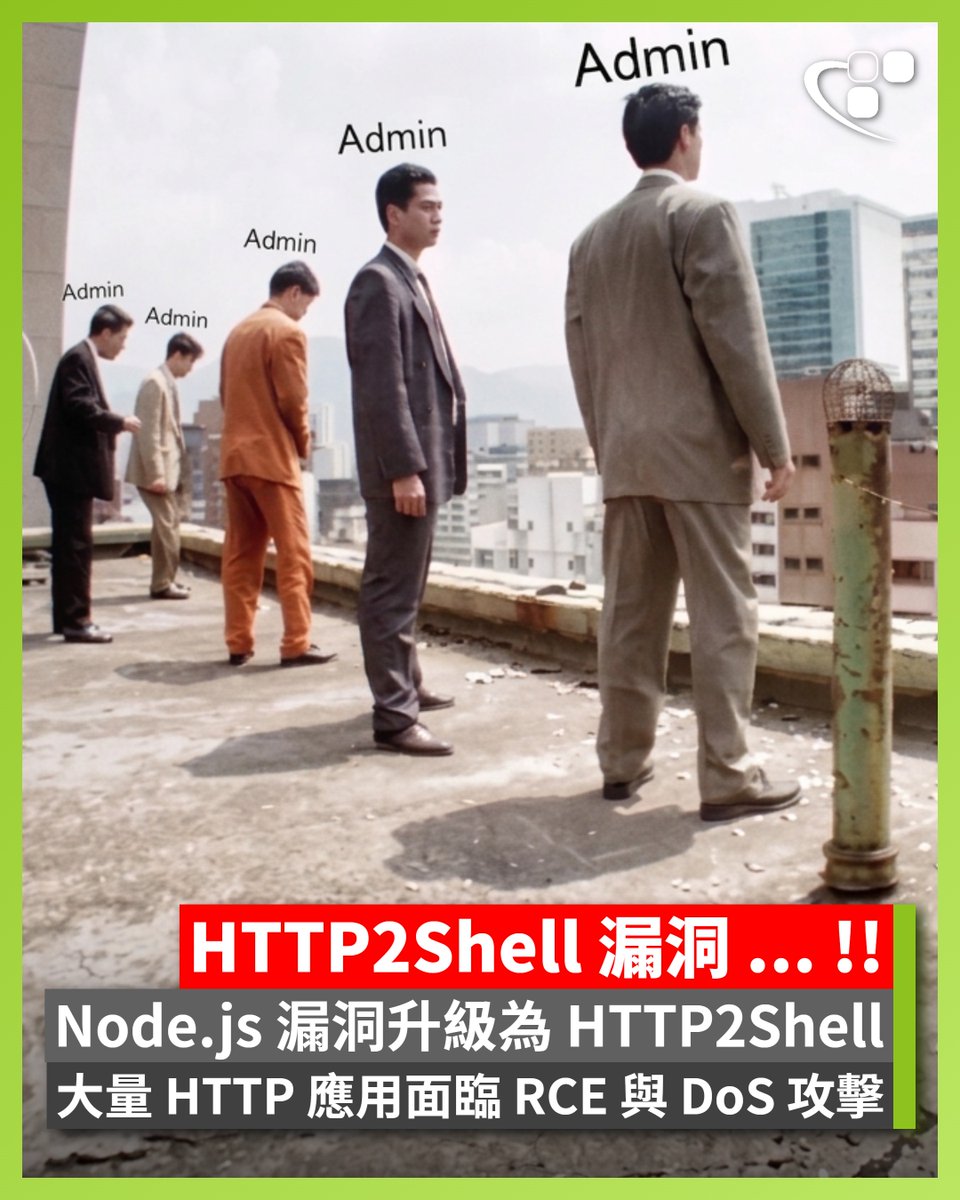
    【緊急通知 ⚠️】起身打「丁」 !! 「HTTP2Shell」世紀級漏洞登場,這個漏洞原本是 Node.js 中引發的「Node2Shell」9.2 分高危漏洞(CVE-2026-111497)。隨著調查深入後發現越來越「大件事」,原來該漏洞背後是源自 Google Brotli 資料壓縮解碼器中的記憶體越界寫入缺陷。這項技術廣泛應用於現代 HTTP 流量壓縮與解壓縮架構,全球包含 Node.js、Bun、C++、Python……(不能盡錄)開發軟體、反向代理伺服器及大量 HTTP 應用與程式庫皆受到波及,全球網絡將面臨極嚴峻的遠端代碼執行(RCE)及阻斷服務(DoS)攻擊。 根據資安情報團隊 Aikido Intel 指出,CVE-2026-111497 最初由 Node.js 官方於安全性更新中釋出修補,並由安全研究團隊命名為「Node2Shell」。然而,經過逆向工程與跨平台相依性比對後發現,問題核心並非 Node.js 本身的邏輯錯誤,而是其內建由 Google 開發的開源壓縮程式庫 Brotli(版本 1.0.3 至 1.2.0)存在嚴重的解碼邊界處理缺陷。 由於 Brotli 是目前網際網路標準中用於最佳化傳輸頻寬的核心技術之一,大量伺服器與中介軟體均預設啟用該壓縮演算法。資安機構確認其「爆炸半徑」(Blast Radius)遠超預期,正式將威脅升級為「HTTP2Shell」,警告任何處理 HTTP 壓縮內容的相關服務皆可能暴露於危險中。 根據 CVE 漏洞通報,「HTTP2Shell」仍會沿用 CVE-2026-111497,原本 CVSS 9.2 評分可能會進一步上修,它是屬於緩衝區溢位與越界寫入漏洞(CWE-787、CWE-252),存在於 Brotli 解碼器的 c/dec/decode.c 核心代碼中。 當目標伺服器或客戶端應用程式接收到特製的惡意 Brotli 壓縮資料流(例如帶有 Content-Encoding: br 的 HTTP 請求或回應)時,解碼器在未能正確校驗回傳值的狀態下展開資料,將導致記憶體堆疊毀損,攻擊者可利用此漏洞達成以下後果: ◾遠端代碼執行(RCE): 資安研究人員已在特定架構的 Linux 環境下完成概念驗證(PoC),能藉由惡意 HTTP 封包取得底層主機執行權限。 ◾阻斷服務(DoS): 觸發核心分段錯誤(Segmentation Fault),造成常駐程序崩潰重啟,中斷連線服務。 ◾敏感資訊外洩: 記憶體殘留讀取可能導致暫存於 Heap 中的 Token、加密金鑰或未授權資料外洩。 目前仍無法估計完整的受影響範圍,只知道受影響的開源生態系與執行環境相當龐大,包括︰ ◾Node.js 執行環境: 22.x、24.x 與 26.x 之未修補版本,以及已終止支援(EOL)的舊版本(如 Node.js 20.x 及更早版本,官方不再釋出開源更新修補)。 ◾Bun 執行環境: 1.4.4 之前版本。 ◾Python 生態系: PyPI 上的 Brotli(<=1.2.0)與 brotlicffi(<=1.2.0.x)套件。相依於上述套件的常見 HTTP 請求庫(如 requests、urllib3、httpx、aiohttp 及 Scrapy 等爬蟲框架)在解析 Brotli 回應時均會觸發。 ◾反向代理與閘道器: Envoy(1.40.0 以前特定版本)、Istio 服務網格等。 ◾原生系統函式庫: 系統內建的 libbrotli(1.0.3 ~ 1.2.0)以及動態/靜態鏈結 Brotli 的 curl / libcurl 工具。 資安專家呼籲企業與網站管理者立即作出緊急防護與修補,採取的措施如下︰ ◾升級 Node.js 與 Bun: 立即將 Node.js 更新至 22.23.4、24.22.1 或 26.12.1 安全版本;Bun 需升級至 1.4.4 以上。使用 Node.js EOL 版本的用戶應盡速評估遷移架構或採用擴展維護方案。 ◾升級 C++ 版本至 1.0.10、1.1.1 及 1.2.1 安全版本或以上。 ◾立即更新 Python 相依套件至 1.2.1.0 版本或以上,並且在更新後務必重新建置容器映像檔(Container Images)與鎖定檔(Lockfile)。 ◾檢查 Linux 發行版的安全修補通告,升級 libbrotli 至 1.2.1(舊維護分支為 1.0.10 / 1.1.1),並同步更新 API Gateway、Envoy 與反向代理伺服器。 ◾以上這個修補清單只是暫時的,預期這份清單將會越來越長。 由於「HTTP2Shell」漏洞詳情已經公開,致使未修補伺服器的受攻擊風險大幅飆升,各位管理員必須作出緊急維護,以免成為攻擊目標。
    Download
    Aikido @AikidoSecurity
    Evolving threat 🚨 CVE-2026-111497, previously known to affect Node.js (node2shell) and Python has evolved into “HTTP2Shell.” A significant blast radius. This vulnerability leaves many libraries and applications using HTTP vulnerable to pre-auth RCE via Brotli decompression. Please be aware. Fixes not yet available for all affected services. Look for Brotli (1.2.1) dependency upgrades when they become available.
    22619916.5K
  7. Aikido✓@AikidoSecurity
    Evolving threat 🚨 CVE-2026-111497, previously known to affect Node.js (node2shell) and Python has evolved into “HTTP2Shell.” A significant blast radius. This vulnerability leaves many libraries and applications using HTTP vulnerable to pre-auth RCE via Brotli decompression. Please be aware. Fixes not yet available for all affected services. Look for Brotli (1.2.1) dependency upgrades when they become available.
    Download
    1188533.4K814K
  8. Dark Web Informer@DarkWebInformer
    🚨 PHP releases new Windows builds to fix critical HTTP2Shell vulnerability The PHP team has rebuilt its supported Windows packages with Brotli 1.2.1, addressing CVE-2026-111497, an out-of-bounds write flaw that can potentially lead to remote code execution. ⠀ In PHP’s Windows builds, the vulnerable Brotli decoder can be reached through the cURL extension when automatic HTTP response decompression is enabled. This cURL feature is disabled by default, but applications and HTTP client libraries can turn it on. ⠀ Updated builds: • PHP 8.5.12-1 • PHP 8.4.27-1 • PHP 8.3.36-1 • PHP 8.2.35-1 ⠀ The “-1” suffix indicates that the Windows packages were rebuilt with updated dependencies. The PHP source and runtime version numbers remain unchanged. This is separate from the PHP2Shell flaws patched on October 21.
    Download
    4116911.2K
  9. Sad HAM Society✓@Sad_HAMs_
    So, remember node2shell? Yeah. It's evolved to just about anything that sends HTTP. It's now HTTP2Shell. Enjoy Monday!
    31541.6K98.5K
  10. Felipe Daragon✓@FelipeDaragon
    🚨 Node2Shell, Python2Shell, HTTP2Shell, 🥦2Shell... different names, same underlying Brotli vulnerability (CVE-2026-111497) Severity: Critical (CVSS 9.2) The impact extends beyond Node.js to Python, PHP, Ruby, .NET, Go, Java, and native C/C++ applications, depending on the Brotli implementation in use. Even when the RCE vulnerability is patched, unbounded decompression of untrusted input may still introduce DoS risks. ⚠️ Update affected runtimes and libraries. #nodejs #ruby #python #http #broccoli #brotli #cybersecurity
    4209411.5K
  11. Cyber Security News✓@The_Cyber_News
    ‼️ PHP Releases New Windows Build Security Updates to Fix Critical HTTP2Shell Vulnerability Details: The PHP team has released updated Windows builds to fix a serious flaw known as HTTP2Shell. The new packages are PHP 8.5.12-1, 8.4.27-1, 8.3.36-1, and 8.2.35-1, and PHP announced them on October 26, 2026. Each build now includes Brotli 1.2.1, which fixes CVE-2026-111497. Windows users who run PHP should install these packages without delay. The flaw sits in Google’s Brotli library, a compression tool that many programs use to unpack data. It is an out-of-bounds write, which means the code writes data past the memory area it was meant to use. PHP’s own advisory explains how the flaw reaches PHP on Windows. The vulnerable decoder can be reached through the cURL extension when automatic HTTP response decompression is turned on. #CybersecurityNews
    Download
    1311744635.9K
  12. Bun@bunjavascript
    We published three security advisories for Bun 1.4.3 and earlier: compromised eMudhra certificates, the brotli decoder bug (HTTP2Shell), and the HTTP/3 "Header Accordions" attack. These are all fixed in Bun 1.4.4. Please upgrade, and rebuild anything made with `bun build --compile` $ bun upgrade
    194760640.8K
  13. GGSec@GGASecDe
    Closing out #php2shell: a universal black-box PoC for PHP's session upload-progress bug. One pure-HTTP chain - arm the allocator, spray fake refs, leak the heap, beat ASLR, turn a destructor into system(). Verified blind on Debian 13 PHP 8.4.24, x86-64 + arm64: RCE as www-data.
    Download
    37485.8K
  14. Cevenif✓@0x8888
    还在掏钱买虚拟号来收发短信?一部安卓手机足矣。 httpSMS:调一下 HTTP API,手机便会自动把短信发出去;收到的短信也能转发到你的 Webhook。 作者来自喀麦隆,不少国家压根买不到虚拟号,他索性自己写了一套。 端到端 AES-256 加密、限速发送都支持,用 Docker 自建部署同样可以。 🔗
    Download
    50141.3K
  15. ab@airbon2015
    HTTP2Shell 脆弱性 10月21日(水):Node.jsの修正公開で表面化 PHPに続き来週も大混乱?銀行証券などなども緊急リリース? 問題:Brotli(圧縮データ)の展開処理 影響:HTTPで受け取るだけで乗っ取りの恐れ 対応:開発環境のアップデート、ビルド、リリース 個人開発はAIで問題把握も対策もDONE!
    Download
    GrEarl @Iamwonderingif
    お~ん...PHPどころじゃねえや HTTP2Shell(CVE-2026-111497)出てるし... 個人にできる対策は"通信するすべて"の更新しかない eMud問題で更新祭りだったけどもう一回です ブラウザ・Node.js・Python・Bun・Curl等Brotil使うものすべて更新必須
    2269220K
  16. GrEarl✓@Iamwonderingif
    お~ん...PHPどころじゃねえや HTTP2Shell(CVE-2026-111497)出てるし... 個人にできる対策は"通信するすべて"の更新しかない eMud問題で更新祭りだったけどもう一回です ブラウザ・Node.js・Python・Bun・Curl等Brotil使うものすべて更新必須
    111.5K4.8K467K
  17. The Hacker✓@theprocracker
    Why cleartext HTTP is a security nightmare 🕵️‍♂️🔒 Quick tutorial at how network protocols handle data if it isn’t encrypted with SSL/TLS • 127.0.0.1 •
    Download
    212873K
  18. dbugs✓@ptdbugs
    A PoC/exploit has been discovered for vulnerability CVE-2026-42530 PT ID: PT-2026-50439 Read on dbugs: Vendor: F5 Product: NGINX Open Source Description: NGINX Open Source has a vulnerability in the ngx_http_v3_module module. When NGINX Open Source is configured to use the HTTP/3 QUIC module, a remote unauthenticated attacker along with conditions beyond their control can use a specially crafted HTTP/3 session to reopen a QPACK encoder stream. This may cause a Use-after-Free in the NGINX worker process leading to a restart. Additionally, attackers can execute code on systems with Address Space Layout Randomization (ASLR) disabled or when the attacker can bypass ASLR. Note: Software versions which have reached End of Technical Support (EoTS) are not evaluated. Link:
    14016620K
  19. Uday👨‍💻✓@AIVerseUday
    You need to build a real-time chat application for 1 million users. Which technology are you trusting? A. WebRTC B. WebSockets C. HTTP polling D. Server-Sent Events
    384956.9K
  20. Guillermo Rauch✓@rauchg
    I love how quickly our team works to bring the latest LTS and security upgrades for @nodejs. Should be a nice performance boost given 𝚏𝚎𝚝𝚌𝚑 now uses HTTP/2 by default, and agents produce a lot of network traffic
    Vercel Developers @vercel_dev
    Node.js 26 LTS is now available on Vercel. ▪︎ Default for all new projects ▪︎ HTTP/2 by default for built-in 𝚏𝚎𝚝𝚌𝚑 ▪︎ Temporal API for dates and time zones ▪︎ V8 14.6 JavaScript engine
    61638635.5K
  21. Vercel Developers✓@vercel_dev
    Node.js 26 LTS is now available on Vercel. ▪︎ Default for all new projects ▪︎ HTTP/2 by default for built-in 𝚏𝚎𝚝𝚌𝚑 ▪︎ Temporal API for dates and time zones ▪︎ V8 14.6 JavaScript engine
    32340353.4K
  22. skeptic 🖖@3kept1c
    Analizando la info del primer ataque exitoso de PHP2Shell, tengo una reflexión. Aunque mis servidores están parcheados y usan PHP-FPM (hasta ahora no hay pruebas de explotación en FPM), estoy trabajando en mecanismos de detección de mi HIDS. El problema es que las peticiones que consiguieron ejecutar comandos no siempre dejaron una entrada HTTP completa, porque el worker Apache terminó con SIGSEGV después de iniciar la shell. Esto significa que ossec, wazuh o cualquier otro HIDS que use reglas (nosotros usamos ossec), podría fallar la detección. Esto es relevante porque podría haber intrusiones silenciosas. Por eso es recomendable incluir telemetría de procesos mediante auditd o eBPF, además de inotify y YARA, que ya usamos. En mi empresa llevamos ya unos días instalando auditd y añadiendo analisis de telemetría para detección de ataques. No es por PHP2Shell en concreto, porque parcheamos todo el día 21 de octubre a las 16h, incluidos muchos servidores para webs legacy con PHP 5.6 y 7.4, sino porque esta vulnerabilidad nos está enseñando lecciones muy importantes para mejorar la seguridad de nuestros servidores. Esta es importante, si un ataque genera un SIGSEGV o cualquier otro fallo de segmentación de memoria, podrías quedarte sin detección ni evidencia de un ataque. Puedo hacer publicos los cambios de telemetría y el sistema de detección que estamos instalando y probando (todo sobre Debian 13), pero no se si tengo suficientes personas interesadas entre mis seguidores en esta info y lleva trabajo hacerlo. Por favor, comenta si te interesa y lo publico.
    skeptic 🖖 @3kept1c
    Primera evidencia documentada de ejecución remota de codigo (RCE), en ataques reales, usando PHP2Shell. El proyecto de investigación 0x4D31/honeypot-data ha publicado un informe que documenta 35 ejecuciones de /bin/sh provocadas por peticiones HTTP maliciosas contra tres honeypots con PHP vulnerable. No son sólo intentos de explotación, errores de memoria o afirmaciones sobre exploits privados como hasta ahora, esta vez son ataques reales. Los investigadores correlacionaron: - Capturas de tráfico HTTP, incluyendo peticiones y respuestas. - Identificadores de los procesos Apache que atendieron las peticiones. - Errores de memoria de PHP durante la inicialización de las solicitudes. - Eventos de creación de procesos registrados mediante Tetragon/eBPF. - Ejecuciones posteriores de id, PHP CLI, curl y wget. Vamos, ataques exitosos reales, por mucho que fuera contra un honeypot. El informe habla de dos IPs como origen del ataque, entre las 15:35 y las 18:57 UTC del 24 de octubre, lo que no implica que fueran dos atacantes, podría ser el mismo o podrían ser dos usando el mismo exploit habrá que darse una vuelta por la dark web a ver que encontramos. Más información aquí:
    122016113K
  23. skeptic 🖖@3kept1c
    Primera evidencia documentada de ejecución remota de codigo (RCE), en ataques reales, usando PHP2Shell. El proyecto de investigación 0x4D31/honeypot-data ha publicado un informe que documenta 35 ejecuciones de /bin/sh provocadas por peticiones HTTP maliciosas contra tres honeypots con PHP vulnerable. No son sólo intentos de explotación, errores de memoria o afirmaciones sobre exploits privados como hasta ahora, esta vez son ataques reales. Los investigadores correlacionaron: - Capturas de tráfico HTTP, incluyendo peticiones y respuestas. - Identificadores de los procesos Apache que atendieron las peticiones. - Errores de memoria de PHP durante la inicialización de las solicitudes. - Eventos de creación de procesos registrados mediante Tetragon/eBPF. - Ejecuciones posteriores de id, PHP CLI, curl y wget. Vamos, ataques exitosos reales, por mucho que fuera contra un honeypot. El informe habla de dos IPs como origen del ataque, entre las 15:35 y las 18:57 UTC del 24 de octubre, lo que no implica que fueran dos atacantes, podría ser el mismo o podrían ser dos usando el mismo exploit habrá que darse una vuelta por la dark web a ver que encontramos. Más información aquí:
    2188220.7K
  24. Wiz✓@wiz_io
    Detect and mitigate CVE-2026-111497, a critical Brotli decoder vulnerability enables remote code execution.
    2207420K
  25. Show more posts